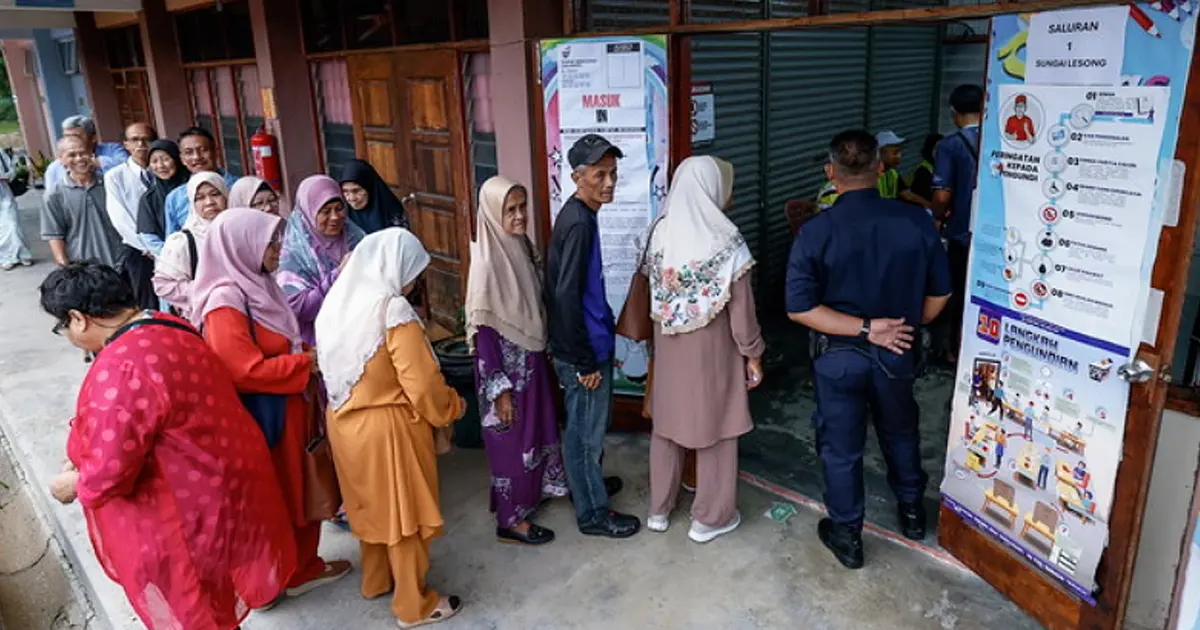
A prominent political analyst at Universiti Malaya has cautioned that Malaysian political parties risk exhausting Malay voters through continued emphasis on the 3R framework—religion, race, and royalty—arguing that such relentless positioning will breed what he terms "emotional fatigue" among the electorate.
Awang Azman Pawi's warning arrives at a critical juncture in Malaysia's political landscape, where these three pillars have traditionally dominated campaign messaging and public discourse. His observation suggests that the Malay-Muslim voter base, despite its traditional responsiveness to cultural and religious narratives, has finite tolerance for campaigns built exclusively around identity-based mobilization. The concept of emotional fatigue speaks to a deeper shift in voter psychology: the wearing down of engagement that occurs when communities are asked to remain in a heightened state of anxiety or consciousness about particular issues without tangible resolution.
The analyst emphasizes that political parties will ultimately be evaluated not on their rhetorical commitment to defending religion, race, and royal institutions—areas where most mainstream Malaysian political actors compete fiercely to appear equally committed—but rather on their demonstrated ability to govern effectively and deliver concrete improvements in daily life. This distinction carries profound implications for campaign strategists and party leaders across Malaysia's political spectrum.
Cost of living has emerged as the dominant concern among Malaysian households across all ethnic groups, but particularly among Malay-Muslim communities in both urban and rural areas. Inflation has eroded purchasing power, rental costs have surged, and the price of essential commodities including food, fuel, and transport has climbed steadily. When voters struggle to afford basic necessities, messaging centered on cultural grievances or historical narratives, however emotionally resonant, risks appearing disconnected from their immediate reality.
Awang Azman's analysis reflects a broader pattern observable across democratic systems globally: voters eventually demand that parties move beyond identity politics toward materialist concerns. The Malaysian context, however, presents unique complexities, given the constitutional significance of Islam's special position, the Malay special position, and the institution of the monarchy. These are not merely rhetorical devices but foundational elements of the Malaysian social contract. Parties cannot simply abandon discussion of these matters without triggering accusations of betraying fundamental national principles.
The challenge for political strategists thus becomes calibrating the appropriate emphasis. Rather than abandoning 3R issues entirely, parties face pressure to integrate them more seamlessly with governance achievements and policy announcements. A party that announces subsidies for essential goods while framing the initiative as consistent with Islamic principles of caring for the vulnerable, or that links infrastructure development to strengthening Malay-Muslim communities, combines identity messaging with material benefit.
The timing of Awang Azman's observation suggests increasing awareness among political observers that the electoral landscape is shifting. The 2022 general election results demonstrated that voter behavior had become less predictable than in previous cycles, with significant swings between constituencies and evidence of strategic ticket-splitting. Emotional fatigue may represent one mechanism explaining these changes—voters retaining the option to penalize parties that fail to balance cultural advocacy with economic competence.
For opposition parties seeking to challenge the ruling coalition, the analyst's warning carries particular strategic weight. These parties often rely on 3R messaging as a primary means of differentiating themselves from government, appealing to voters concerned about the direction of the nation on cultural lines. Yet if such messaging simultaneously generates emotional exhaustion, the strategy becomes self-defeating. Voters may vote against their preferred opposition candidate if they perceive the latter as incapable of addressing their rent, food, and transport costs.
For the government, the implication cuts differently. With control over administrative machinery and budget allocation, the ruling coalition possesses greater capacity to demonstrate tangible economic improvements. However, if these achievements are overshadowed by perceptions of corruption, mismanagement, or favoritism in their distribution, the emotional fatigue effect may still damage government prospects. Voters may feel simultaneously tired of hearing political messaging while unconvinced that either side deserves their support.
The Malaysian experience with 3R politics is deeply embedded in the nation's founding structure and post-independence political settlement. These are not ephemeral concerns that can be switched on and off like campaign messaging on other topics. Rather, they represent enduring dimensions of national identity and constitutional arrangement. Awang Azman's analysis thus implicitly suggests that the path forward involves not abandoning these foundations but rather integrating them more credibly with solutions to practical problems affecting household welfare.
Political analysts across Southeast Asia are increasingly attentive to this pattern, as other democracies in the region also grapple with the tension between identity-based mobilization and material governance performance. Malaysia's experience will likely inform understanding of electoral dynamics across the region, particularly in societies with significant ethnic, religious, or cultural dimensions to political competition.
As Malaysia moves toward future electoral cycles, parties that recognize voter fatigue and respond by demonstrating that they can simultaneously defend cultural concerns while delivering economic improvement may gain meaningful advantage. Conversely, those perceived as offering only one or the other—cultural messaging without economic competence, or economic claims without cultural consistency—risk finding themselves increasingly rejected by an exhausted electorate.

