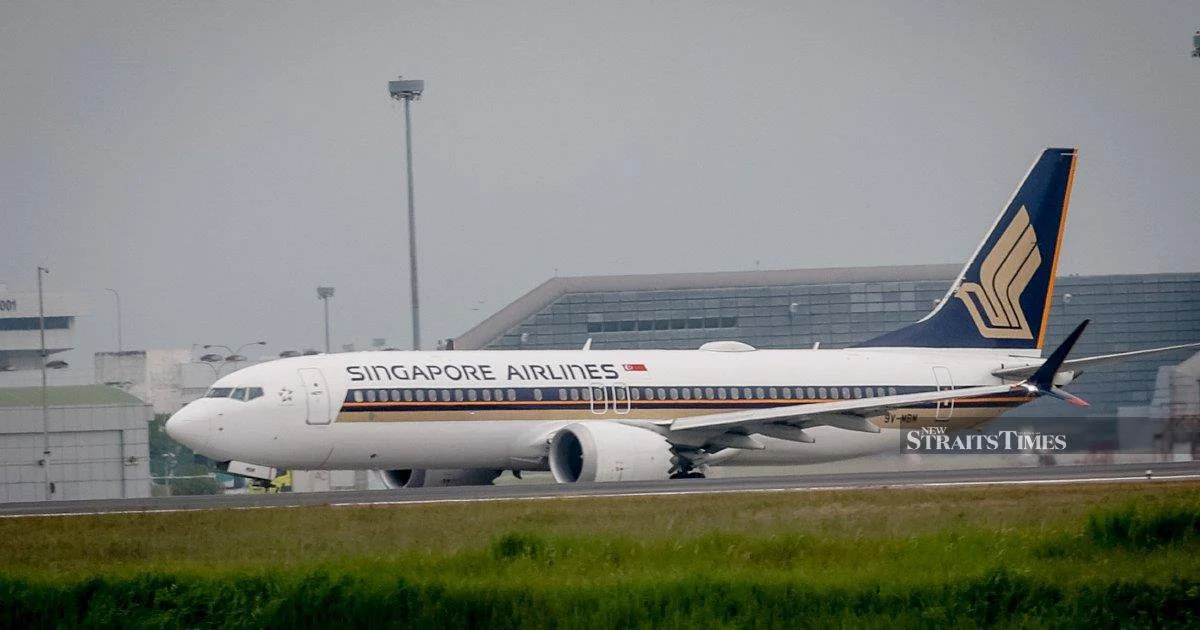
Malaysia Airports Holdings Bhd has set the record straight regarding a Singapore Airlines incident that unfolded last Sunday, establishing that the tyre malfunction occurred not upon the aircraft's touchdown at Kuala Lumpur International Airport, but rather during the aircraft's departure sequence from Singapore. The clarification represents an important correction to initial reports that suggested the problem emerged at Malaysia's busiest aviation hub.
The distinction carries practical significance for understanding the flight's operational timeline and the respective jurisdictions involved in managing the incident. When a tyre issue develops at the departure airport, Singapore's aviation and ground handling authorities would bear primary responsibility for investigation and remediation. This differs markedly from scenarios where technical problems develop mid-flight or during landing procedures at destination airports, which would typically fall under the jurisdiction and accountability frameworks of the landing airport's operator.
Singapore Airlines, one of Asia's most respected carriers and a regular operator on regional routes including the Singapore-Kuala Lumpur corridor, maintains stringent aircraft maintenance protocols. The fact that departure procedures in Singapore identified or triggered the tyre issue suggests that either pre-flight checks detected an anomaly, or the problem manifested during the initial stages of takeoff preparation. Either scenario demonstrates the effectiveness of systematic ground checks in identifying potential safety concerns before aircraft become airborne.
The incident underscores the critical importance of the handoff procedures between airlines and ground service providers at each airport. Ground handling teams in Singapore, working with SIA's maintenance personnel, would have addressed the tyre condition according to standard protocols before permitting the aircraft to proceed to Kuala Lumpur. This systematic approach to aircraft safety has been fundamental to Southeast Asian aviation's strong safety record and public confidence in regional carriers.
For MAHB and Kuala Lumpur International Airport, the clarification removes any implication that aircraft arriving at KLIA had encountered technical difficulties during their approach or landing sequence. The airport operator's swift public statement reflects the transparency increasingly expected from major aviation authorities in the region. In Malaysia's aviation sector, where KLIA serves as the primary gateway for international traffic and a hub for regional connections, maintaining clear communication about operational incidents helps sustain passenger confidence and operational efficiency.
The tyre issue, while perhaps not uncommon in aviation operations given the extreme stresses that aircraft landing gear endures, highlights the routine technical challenges that ground handlers and airline engineers manage daily across Southeast Asian airports. Modern aircraft systems typically feature multiple redundancies and monitoring systems designed to detect and alert crews to tyre conditions before they pose safety risks. The fact that the incident was managed without disruption to passenger safety or significant operational disruption speaks to the robustness of contemporary aviation safety systems.
For regional carriers operating high-frequency routes between major Southeast Asian hubs like Singapore and Kuala Lumpur, managing technical issues efficiently is essential to minimizing schedule disruptions and maintaining connectivity. Singapore Airlines' operations between these two cities represent some of the world's densest short-haul air service, meaning that even brief delays ripple through connecting passenger networks and subsequent flight schedules. The early identification of the tyre condition in Singapore therefore proved beneficial in preventing compounding delays downstream.
The incident also illustrates the interconnected nature of aviation operations across Southeast Asia's open skies framework. Technical issues at one airport inevitably affect operations across the region's network, making transparent communication and clear delineation of responsibility essential for maintaining coordinated responses. MAHB's prompt clarification demonstrates the region's commitment to operational transparency and professional communication standards in aviation matters.
For passengers traveling on Southeast Asian airlines, such incidents usually remain entirely invisible, managed through routine maintenance and engineering procedures that occur between scheduled services. The robust safety frameworks underpinning regional aviation mean that technical issues like the SIA tyre incident are identified, reported, and resolved through established protocols that prioritize passenger welfare above all other considerations. Understanding that such matters are handled systematically at departure airports, rather than creating emergencies at destination airports, reinforces confidence in the professionalism of the region's aviation ecosystem.

