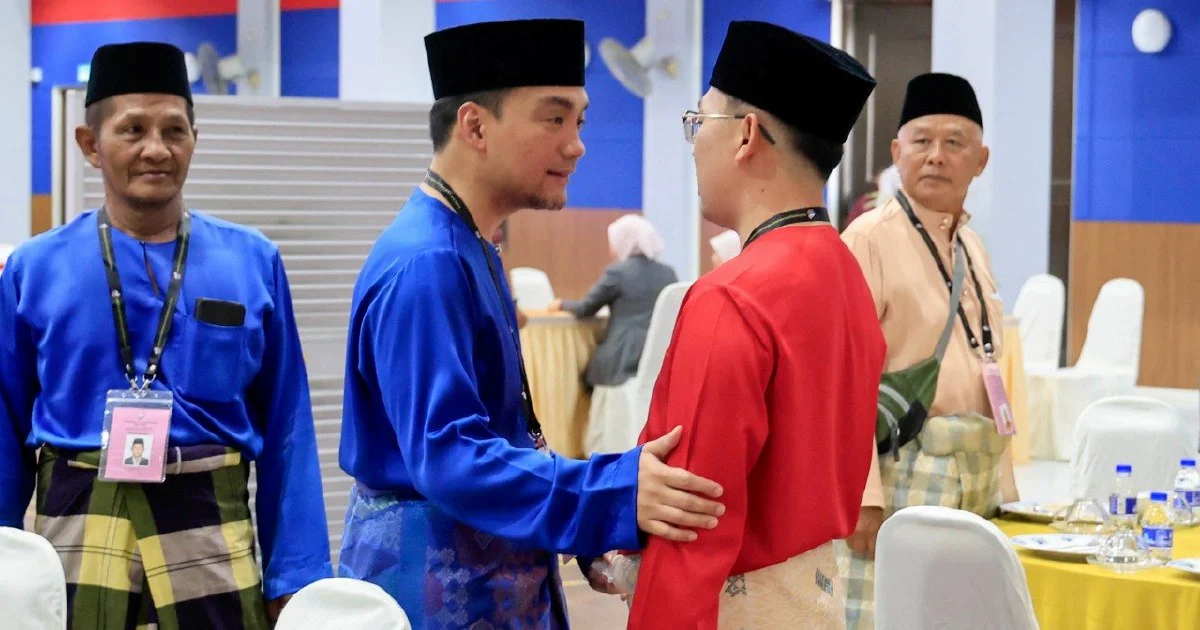
Machap has emerged as one of Johor's most contested constituencies heading into the state elections, with all indications pointing toward a two-way battle between Malaysia's two major political coalitions. The Simpang Renggam area, which forms part of this battleground, reveals a political landscape where both Barisan Nasional and Pakatan Harapan are preparing significant ground efforts to capture this strategically important seat.
The consolidation of this race into a straight fight carries considerable significance for both coalitions. Rather than fragmenting opposition votes across multiple candidates, a direct contest between the camps suggests that negotiations and political positioning have largely concluded, with smaller parties either backing major contenders or stepping aside. This dynamic reflects the maturing political climate in Johor, where electoral mathematics have become increasingly refined and sophisticated.
Barisan Nasional's representation through its candidate reflects the coalition's continued dominance in much of peninsular Malaysia's political establishment. The party's machinery in Johor remains formidable, with deep roots in local communities, established networks of grassroots supporters, and access to considerable organizational resources. The region's historical voting patterns have generally favoured BN-aligned parties, though recent federal election results have shown growing volatility in voter preferences even in traditionally conservative constituencies.
Pakatan Harapan's presence in Machap signals the opposition's determination to expand its footprint in Johor, a state that has remained a crucial testing ground for both coalitions' electoral strategies. The PH-aligned candidate's positioning within this contest reflects broader coalition ambitions to build momentum from recent federal electoral performances. The ability to mount a credible challenge in Machap would provide the opposition with both symbolic and practical gains in what remains a significant political arena.
The nature of this straight fight distinguishes Machap from constituencies where three or more-way contests might dilute voting blocs or create unpredictable outcomes. A binary choice simplifies the electoral narrative, allowing voters to make clearer decisions between competing visions and policies. It also means that voter mobilization efforts become more straightforward, with each coalition able to focus resources on converting persuadable voters rather than managing complex multi-candidate dynamics.
Johor's electoral landscape carries implications extending well beyond the state itself. As one of Malaysia's largest and most populous states, Johor serves as a barometer for broader national political trends. Results from constituencies like Machap often hint at shifts in voter sentiment that may later manifest at the federal level. Both coalitions will be watching performance in this seat closely as an indicator of their competitive strength in the region and nationally.
The consolidation of support around two main candidates also reflects the maturation of Malaysian electoral politics post-2018. Rather than seeing fragmentation of anti-establishment sentiment or defection to new parties, voters in key constituencies have largely coalesced around established coalitional frameworks. This suggests that despite considerable political turbulence at the national level, state-level voters are inclined toward choices between clearly defined political options rather than experimental alternatives.
For Machap voters specifically, the two-candidate format presents a choice between distinct organizational and policy approaches. BN's institutional depth and historical experience in governance contrasts with PH's reform agenda and promises of political renewal. The specific track records and personal qualities of the candidates fielded—Onn Hafiz for BN and Nur Hafiz for PH—will undoubtedly feature prominently in local campaigns, with both figures likely presenting themselves as best-positioned to serve their constituencies' immediate interests and development needs.
The campaign environment in Machap will likely emphasize local bread-and-butter issues alongside broader state and national concerns. Infrastructure development, economic opportunities for residents, healthcare and education provision, and community development initiatives typically dominate voter priorities in constituencies across Johor. Both campaigns will need to articulate how their candidate and coalition can deliver tangible improvements in residents' daily lives, moving beyond purely ideological arguments to demonstrate concrete competence and commitment.
Monitoring this contest provides valuable insight into the political health and preferences of Johor's electorate. A decisive victory for either side would signal clear voter preference, while a closer result might suggest an evenly divided constituency where localized factors and candidate appeal prove decisive. The campaign momentum and on-ground sentiment in Machap will offer early indicators of how the broader Johor election is trending as polling day approaches.
The straight fight format in Machap ultimately reflects confidence from both BN and PH in their respective candidates' viability and their own organizational capacity to mobilize voters effectively. Rather than perceiving the prospect of a two-way contest as disadvantageous, both coalitions evidently assess their position as sufficiently strong to compete head-to-head in this pivotal constituency.

