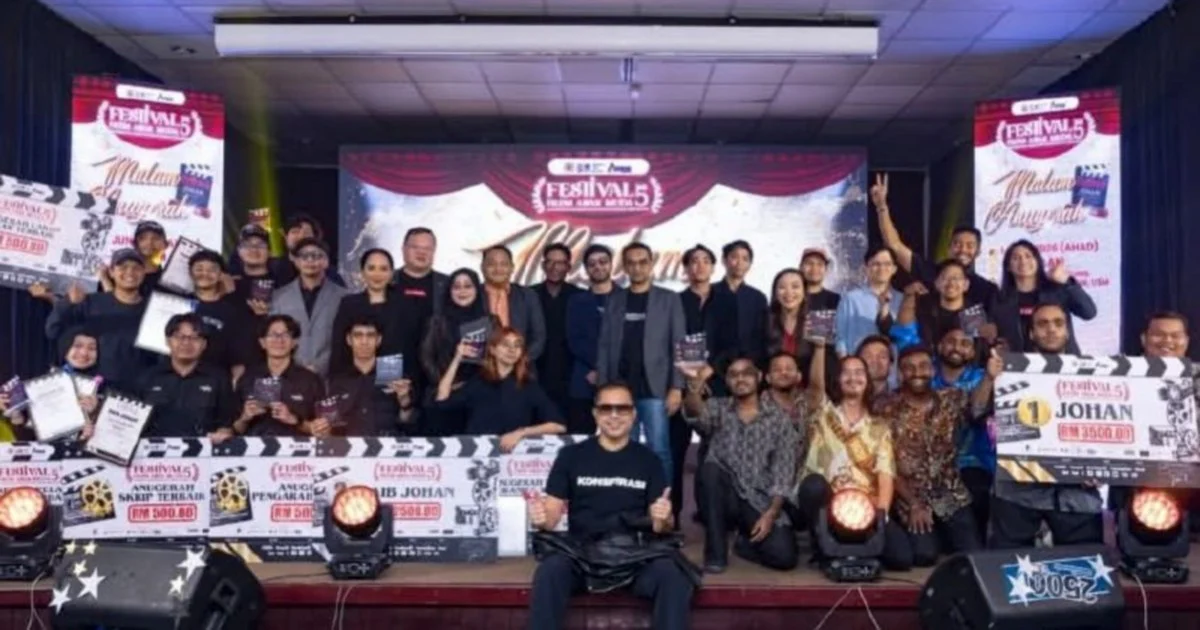
The Malaysian Anti-Corruption Commission (MACC) is expanding its reach into Malaysia's creative industries by joining forces with Universiti Sains Malaysia to amplify anti-corruption messaging through the 5th Youth Film Festival (FFAM) in Penang. The partnership reflects a growing recognition within Malaysia's institutional oversight agencies that traditional enforcement methods alone prove insufficient in cultivating a culture of integrity among younger generations who increasingly consume content through digital and creative mediums.
This strategic positioning of MACC within the youth film festival ecosystem signals a deliberate shift in how the country's corruption-fighting body communicates its mission. Rather than relying solely on prosecution statistics or institutional announcements, the commission recognises that engaging filmmakers, producers, and young creatives offers a more resonant pathway to embedding anti-corruption values into the consciousness of Malaysia's under-30 demographic. Film festivals dedicated to youth participation create natural conduits for values-driven storytelling that can influence attitudes toward corruption and ethical conduct in ways that conventional public awareness campaigns often cannot achieve.
The choice of Universiti Sains Malaysia as the festival venue carries particular significance for Malaysia's educational landscape. USM, as a leading research-intensive institution, represents a hub of creative and critical thinking across the northern region. By anchoring the festival at a major university rather than at a government office or convention centre, MACC positions anti-corruption messaging within an intellectual and creative context that appeals to students and young professionals who view the university as a space for innovation and social discourse.
Youth film festivals serve as incubators for emerging talent and provide filmmakers with opportunities to explore socially relevant themes through their craft. By integrating anti-corruption messaging into this environment, MACC taps into the creative energy and idealism that characterises young filmmakers who are often motivated by desires to effect social change. The commission's involvement signals that corruption is not merely a law enforcement issue but a cultural and ethical challenge that demands creative exploration and public conversation.
Malaysia's governance landscape has undergone significant transformation in recent years, with growing public discourse surrounding corruption, accountability, and institutional reform. The MACC's involvement in cultural and educational initiatives reflects the agency's understanding that sustainable anti-corruption infrastructure requires deep societal buy-in. Young people who grow up internalising anti-corruption values through multiple channels—classroom education, family reinforcement, and now through engaging cultural products—are more likely to become citizens and professionals committed to ethical conduct throughout their careers.
The positioning of film as a medium for anti-corruption messaging also acknowledges the shift in how information circulates within Malaysia's media ecosystem. Younger audiences increasingly engage with content through platforms centred on entertainment and creativity rather than through formal institutional channels. A compelling film exploring corruption's ripple effects throughout a community or organisation may reach and persuade far more young people than a government publication or press release ever could. This recognition reflects international best practices in institutional communication and values-building.
The Penang location for the festival holds regional importance for Southeast Asia's creative economy. Penang has emerged as a growing hub for creative industries and technology ventures, attracting young talents from across Malaysia and the broader region. By situating the festival in this innovation-focused state, MACC potentially influences not only Malaysian youth but also young creatives from neighbouring countries who participate in or follow the festival's proceedings and outcomes.
The collaboration between a law enforcement agency and a university-based arts festival also models the kind of cross-sectoral partnerships that Malaysia increasingly recognises as essential for tackling complex social challenges. Rather than viewing universities, creative industries, and government agencies as operating in separate spheres, this initiative demonstrates how these institutions can amplify each other's missions. Universities gain institutional support for major cultural events, MACC gains access to credible channels for values communication, and young filmmakers gain exposure and institutional validation for exploring socially significant themes.
The 5th iteration of the Youth Film Festival suggests this initiative has evolved beyond a one-off experiment into an established and potentially expanding program. The willingness of MACC to participate at multiple iterations indicates institutional commitment to embedding anti-corruption values within Malaysia's creative culture. As Malaysia continues to strengthen its governance frameworks and combat entrenched corruption patterns, building generational support for integrity becomes as strategically important as legislative reform or investigative capacity. The festival partnership represents a recognition that the next wave of Malaysia's leaders—whether in business, public service, or civil society—will be shaped in part by the cultural values and ethical frameworks they encounter during their formative years.