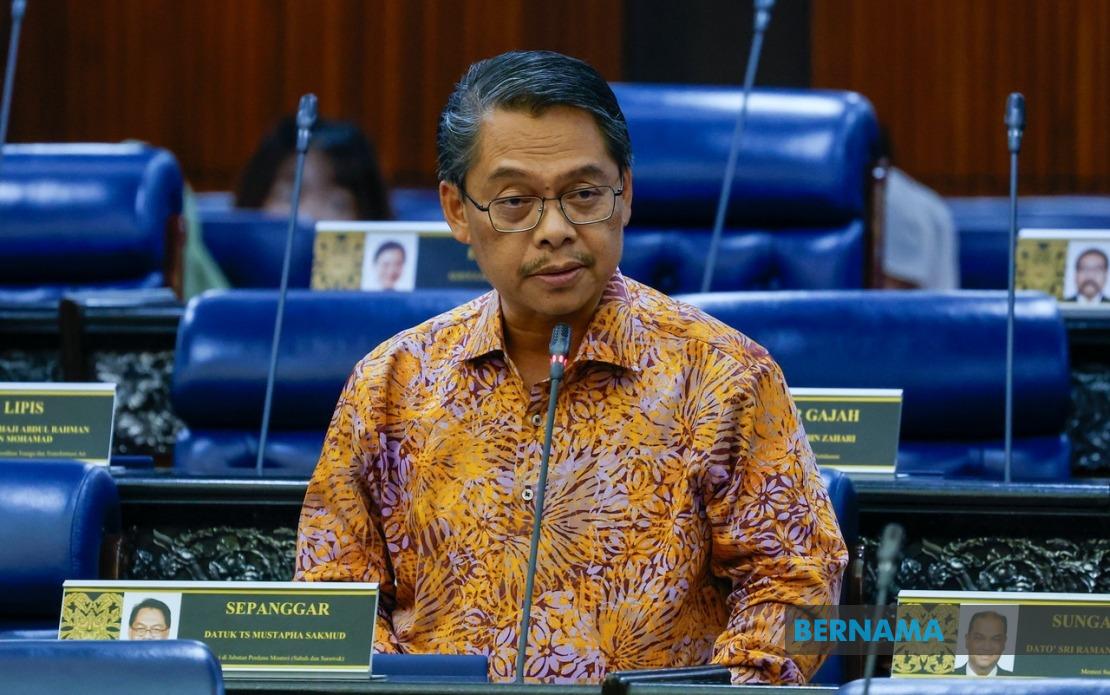
The long-running dialogue aimed at implementing the Malaysia Agreement 1963 (MA63) has reached a notable milestone, with the federal government confirming that roughly half of the disputed matters have now been settled through dedicated negotiation channels. Minister in the Prime Minister's Department (Sabah and Sarawak Affairs) Datuk Mustapha Sakmud disclosed in parliament that 13 of the 29 contentious issues have been fully resolved, while a further five have achieved what officials describe as partial or interim resolution following a March 2 meeting of the MA63 Technical Committee. The progress represents incremental but meaningful headway on an accord that continues to shape the constitutional and administrative relationship between Malaysia's federal government and its two East Malaysian states.
The interim resolutions touch on several areas that have long preoccupied policymakers and regional leaders in Sabah and Sarawak. Four of the five matters classified as interim involve the expansion of state public service positions under Article 112 of the Federal Constitution, as well as interconnected policy domains spanning healthcare delivery, educational provision, and the so-called Borneonisation agenda—a framework designed to increase the hiring and promotion of East Malaysian personnel within federal public service posts stationed in the two states. These categories represent some of the most technically complex and politically sensitive terrain within the MA63 negotiations, touching as they do on employment rights, resource allocation, and the degree of autonomy that Sabah and Sarawak can exercise over their own administrative apparatus. The fact that such matters have reached even an interim stage suggests movement on fronts that have historically generated considerable tension.
The remaining 11 unresolved issues are subject to ongoing oversight by the Sabah and Sarawak Affairs Division (BHESS), which functions as the secretariat coordinating discussions between federal authorities and representatives from both state governments. This institutional arrangement underscores the sustained commitment to dialogue, yet the continued stalling of nearly 40 per cent of the outstanding matters points to the structural difficulties that persist. The complexity stems partly from the fact that many MA63 provisions intersect with constitutional provisions that cannot be altered without exceptional parliamentary majorities, creating a bottleneck that transcends ordinary legislative processes.
An especially contentious element of the MA63 discourse centres on parliamentary representation for Sabah and Sarawak. Regional advocates have mounted a sustained campaign to increase the number of parliamentary seats allocated to the two states from their current level, arguing that the existing distribution fails to reflect contemporary demographic realities and that a 35 per cent quota would be more equitable. This demand has gained traction among civil society groups and opposition figures in East Malaysia, who contend that under-representation disadvantages their constituents in federal decision-making. However, Mustapha's response in parliament suggests this particular grievance faces formidable institutional barriers.
The federal minister explained that the question of parliamentary seat allocation remains unresolved and continues to be the subject of discussion, with little prospect of early movement. The chief constraint is procedural: under existing constitutional arrangements, any electoral redelineation exercise—the technical process through which seat boundaries and numbers are adjusted—can only be undertaken by the Election Commission (EC) following the expiration of an eight-year cycle from the previous such exercise. This temporal lock-in mechanism means that even if political consensus were to crystallise around seat redistribution, implementation could not occur until the relevant cycle concludes. Beyond that institutional hurdle lies a more formidable constitutional obstacle: altering the composition of the Dewan Rakyat as prescribed in Article 46 of the Federal Constitution requires a two-thirds supermajority in the lower house. This threshold is significantly higher than ordinary legislation and reflects the framers' intention to insulate electoral architecture from fluctuating parliamentary majorities.
The interplay of these constraints illustrates a persistent challenge in Malaysian federalism: the tension between resolving historical grievances and navigating an inflexible constitutional framework. Sabah and Sarawak, as the two states with the shortest history within the Malaysian federation (having joined in 1963), have consistently argued that the 1963 settlement created unique conditions warranting special constitutional consideration. Yet the federal structure enshrined in Malaysia's founding documents often constrains the executive and legislative branches when attempting to accommodate demands from the periphery. The requirement for two-thirds parliamentary approval represents a deliberate brake on constitutional change, ensuring that such modifications cannot be achieved through narrow partisan advantage alone.
For Malaysian readers and observers across Southeast Asia, the MA63 negotiations carry significance extending beyond technocratic detail. The agreement forms the constitutional bedrock of Malaysia's integration and has spawned recurring debates about the extent to which the federation respects regional autonomy and protects minority interests. The slow pace of resolution on certain matters has occasionally fuelled political friction, with opposition figures and civil society groups in Sabah and Sarawak arguing that insufficient progress reflects insufficient federal commitment to honouring the terms of the original compact. Conversely, federal officials contend that numerous technical and legal hurdles require patient negotiation and that many resolutions do ultimately emerge through sustained dialogue.
The categorisation of certain matters as achieving only interim rather than full resolution also warrants scrutiny. In bureaucratic nomenclature, an interim resolution often represents a middle ground—a framework or principle has been agreed, yet implementation details or subsidiary questions remain outstanding. In the context of the Borneonisation initiative, for instance, interim status might mean that the principle of increasing East Malaysian representation in federal posts has been acknowledged, yet the specific numerical targets, timeline for implementation, and mechanisms for achieving these remain to be finalised. This gradation between full and interim resolution reflects the genuine difficulties of harmonising competing interests across a geographically dispersed federation with distinct regional histories and political traditions.
Moving forward, the protracted nature of these negotiations suggests that further resolution of outstanding matters will likely proceed incrementally rather than through dramatic breakthroughs. The March 2 Technical Committee meeting that yielded the interim resolutions indicates that designated forums for sustained engagement continue to function. However, the political will required to surmount constitutional thresholds—particularly the two-thirds requirement for electoral redistribution—remains uncertain and likely depends on the configuration of political forces in parliament at any given moment. Regional observers in Sabah and Sarawak will continue scrutinising the pace of progress, particularly on matters touching upon employment, resource allocation, and parliamentary representation. The challenge facing federal policymakers is to demonstrate tangible progress on these fronts whilst navigating the institutional constraints that bind them, a balance that remains delicate and subject to evolving political circumstances.

