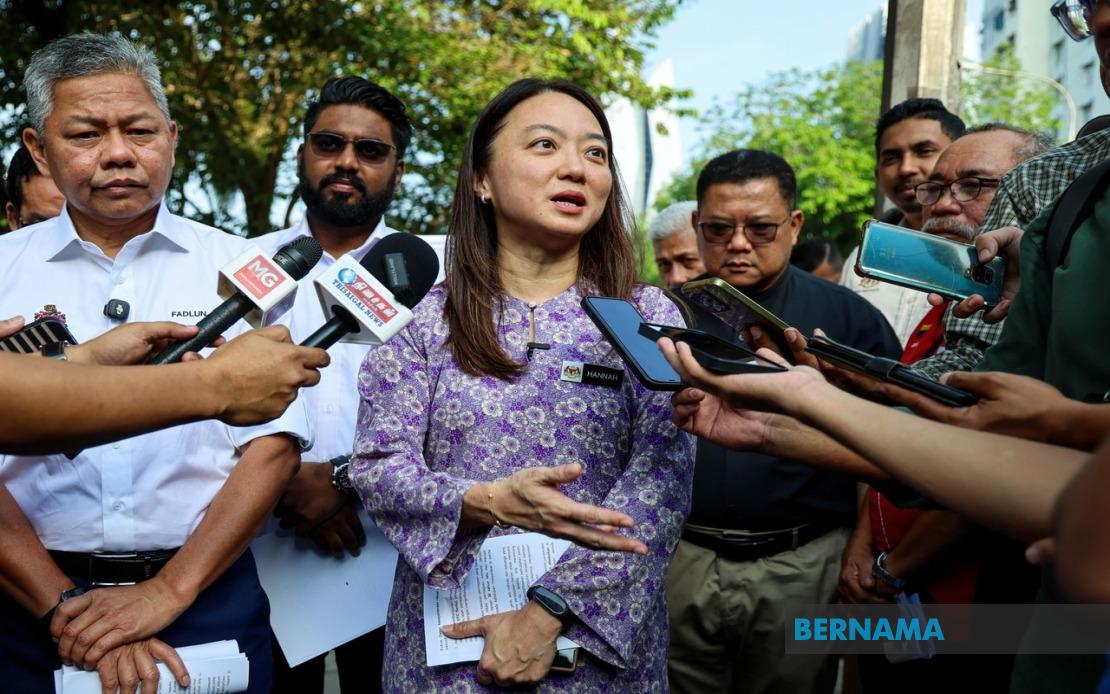
Malaysia's local authorities must take ownership of basic facility maintenance and stop relying on social media outcries to drive action, according to Minister in the Prime Minister's Department (Federal Territories) Hannah Yeoh. Speaking after touring a hawker facilities upgrading project near the Urban Transformation Centre (UTC) Sentul, she emphasised that cleanliness and safety standards should be upheld continuously through proactive management, not reactive responses triggered by online criticism.
The minister's remarks come amid recent complaints circulating on social media regarding malfunctioning lifts and escalators in Putrajaya, a premier destination that attracts both domestic and international visitors. As Malaysia positions itself as a competitive tourism destination across Southeast Asia, the condition of public infrastructure directly reflects national standards and affects visitor experience. For a city that serves as an administrative centre and tourist attraction, facility maintenance failures carry particular significance beyond mere inconvenience, translating into broader perceptions about government efficiency and urban management capabilities.
Hannah stressed that while large-scale upgrade projects may require substantial budget allocations, the fundamentals of routine maintenance present no such barrier. Regular inspections, swift repairs, and consistent upkeep demand organisational discipline rather than exceptional resources. She pointedly noted that local authorities possess neither justification nor excuse for neglecting these essential duties, signalling that the ministry views such lapses as governance failures rather than resource constraints. The distinction matters: it frames maintenance as a matter of commitment and execution rather than budgetary limitation, placing accountability squarely on management shoulders.
Putrajaya Corporation has already initiated repair works following ministerial contact, demonstrating that escalation through formal channels can accelerate response. However, Hannah's broader message targets systemic change across all local authorities nationwide. She urged officials at all levels to conduct frequent site visits and ground-level monitoring, suggesting that physical presence and regular assessment remain irreplaceable tools for identifying and addressing problems before they accumulate or deteriorate further. This emphasis on active supervision reflects international best practices in facility management, where prevention through oversight proves more cost-effective than crisis management.
The minister also addressed the role of social media in amplifying facility complaints, cautioning digital users about context and perspective. She acknowledged that while everyone now possesses the capacity to document and share information instantaneously, such content often captures incomplete snapshots rather than full situations. Video recordings that circulate virally may represent merely 10 per cent of actual circumstances, lacking the broader narrative or contributing factors that professional assessment would reveal. Her message recognises a genuine contemporary tension: social media democratises public accountability but simultaneously risks distorting reality through selective framing.
This tension carries particular relevance in Malaysia's digital landscape, where civic complaints increasingly gain traction through platforms like Facebook, TikTok, and Twitter rather than traditional complaint channels. The viral amplification of facility failures creates pressure on authorities but may also distort priorities by elevating visibility above genuine severity. Hannah's counsel to social media users—to exercise discernment and seek multiple perspectives before amplifying content—suggests that public infrastructure accountability functions optimally when combining both official responsiveness and informed citizen engagement rather than reactive crisis response to trending topics.
Yet the minister's framing also acknowledges legitimate public interest in facility standards. Rather than dismissing social media complaints as inherently distorted, her remarks position them as starting points for investigation rather than complete records. The implicit message to local authorities recognises that public scrutiny, whatever its limitations, serves a valuable function in surfacing problems that might otherwise escape notice within bureaucratic systems. The challenge becomes channeling this scrutiny into sustained improvement rather than treating viral moments as anomalies requiring only temporary response.
For Malaysian and Southeast Asian readers observing these dynamics, the implications extend beyond administrative facilities to broader governance expectations. Across the region, rising urban populations demand improving public services alongside infrastructure expansion. The conversation Hannah initiated reflects evolving citizen expectations: facility maintenance is no longer viewed as occasional attention but as fundamental government responsibility warranting continuous investment and monitoring. This expectation particularly affects tourism-dependent economies where visitor experience directly influences spending and return visits.
The minister's remarks also highlight generational shifts in accountability mechanisms. Traditional complaint channels—letters, physical visits to offices, official petitions—now compete with instant digital documentation and mass sharing capabilities. Government agencies across Southeast Asia increasingly face the reality that poor maintenance becomes evidence of broader incompetence when captured and distributed online. This intensifies pressure on local authorities to maintain higher standards, as failures achieve visibility that previously might have escaped wider attention.
Moving forward, the challenge for Malaysian local authorities involves institutionalising maintenance excellence rather than treating it as crisis response. This requires establishing clear protocols for routine inspection, establishing measurable standards for facility conditions, and creating accountability mechanisms that address problems before viral exposure becomes necessary. Professional facility management increasingly becomes a core competency for urban governance, distinct from the ad-hoc approaches that characterised earlier administrative eras.
Hannah's intervention suggests the federal government recognises that achieving consistent standards across diverse local authorities requires both oversight and capacity building. Different PBTs operate across varying economic and administrative contexts, yet all must meet baseline expectations for public facility maintenance. Supporting weaker authorities with technical guidance, establishing sector-wide best practices, and fostering peer learning may prove more effective than exhortation alone. The comments indicate a growing recognition that facility maintenance quality reflects directly on government legitimacy and citizen satisfaction across Malaysia's federal structure.