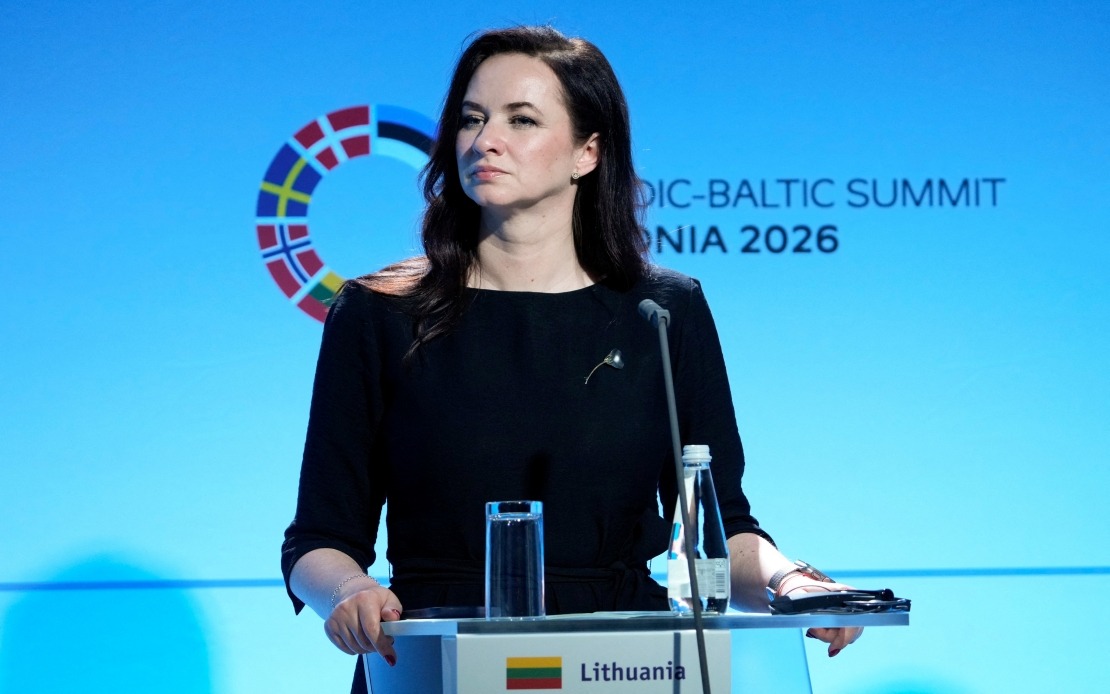
Lithuanian Prime Minister Inga Ruginiene announced the resignation of her government on Tuesday, setting in motion a constitutional process that will lead to the formation of a fresh administration. The departure marks another significant shift within the country's ruling coalition, which has faced considerable turbulence since parliamentary elections held late in 2024. President Gitanas Nauseda formally accepted the resignation and instructed the existing Cabinet to discharge its duties in a transitional capacity until a successor government is established and ready to assume full responsibility.
Under Lithuania's constitutional framework, the president has a 15-day window to propose a candidate for the prime ministerial position. The nominee must then obtain the support of the Seimas, the country's unicameral parliament, to assume office. Once confirmed, the incoming prime minister receives a further 15 days to assemble their Cabinet team and outline the government's policy agenda. An additional 15-day period follows for submission of the complete ministerial lineup to parliament for final approval, a structured timeline designed to ensure stability during transitions of executive power.
Mindaugas Sinkevicius, who chairs the Lithuanian Social Democratic Party, is widely anticipated to receive the presidential nomination. Political analysts and observers across the Baltic nation regard his selection as the most probable outcome, given the party's majority standing in the Seimas and his established leadership within the governing coalition. Should parliament endorse his candidacy, Sinkevicius would lead the third coalition government formed by the Social Democrats since the recent electoral cycle, underscoring the party's continued dominance in Lithuanian politics despite internal tensions and restructuring.
The formation of yet another coalition represents a striking pattern of governmental instability within Lithuania's political system. The outgoing administration, which took office in August of the previous year, itself succeeded the government of Gintautas Paluckas following his resignation. This successive turnover within a single parliamentary term reflects deeper strains within the coalition's working relationship and raises questions about the sustainability of governing partnerships in the current Seimas composition. For observers of Baltic politics, the frequency of reshuffles raises concerns about policy continuity and the capacity of successive administrations to implement long-term strategic initiatives.
Ruginiene's Cabinet conducted its final formal session on Tuesday, during which ministers unanimously approved a resolution formally endorsing the government's resignation. Speaking at this closing meeting, Ruginiene reflected on the outgoing administration's tenure, acknowledging significant accomplishments achieved despite navigating a complex landscape of domestic and international pressures. Her remarks sought to frame the resignation as a planned transition rather than a crisis-driven collapse, emphasizing the government's pride in its record even as coalition dynamics necessitated its replacement.
The timing and circumstances of this resignation warrant examination within the broader context of Lithuania's geopolitical position. As a NATO member state and European Union participant sharing a border with Belarus and proximity to Russia, Lithuania operates within an exceptionally demanding security environment. Any governmental transition occurs against a backdrop of ongoing regional tensions and the imperative to maintain consistent foreign policy positioning. The speed of coalition cycling could complicate Lithuania's ability to project stability to international partners and maintain coherent policy implementation across critical sectors including defence, energy security, and European integration objectives.
For regional observers and governments across Southeast Asia, Lithuanian political dynamics might seem distant. However, the patterns evident in Baltic political structures mirror certain challenges facing coalition governments globally. The difficulty of sustaining multi-party coalitions without chronic instability remains a universal governance problem, particularly relevant to Malaysia and other Southeast Asian democracies where coalition mathematics frequently determine electoral outcomes and governmental durability. The Lithuanian experience offers instructive lessons regarding coalition management, ministerial accountability, and the constitutional mechanisms designed to facilitate orderly transitions.
The incoming Sinkevicius administration, should he secure parliamentary confirmation, will inherit substantial policy challenges spanning economic management, energy diversification away from Russian sources, defence spending commitments within NATO frameworks, and domestic social policy priorities. These responsibilities cannot afford extended periods of governmental uncertainty or policy drift. The constitutional timeline of 45 days from presidential nomination to full Cabinet approval, while providing structured procedure, also compresses the period available for careful selection and vetting of ministerial candidates and development of coherent policy platforms.
The caretaker status of the existing government during this transition period requires careful calibration of authority and responsibility. While routine administrative functions must continue, substantial new initiatives or decisions of major consequence typically await the new government's formation. This interim arrangement seeks to maintain governmental functioning while respecting the democratic principle that significant policy directions should emerge from elected representatives working within freshly constituted administrations with clear mandates and parliamentary support.
Lithuania's coalition instability also reflects broader pressures within European political systems. The fragmentation of traditional party structures, the emergence of newer political forces, and shifting voter preferences have complicated coalition-building across the continent. Small nations like Lithuania, where parliamentary mathematics often require coalition arrangements between parties with divergent policy preferences, face particular challenges in maintaining stable governing arrangements. The resolution of these tensions through successive reshuffles rather than early elections suggests a determination to work within existing parliamentary configurations rather than risk further electoral contests.

