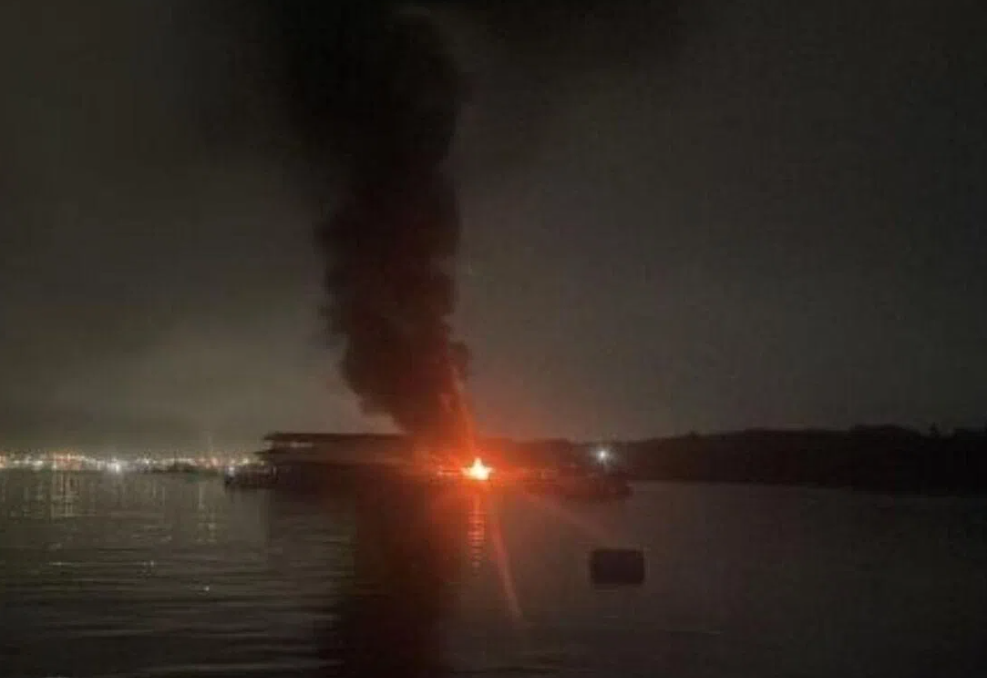
Emergency responders in Singapore faced a challenging maritime firefighting operation on June 24 when a blaze erupted at floating fish farming facilities anchored near Pulau Ubin. The Singapore Civil Defence Force received the alert at approximately 8.10pm and launched an extended battle to contain and extinguish the flames that would ultimately engulf at least two separate farms before being brought under control. No injuries were recorded during the incident, though the financial and operational toll proved considerable for the farming community operating in these waters.
Investigators have identified a suspected lightning strike as the likely cause of the fire, with evidence pointing toward the impact hitting solar panels installed on one of the floating installations. This preliminary assessment aligns with patterns of weather-related damage in the region, where monsoon thunderstorms periodically threaten maritime operations and offshore installations. The fire then propagated to at least two adjacent farms, creating a complex multi-site emergency that demanded coordinated response from several agencies and the voluntary assistance of nearby aquaculture operators.
The affected facilities operate from moorings off the Lorong Halus jetty in the Pasir Ris area, positioning them in close proximity to Pulau Ubin and Pulau Ketam. This location places them within Singapore's intensively managed marine zone, where floating farms represent an increasingly important component of the nation's food security strategy. The accessibility of the site to maritime rescue services and its position relative to other operational farms made both the emergency response and containment efforts feasible, though not without significant challenges posed by the aquatic environment.
One farm owner estimated losses reaching S$120,000 from the incident, a substantial blow to an operation that depends on consistent productivity and minimal disruption. The financial damage extended beyond simple equipment replacement, as the owner revealed an inability to pursue insurance claims for the losses sustained. This exposure illustrates vulnerabilities within the aquaculture sector regarding weather-related risk management and the often precarious insurance arrangements available to small and medium-scale farming operations in maritime environments.
The owner's account of previous lightning damage to the solar panels, which had been addressed quickly by on-site workers in prior incidents, underscores a critical difference in outcome when staffing levels change. The absence of workers during this particular strike meant that initial suppression efforts could not commence immediately, allowing the fire to establish and spread across multiple installations. This highlights operational considerations that extend beyond mere presence of personnel, touching on the balance between staffing costs and disaster prevention capabilities in round-the-clock agricultural operations.
The physical destruction inflicted by the fire encompassed the core infrastructure and assets necessary for functioning aquaculture. Damaged items included fish feed supplies, backup generators, the aforementioned solar panels, a fishing vessel, and multiple fish traps critical to daily operations. The loss of fishing nets created an additional catastrophic consequence: approximately half of the farm's entire fish stock escaped during the incident, representing both an immediate loss of inventory and potential ecological implications should the escapees establish themselves in surrounding waters.
The emergency response demonstrated the multi-agency coordination characteristic of Singapore's maritime safety protocols. The Maritime and Port Authority of Singapore deployed marine vessels to the scene, while the Airport Emergency Service contributed firefighting capability and resources. Beyond official agencies, neighbouring fish farm operators recognised the threat to their own installations and voluntarily participated in containment efforts, reflecting the cooperative ethos that often emerges among farming communities facing shared environmental hazards.
For Malaysia and Southeast Asia more broadly, this incident carries implications for aquaculture development and resilience planning across the region. Floating fish farms have proliferated throughout Southeast Asian waters as nations pursue food security objectives and develop blue economy initiatives. However, incidents like this one reveal gaps in protective infrastructure, insurance availability, and emergency preparedness specific to offshore farming operations. As climate patterns potentially intensify severe weather events, the vulnerability of distributed farming assets to lightning strikes and storms demands regional attention.
The reliance on solar power for offshore installations, while environmentally progressive, introduces new vulnerabilities to electrical damage and fire risk that traditional farm infrastructure did not present. Lightning protection systems and surge suppression technology designed specifically for maritime aquaculture environments remain inadequately developed or implemented across much of Southeast Asia. The incident thus serves as a practical case study in the technological and operational requirements for scaling sustainable aquaculture in increasingly crowded offshore zones.
Singapore's Fish Farmers Association and the Singapore Food Agency have been approached for additional context and potential policy responses, reflecting recognition that single incidents can catalyse sectoral improvements and regulatory evolution. The June 24 fire will likely prompt discussion among industry stakeholders regarding mandatory safety equipment, insurance frameworks, and operational protocols for floating farms. Such conversations resonate across the region, where similar facilities operate in comparable environmental and regulatory contexts.
The incident ultimately demonstrates both the opportunities and fragilities inherent in maritime food production. While floating aquaculture represents an innovative response to land scarcity and food security pressures throughout Southeast Asia, operational realities—from weather exposure to insurance gaps to workforce management challenges—remain substantial. Policymakers and industry participants across the region will benefit from learning how Singapore's farming community addresses these vulnerabilities, particularly as offshore aquaculture continues expanding as a cornerstone of regional agricultural strategy.

