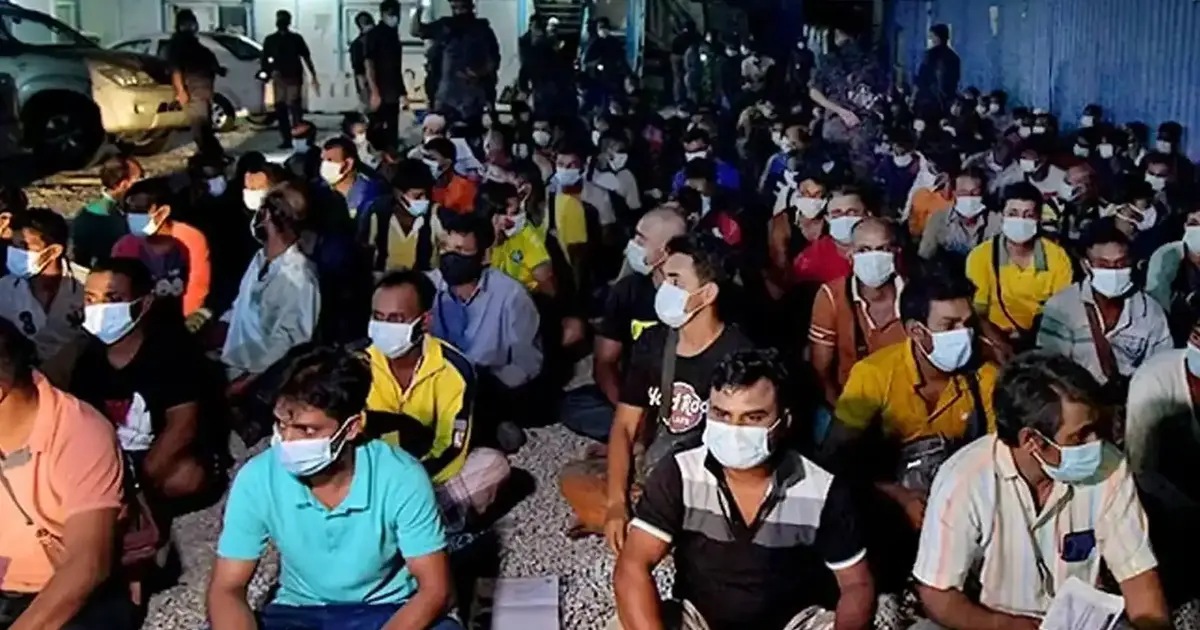
A prominent Malaysian economist has raised alarm over the mounting barriers preventing the rollout of refugee employment initiatives across the country, pointing to an absence of coherent policy architecture and the cautionary tale of a stalled pilot project from 2017. Yea Kim Leng's assessment underscores how ambitious humanitarian employment schemes can falter when confronted by the interplay of bureaucratic constraints and community-level resistance, an especially relevant concern as Malaysia grapples with hosting over 180,000 registered refugees and asylum seekers.
The lack of a comprehensive legal framework represents perhaps the most formidable obstacle to formalising refugee labour integration. Unlike neighbouring Thailand or Indonesia, which have crafted more explicit protocols governing non-citizen employment, Malaysia's existing labour laws remain largely silent on refugee work rights, leaving policymakers navigating unclear territory between humanitarian obligations and domestic labour protection standards. This legislative vacuum creates uncertainty for both employers considering hiring refugees and government agencies tasked with implementation, thereby stalling momentum that might otherwise exist for such programmes.
Yea Kim Leng's reference to the 2017 pilot initiative carries particular weight, as that experiment attempted to test refugee employment viability in controlled settings before wider adoption. The failure of that scheme to translate into sustained policy reveals the depth of institutional and political challenges at play. Rather than merely representing a technical setback, the project's collapse suggested fundamental disagreements within government on the desirability and mechanics of formalising refugee work, disagreements that remain unresolved today.
Local resistance represents the second pillar of opposition that economists and policymakers cannot dismiss. Communities in Malaysia have historically expressed anxiety over employment competition, particularly among lower-skilled workers already contending with wage pressures and job scarcity. Trade unions and worker advocacy groups have occasionally mobilised against refugee employment proposals, framing them as potential threats to citizen job opportunities. This grassroots sentiment, while sometimes rooted in economic anxiety rather than empirical evidence, carries political weight that elected officials must navigate carefully.
The absence of public communication campaigns explaining the rationale and safeguards surrounding refugee employment has exacerbated local apprehension. When government fails to articulate clearly how such schemes would protect Malaysian worker interests through wage floors, sectoral restrictions, or skills-matching mechanisms, suspicion naturally fills the void. Manufacturing consent for refugee employment initiatives requires sustained dialogue demonstrating how formalisation might actually reduce informal competition and underground labour markets.
International evidence from countries that have successfully integrated refugees into labour markets suggests that targeted programmes focusing on skills-mismatch sectors—such as healthcare, agriculture, and construction—encounter less resistance than blanket employment schemes. Malaysia's specific labour market dynamics, characterised by particular sectoral gaps and demographic pressures, might support similarly tailored approaches. However, designing such nuanced policy requires precisely the kind of inter-agency coordination and stakeholder consultation that institutional fragmentation prevents.
The humanitarian dimensions of this impasse warrant consideration alongside economic concerns. Refugees in Malaysia, lacking formal work permits, often resort to informal or illegal employment at substantially lower wages and under exploitative conditions. Paradoxically, preventing legal refugee employment may increase vulnerability rather than protecting Malaysian workers, as underground labour markets operate without wage or safety protections benefiting anyone. Yea Kim Leng's analysis implicitly suggests that the current status quo—where many refugees work informally anyway—represents the worst possible outcome for both refugee welfare and Malaysian labour market integrity.
Governance challenges extend beyond legislative gaps to encompass institutional capacity and coordination. Multiple agencies potentially hold stakes in refugee policy—the Immigration Department, the Ministry of Human Resources, the Health Ministry, and local governments—yet clear delineation of responsibilities and streamlined decision-making mechanisms remain underdeveloped. This fragmentation means that advancing any employment proposal requires navigating bureaucratic silos, a process that typically outlasts political cycles and individual champions.
Regional context provides additional perspective on Malaysia's apparent paralysis. Other Southeast Asian nations hosting substantial refugee populations, while not universally embracing refugee employment, have at least conducted feasibility studies or established clearer legal parameters for discussion. Malaysia's relative inaction suggests not merely technical difficulties but deeper political hesitation about endorsing refugee economic integration, possibly reflecting broader anxiety about national sovereignty and cultural cohesion.
The path forward likely requires simultaneous action across multiple fronts: legislative reform creating explicit frameworks, targeted pilot schemes in sympathetic sectors with built-in protections, sustained public communication addressing legitimate worker concerns, and interagency coordination establishing clear implementation pathways. Yea Kim Leng's diagnosis points toward the urgency of such comprehensive approaches. Leaving refugee employment frozen in legal ambiguity while communities simmer with unaddressed concerns guarantees continued failure, potentially for years to come.

