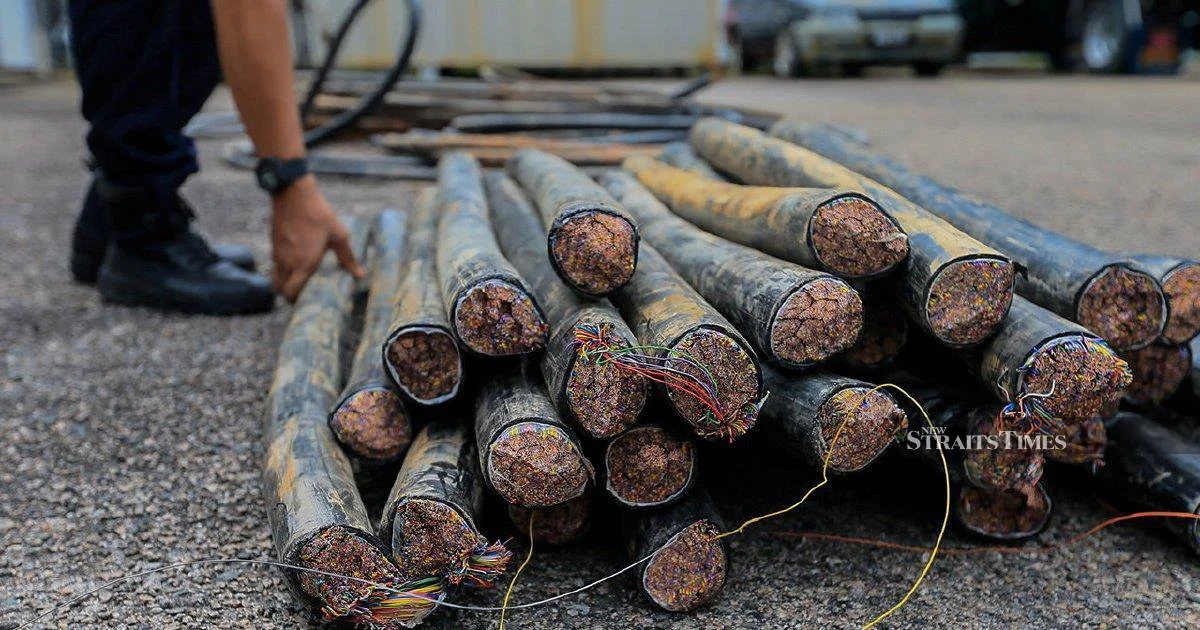
The Kuala Lumpur police force has made significant progress in combating the persistent problem of cable theft, which has plagued the capital for years. Early indications for 2024 paint an encouraging picture, with law enforcement agencies recording only 71 incidents of cable theft between January and May—a sharp decline from the 205 cases documented throughout the entirety of 2023. This reduction represents a substantial turnaround in an issue that has previously ranked among the city's more vexing crime categories, affecting critical infrastructure and disrupting essential services across the urban landscape.
The enforcement effort has been bolstered by heightened police vigilance and targeted operations aimed at disrupting criminal networks involved in the theft and trafficking of electrical cables. To date in 2024, authorities have arrested 85 suspects connected to cable theft activities, signalling a more aggressive approach to both prevention and prosecution. These arrests reflect a deliberate strategy to tackle the problem at multiple levels, from street-level thieves to organised groups involved in the acquisition and sale of stolen materials. The sustained pressure on perpetrators appears to be yielding tangible results, though sustaining this momentum will require continued commitment and resources.
Cable theft has long represented more than a simple property crime in Kuala Lumpur and other Malaysian cities. The illicit removal of copper and aluminium cables disrupts telecommunications networks, interferes with power distribution systems, and compromises security infrastructure. Businesses and residents have endured repeated service interruptions caused by theft-related damage, incurring substantial economic costs through downtime and repair expenses. In some instances, cable theft has created genuine safety hazards, leaving exposed electrical lines or creating structural vulnerabilities in buildings and public facilities. The crime has particularly affected outlying areas and industrial zones, where monitoring and security presence has traditionally been lighter.
Police attribute at least a portion of the improvement to increased patrols in high-risk areas and enhanced coordination with private sector security providers who manage critical infrastructure assets. Joint operations with utility companies have enabled faster response times when thefts are reported, allowing officers to secure crime scenes and pursue suspects more effectively. Intelligence-gathering efforts targeting known offenders and disposal networks—the informal channels through which stolen cable is sold to scrap dealers and recyclers—have also contributed to disrupting the supply chain that makes cable theft economically viable for criminals. The identification and prosecution of receivers of stolen goods represents an underutilised but potentially powerful deterrent.
The financial incentive driving cable theft remains substantial. Copper and aluminium cables command respectable prices in the scrap metal market, and the relative ease of removing cables from many locations—particularly in less developed areas or properties with inadequate security—has made this crime attractive to opportunistic offenders and organised theft rings. Economic desperation, combined with the minimal technical skill required for basic cable removal, has ensured a steady supply of potential perpetrators. However, the increased likelihood of arrest and consequences appears to be shifting the risk-reward calculation for would-be thieves, suggesting that visible enforcement does matter in deterring such crimes.
The implications of the cable theft decline extend beyond crime statistics. Improved cable security and reduced theft incidents support Malaysia's broader infrastructure stability and economic functionality. Telecommunications companies can invest more confidently in network expansion, power utilities can operate with greater reliability, and businesses can plan operations with fewer unexpected disruptions. For ordinary residents, fewer cable thefts mean more consistent access to electricity and communications services, directly affecting quality of life in a densely populated urban environment like Kuala Lumpur. The economic externalities of reduced cable theft—though difficult to quantify precisely—likely exceed the direct value of the stolen materials themselves.
Looking forward, the challenge for police and relevant authorities will involve maintaining this improved trajectory without allowing complacency to erode recent gains. Criminal enterprises typically respond to enforcement pressure by adapting their methods, finding new targets, or shifting their operations to areas with weaker security presence. Some offenders apprehended in recent months may have simply relocated their activities to neighbouring states or districts rather than ceasing theft operations entirely. Sustained inter-agency cooperation, continued intelligence work, and public awareness campaigns about the seriousness of cable theft will be necessary to solidify current progress. The positive trend observed in the first half of 2024 provides a foundation upon which to build, but represents neither a permanent solution nor grounds for reduced vigilance by law enforcement.

