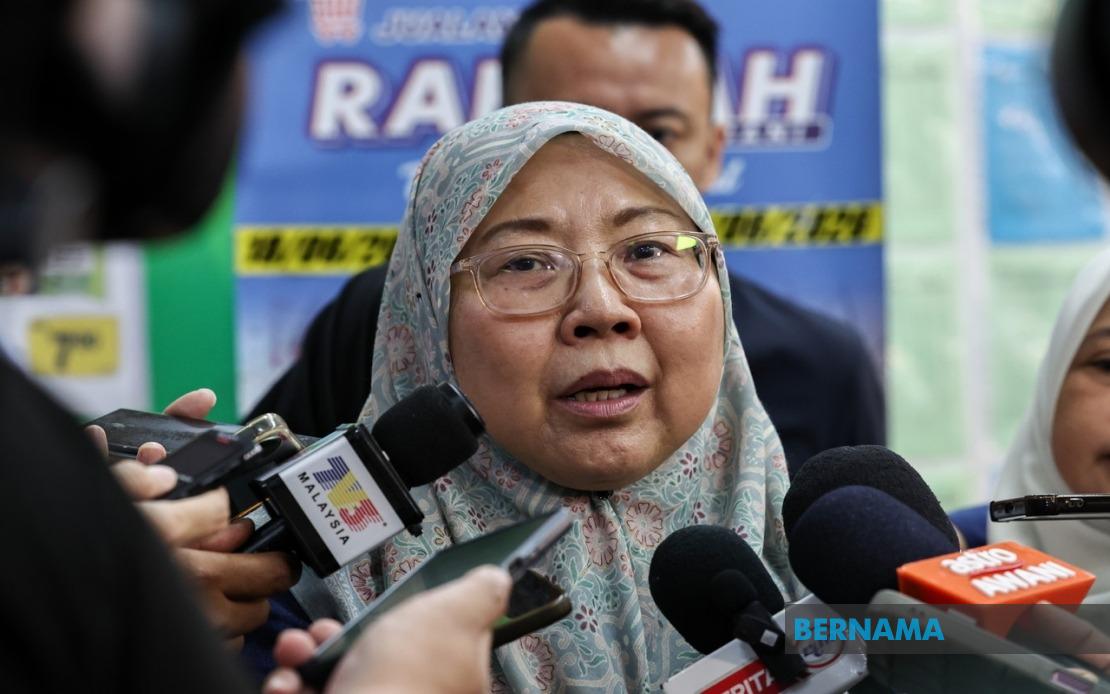
The Malaysian Ministry of Domestic Trade and Cost of Living has moved to reassure consumers that essential commodities will remain adequately stocked in Johor and Negeri Sembilan during the forthcoming state elections, even as international shipping costs surge due to ongoing conflicts affecting supply routes from Western Asia. Deputy Minister Datuk Dr Fuziah Salleh outlined the government's strategy to maintain market stability during what officials expect will be a period of heightened demand from election officials and visitors travelling into the affected states.
Global disruptions to maritime trade have created headwinds for Malaysia's logistics sector in recent months, raising the cost of imports and potentially threatening the smooth flow of goods into regional markets. Rather than allowing these external pressures to disrupt domestic supply chains, the ministry has undertaken a comprehensive review of distribution mechanisms and inventory management systems. The focus is particularly sharp on subsidised items that form the backbone of cost-of-living support programmes, where any shortage could generate public dissatisfaction at a politically sensitive moment.
At the heart of the ministry's response is a restructured distribution system for subsidised cooking oil that fundamentally alters how the product reaches Malaysian households and retailers. Under the new arrangement, repackers now deliver directly to points of sale, bypassing the traditional wholesaler intermediaries that previously dominated the supply chain. This streamlined approach reduces handling steps and potential bottlenecks while maintaining the government's price subsidies. For Johor, the monthly allocation stands at more than 3,000 metric tonnes, managed by a network of 18 repackers feeding into 95 designated sales points, including major retail chains such as Econsave supermarkets.
The direct repackager-to-retailer model reflects broader lessons learned from previous supply disruptions across Southeast Asia, where intermediate layers in supply chains have historically proven vulnerable to logistical shocks. By tightening the chain, the ministry gains greater visibility over inventory levels and can respond more swiftly to emerging bottlenecks. Deputy Minister Salleh's inspection of an Econsave outlet in Taman Daya provided tangible reassurance, with approximately 100 cartons of subsidised cooking oil available daily at that single location, suggesting the system is functioning as intended.
Beyond simply ensuring adequate quantity, the government has implemented stricter verification procedures at the point of sale to ensure that subsidised goods benefit only Malaysian citizens. Checkout protocols now require either mobile app verification or identification card scanning, creating a digital or biometric trail that prevents the redirection of heavily subsidised items to unauthorised purchasers or informal resellers. Such leakage has historically been a concern in subsidy programmes across the region, where price differentials between subsidised and open-market goods can incentivise diversion to neighbouring countries or black markets.
The broader Rahmah MADANI Sales Programme, of which cooking oil is merely one component, has demonstrated considerable reach across the nation. Between the start of 2026 and mid-June, the programme executed 13,692 events nationwide, with Johor alone hosting 920 sessions spanning all 56 state constituencies. These grassroots market activations drew 2.3 million visitors to Johor events and generated more than 1.46 million transactions, suggesting that the government's cost-of-living relief initiatives are penetrating deep into community networks. The scale of these figures indicates that the subsidised goods programmes extend well beyond mere statistical exercises, functioning as genuine mechanisms of household income support.
The timing of these assurances carries distinct political weight. Johor will hold its state elections on July 11, with early voting scheduled for July 7 and candidate nominations set for June 27, leaving the ministry approximately two weeks to demonstrate supply stability. The state has historically been a bellwether for broader political sentiment in Malaysia, making any disruption to consumer goods availability during the campaign period a potential liability. By publicly staking its credibility on supply continuity, the government signals confidence in its preparedness and implicitly challenges opposition parties to demonstrate alternative solutions were they to take office.
The emphasis on proactive measures reflects awareness within the ministry that election periods can create genuine supply pressures. Poll workers, election observers, security personnel, and visiting officials converge on electoral hotspots, increasing local demand for accommodation, food, fuel, and other essentials. Additionally, some voters may rush to stockpile goods ahead of perceived post-election price adjustments, creating artificial spikes in demand. By positioning its distribution network to absorb such surges, the government attempts to prevent the kind of shelf-emptying that can damage public confidence in stability.
For Malaysian and Southeast Asian observers of supply chain policy, this episode illustrates how advanced economies are adapting subsidy administration to contemporary challenges. Rather than retreat from price supports amid global cost pressures, Malaysia is instead innovating the delivery mechanisms, leveraging digital verification and network restructuring to improve efficiency. This contrasts with some neighbouring approaches that have simply rationed subsidies or allowed selective scarcity, which can breed resentment and perceived inequality.
The geopolitical dimension should not be overlooked. Disruptions to shipping lanes through Western Asia directly affect Malaysia's import-dependent economy, particularly for commodities like cooking oil where domestic production cannot satisfy national demand. By developing redundancy and flexibility in distribution systems now, the ministry builds resilience that will outlast the current election cycle. Southeast Asian policymakers generally face similar supply vulnerabilities, making Malaysia's technical solutions potentially replicable across the region.
While the government's assurances appear supported by concrete operational details, the ultimate test will arrive in the weeks following the election, when any logistical vulnerabilities left unaddressed would become apparent. The ministry has positioned itself transparently, naming specific tonnage quotas, repacker numbers, and point-of-sale locations. Such specificity creates accountability but also an implicit invitation for media and opposition monitors to verify claims against observable reality. For households in Johor and Negeri Sembilan, the practical significance lies in whether cooking oil and other essentials remain accessible at controlled prices throughout the electoral period and beyond.

