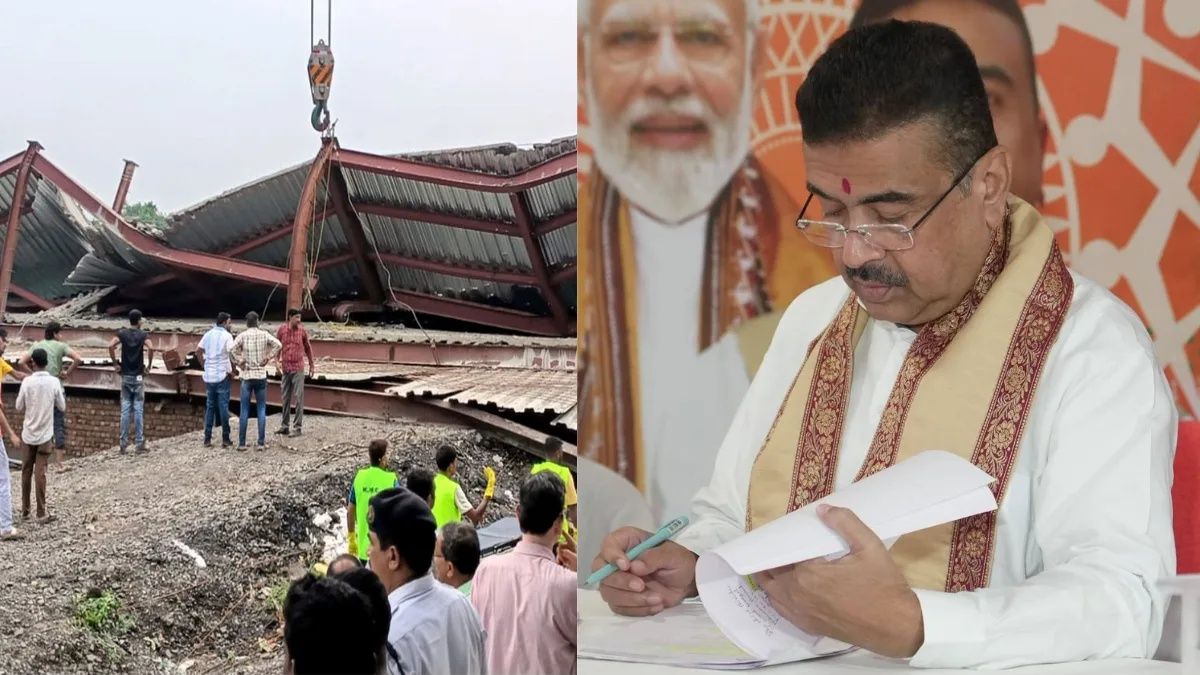
A devastating warehouse collapse in Kolkata's Taratala neighbourhood has claimed 11 lives as rescue operations stretched into their second day, with authorities grappling to locate additional workers feared trapped under the rubble. The body of another victim reached SSKM Hospital's Trauma Care Centre at around 1:15pm on Thursday, June 25, though officials have yet to confirm the deceased's identity. The incident has triggered an intensive, coordinated response involving personnel from the Indian Army, the National Disaster Response Force, and other emergency services, all working to locate survivors as concerns persist that multiple labourers may remain buried beneath the collapsed structure.
The tragedy has ignited a fierce political response in West Bengal's assembly, with Chief Minister Suvendu Adhikari launching a withering critique of the Kolkata Municipal Corporation's previous Trinamool Congress-led administration. Adhikari presented documentary evidence to legislators alleging that the Taratala warehouse building plan had received municipal approval despite containing serious structural deficiencies in its design. Drawing upon official records, including documents bearing the signature of former Mayor Firhad Hakim, the Chief Minister contended that approval should never have been granted given the documented design flaws.
Adhikari's assault on regulatory failings extended to questioning the professional conduct of engineers and officials who sanctioned the construction blueprint. He characterised the previous governance as riddled with corruption and the systematic extraction of illicit "cut money" from developers, painting the city as having descended into what he termed a "city of death" under lax oversight. The government's own fact-finding investigation has already concluded and reportedly substantiates these allegations of serious irregularities in the approval process.
Five individuals have already faced arrest in connection with the collapse, including the construction company's site supervisor, the iron structure fabricator responsible for structural elements, the individual who leased the land, a labour contractor associated with Trimex, and a broker implicated in securing the building plan's municipal clearance. However, the primary accused figure, identified as Azgar, remains at large. Authorities are actively pursuing this individual as investigations deepen into the chain of responsibility that culminated in the catastrophic failure.
In response to this structural catastrophe, Chief Minister Adhikari has declared an unprecedented four-week moratorium on all construction activities across expansive territories, with the exception of work deemed essential for critical infrastructure. This suspension blankets the entire Kolkata Municipal area and extends across multiple surrounding jurisdictions including Rajarhat-New Town, Maheshtala, Budge Budge, Pujali, Bishnupur, Sonarpur, and Baruipur. During this suspension period, every approved building plan within these regions will undergo comprehensive auditing to identify and rectify any comparable regulatory failures before work resumes.
Overseeing this unprecedented safety review is a high-level committee chaired by Additional Chief Secretary Rajesh Pandey, assembled specifically to restore confidence in construction standards. The committee's composition reflects the gravity of the undertaking, drawing expertise from senior government officials alongside representatives from India's premier technical institutions and construction agencies. Participants include representatives from IIT Kharagpur, the Rail India Technical and Economic Service, Indian Railway Construction Limited, the Fire Services Department, the Public Works Department, and the Kolkata Municipal Corporation itself, ensuring that multiple perspectives inform the review process.
Adhikari has pledged uncompromising accountability, declaring that the state government will tolerate no shortcuts or leniency where public safety is at stake. Those ultimately found culpable will face imprisonment, he warned, while emphasising that the government stands prepared to confiscate the properties of guilty parties if such seizures prove necessary to generate compensation for the affected victims and their families. This stern posture signals determination to pursue justice comprehensively and to extract meaningful restitution from those responsible for the disaster.
The collapse has underscored troubling questions about building regulation enforcement across Indian urban centres, particularly in metropolitan areas where explosive construction demand can overwhelm oversight mechanisms. For Malaysian observers, the incident carries cautionary relevance given comparable development pressures in Kuala Lumpur, Penang, and other rapidly expanding centres, where the balance between accelerating construction timelines and maintaining rigorous safety standards remains perpetually contested. Taratala's catastrophe demonstrates the lethal consequences when this balance tilts excessively toward speed at safety's expense.
The rescue coordination between central and state authorities has drawn praise from the Chief Minister, who specifically commended the professionalism of the Indian Army and the National Disaster Response Force in their life-saving efforts. Their swift mobilisation and sustained operations have minimised what could have been an even more catastrophic death toll, though the current toll of 11 remains a sobering reflection of the disaster's severity. As recovery and investigation proceed simultaneously, the incident will likely catalyse broader conversations about construction regulation across India and neighbouring South Asian nations grappling with similar urban development challenges.

