A grassroots assistance programme in Kluang has delivered RM5 fuel vouchers to 200 motorcyclists in the Renggam area, marking another step in the government's effort to provide targeted relief to working-class Malaysians grappling with transport costs. The distribution took place during the Jiwa@Komuniti MADANI Sembang Santai World Cup Edition programme, an engagement event designed to bridge communication between government agencies and rural communities.
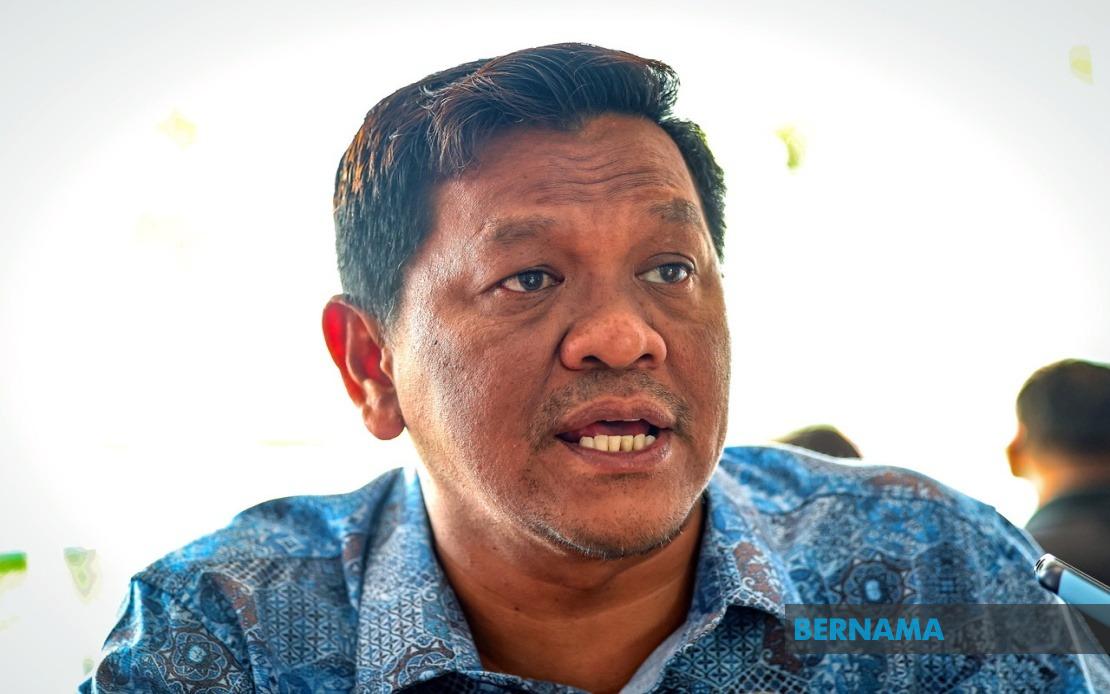
The initiative stems from the National Security Council, with political secretary to the Communications Minister Abdullah Izhar Mohamed Yusof overseeing the effort. Speaking to Bernama at the event, Yusof framed the voucher programme as an expression of the government's commitment to supporting the everyday struggles of ordinary Malaysians while fostering a sense of national cohesion. He positioned the assistance as part of a broader strategy to strengthen community bonds through tangible support measures.
Beyond the symbolic value of direct financial help, the Kluang programme incorporated broader civic engagement elements that reflect shifting approaches to government communication in Malaysia. Participants heard briefings on current policy matters and had opportunity to engage directly with representatives from the National Security Council, the Information Department, and the Department of Community Communications. This multi-agency approach suggests an attempt to create spaces where rural residents can access authoritative information about government initiatives while simultaneously offering feedback on local concerns.
According to Yusof, such programmes serve a dual purpose: providing communities with verified information about government policies while creating feedback channels that allow officials to hear directly from constituents about their experiences and priorities. He emphasised that ensuring Malaysians have access to accurate information remains a government priority, particularly in an era where misinformation and competing narratives can spread rapidly through social media and informal networks.
The voucher recipient interviews provide insight into how such assistance is perceived at the community level. M. Raja, 56, a father of five from Taman Sri Jaya, expressed genuine appreciation for the support while articulating what many lower-income Malaysians likely feel—that monthly assistance would be transformative, yet even sporadic help represents meaningful acknowledgment of their financial difficulties. His measured gratitude, coupled with hope for expansion, captures the precarious position of workers dependent on motorcycles for livelihood or daily commuting in a context of rising fuel prices and living costs.
Similarly, Hee Eeck Kwe, a 66-year-old from Kampung Baru, characterised the initiative as evidence that rural communities remain within the government's consideration when designing assistance programmes. This perspective addresses a persistent concern in Malaysian politics: the perception that development benefits and social support tend to concentrate in urban areas, leaving peripheral communities underserved. By ensuring programmes reach smaller towns like Kluang, the government signals intention to maintain rural political engagement and demonstrate material responsiveness to non-metropolitan constituencies.
The RM5 voucher amount warrants contextual consideration. While modest in absolute terms, for motorcyclists commuting daily for work, regular small fuel stipends can accumulate meaningfully over weeks and months. Motorcycles remain the primary personal transport for millions of working-class Malaysians, particularly those in smaller towns and rural areas where public transport infrastructure remains limited. Rising fuel costs have therefore cascaded through multiple economic strata, affecting delivery drivers, construction workers, smallholder farmers, and other workers whose livelihoods depend on motorcycle mobility.
Yusof's assertion that such programmes would be held regularly suggests the government views this as part of an ongoing engagement model rather than a one-off gesture. This rhetoric matters for political sustainability, as constituencies develop expectations based on stated frequency and consistency of support. Whether the promised regularity materialises will significantly influence how recipients and their communities perceive government credibility and commitment to their welfare in future electoral cycles.
The integration of information dissemination with material assistance reflects a strategic understanding that rural and working-class voters increasingly demand both tangible benefits and transparent communication about policy rationales. By combining voucher distribution with briefings on government initiatives, officials attempt to build not just voter goodwill but also informed understanding of their policy priorities. This approach acknowledges that contemporary Malaysian politics increasingly hinges on whether ordinary citizens perceive government programmes as genuinely responsive to their circumstances or merely performative.
For Malaysia's broader economic context, such targeted programmes hint at recognition that fuel subsidies and blanket price controls have become fiscally unsustainable, necessitating more granular, means-tested support directed at vulnerable populations. Rather than subsidising fuel for all consumers—a costly proposition that often benefits higher-income vehicle owners proportionally—targeted voucher schemes attempt to concentrate assistance where need is most acute. This shift reflects evolving economic governance philosophies across Southeast Asia, where governments increasingly employ direct cash transfers and targeted vouchers rather than universal price controls.
The Kluang programme also carries implications for how government agencies coordinate on community engagement. The involvement of the National Security Council, Information Department, and Department of Community Communications suggests an institutional recognition that security, information dissemination, and grassroots communication require coordinated rather than siloed approaches. This integration could foreshadow more systematic government outreach across Johor and other states, potentially reshaping how Malaysians experience government presence and communication in their localities.

