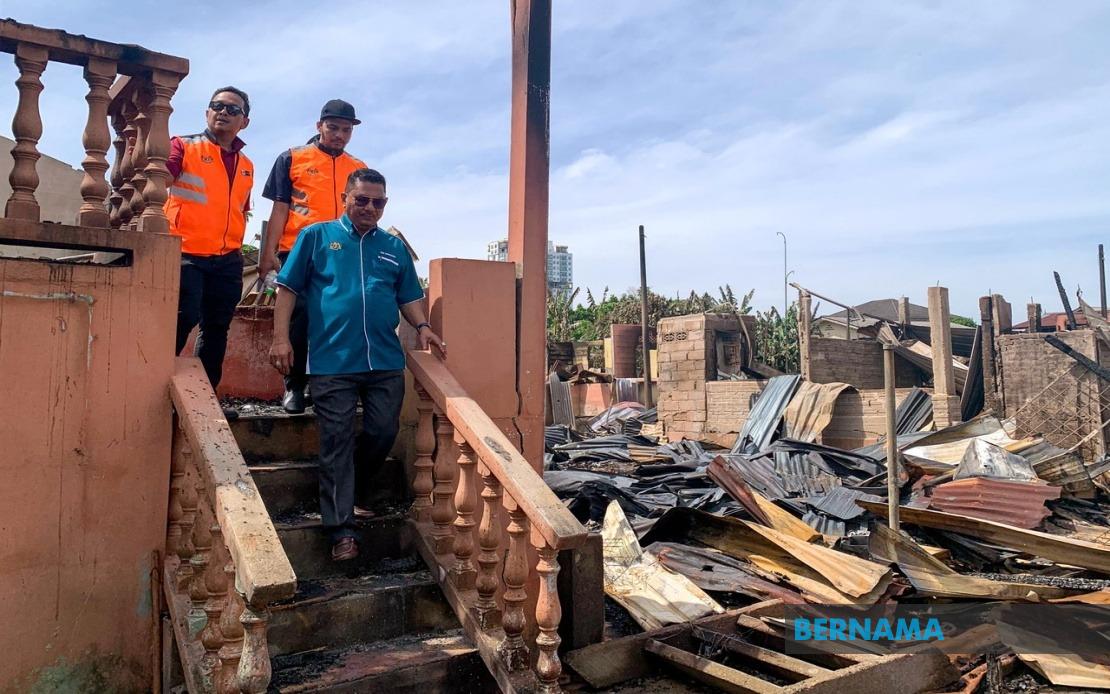
The devastating fire that consumed 27 residences in Kampung Gok Kapur, Kelantan on June 8 has been traced to a single act of negligence in a domestic kitchen. The Fire and Rescue Department's investigation unit has determined that the blaze originated when an occupant used a gas lighter to ignite a pile of papers directly within the kitchen area of one house. The controlled burning quickly spiralled into an uncontrolled conflagration, with nearby combustible materials catching fire in succession before the flames spread horizontally through the structure and jumped to neighbouring homes.
Kelantan JBPM director Farhan Sufyan Borhan provided detailed findings from the forensic investigation, explaining that physical evidence at the scene and witness statements converged on the same cause. The use of an open flame source applied deliberately to paper waste in a residential kitchen represented a critical lapse in judgment. Such activities, commonplace in some households as a waste disposal method, carry extreme risk in built-up areas where homes are often constructed close together with shared walls or minimal spacing. The rapid escalation from a single ignition point to a multi-structure catastrophe underscores how quickly domestic fires can overwhelm initial containment.
The circumstances reveal a pattern of behaviour that authorities have long flagged as dangerous. Burning waste indoors or in immediate proximity to residential structures remains surprisingly prevalent across Malaysia, particularly in rural and semi-rural settings where formal waste collection systems may be limited or inconsistent. Residents sometimes resort to open flames as an expedient means of reducing household rubbish, often underestimating the combustibility of materials in enclosed or semi-enclosed spaces. The kitchen environment, with its proximity to cooking equipment, stored provisions, and often inadequate ventilation, compounds the risk exponentially.
The investigation's conclusion regarding negligence is significant for potential legal proceedings. The department indicated that the findings will be forwarded to police and other relevant authorities for possible further action, suggesting that criminal charges related to recklessness or negligence causing property destruction may be contemplated. Such prosecutions remain relatively rare in Malaysia, but growing awareness of fire safety and the cumulative cost of preventable disasters has prompted authorities to pursue accountability when grossly negligent behaviour endangers entire communities.
The human toll of the June 8 incident extends beyond the immediate destruction of property. A total of 110 villagers were rendered homeless by the blaze, forced to abandon their residences with minimal warning and relocated to temporary shelter at Mukim Banggol Mosque. While the absence of reported casualties represents fortunate timing and swift evacuation, the disruption to livelihoods, community networks, and personal security remains profound. Families displaced by fire often face extended periods in emergency accommodation whilst rebuilding processes commence, compounding economic hardship with psychological stress.
The fire underscores vulnerabilities in how rural communities address waste management and fire prevention. Unlike urban areas served by municipal waste collection and disposal systems, smaller settlements often lack formal infrastructure, leaving residents to devise personal solutions. Education campaigns addressing safe disposal practices have achieved variable results, particularly when cultural norms or economic constraints make open-burning appear to be the most practical option. The tragedy in Gok Kapur presents an opportunity for renewed emphasis on the availability and accessibility of safer alternatives, whether through improved waste collection services or community-level initiatives promoting fire-safe practices.
Firefighting officials seized the opportunity provided by the investigation's completion to issue broader public advisories. Farhan Sufyan Borhan specifically cautioned the public against using open flame sources, particularly within or near residential areas where fire risk is substantially elevated. Such warnings carry greater weight when grounded in concrete incident analysis, allowing authorities to point to real consequences rather than abstract hazards. However, translating warnings into sustained behavioural change requires complementary measures: accessible disposal infrastructure, affordable alternatives, and consistent enforcement where necessary.
The incident also highlights the critical importance of building design and spacing standards in residential settlements. Many houses destroyed in the fire were likely constructed under older regulations or without formal planning oversight, potentially featuring inadequate clearances, shared walls, or combustible construction materials that facilitated rapid fire spread. Retrospective improvements to building safety in existing settlements face significant practical and financial obstacles, yet the recurring nature of multi-house fire incidents suggests that proactive intervention during construction phases could substantially reduce future risk.
The Kelantan Fire and Rescue Department's response demonstrates the value of dedicated forensic investigation capacity. By systematically examining physical evidence and cross-referencing witness accounts, investigators were able to pinpoint the precise cause rather than remaining uncertain. This capability enables targeted public education and supports potential legal action. However, such investigative resources may be unevenly distributed across Malaysia, with smaller or less-developed regions potentially lacking equivalent capacity to conduct thorough post-incident analysis.
As the investigation report moves toward police and other authorities, attention will likely focus on whether the individual responsible will face formal charges and what sanctions might apply. Even where criminal prosecution proceeds, such cases often highlight the inadequacy of existing legal frameworks for addressing negligence-caused disasters. Legislators and enforcement agencies across Southeast Asia continue grappling with appropriate accountability mechanisms for incidents driven by carelessness rather than intentional malice, seeking to deter reckless behaviour without imposing disproportionate punishment.
The broader significance of the Gok Kapur fire extends to regional fire safety discourse. Malaysia has experienced numerous preventable fires triggered by domestic negligence, yet systemic responses remain fragmented. Better coordination between fire departments, urban planners, building regulators, and waste management authorities could address underlying vulnerabilities. Regional cooperation on fire safety standards and lessons-learned sharing would benefit other Southeast Asian nations facing similar challenges in balancing economic development with disaster risk reduction.

