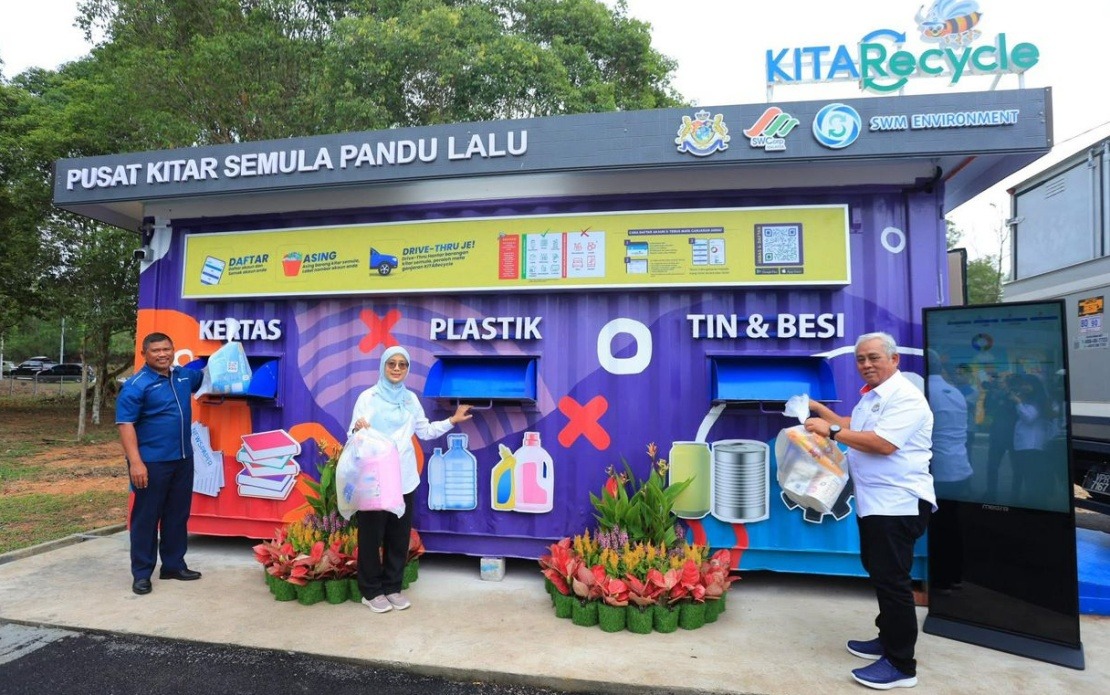
Malaysia's KITARecycle programme has accumulated 3.788 million kilogrammes of recyclable materials across Johor since its inception in 2020, demonstrating the growing viability of reward-driven waste management in the state. The initiative, which operates through a network of collection facilities and community engagement efforts, has attracted nearly 80,000 registered users as of May, representing a substantial participation rate for an environmental programme in the region. The achievement underscores shifting attitudes towards waste separation and circular economy participation among Malaysian households and businesses alike.
The composition of collected materials reveals distinct patterns in recycling behaviours. Paper-based items constitute the largest category by volume, accounting for 2.359 million kilogrammes—a finding that aligns with Malaysia's high consumption of packaged goods and office materials. This dominance reflects both the visibility of paper waste in households and its relative ease of collection compared to other materials. The remaining recyclables paint a picture of a modern consumer economy: plastic waste reached 397,634 kilogrammes, scrap metal accumulated 385,161 kilogrammes, while glass food containers and bottles contributed 339,960 kilogrammes. Together, these non-paper materials represent a significant diversion of waste from landfills, though they collectively remain secondary to paper collection.
The success of KITARecycle owes much to the collaborative framework underpinning the programme. SWM Environment, working in partnership with local municipal authorities and corporate sponsors, has deployed multiple collection mechanisms to maximise convenience and accessibility. Mobile recycling counters bring collection points directly to residential areas and commercial zones, while drive-thru facilities cater to time-constrained participants who might otherwise abandon recycling efforts. The Iskandar Malaysia Ecolife Challenge serves as an educational counterweight to these logistical innovations, embedding sustainability values within the broader community rather than treating recycling merely as a transactional activity. This three-pronged approach—convenience, incentives, and education—explains why the programme has achieved scale across Johor.
The physical infrastructure supporting KITARecycle has expanded considerably, with 39 dedicated facilities now operational throughout the state. This distribution allows residents in both urban and semi-urban areas to participate without excessive travel, a critical factor in the uptake of voluntary environmental programmes. The recently inaugurated Pasir Gudang Drive-Thru Recycling Centre exemplifies the programme's infrastructure evolution. Housed within two refurbished shipping containers—itself a recycling statement—the facility accommodates six segregated collection slots designed for specific material types. The use of repurposed containers reflects contemporary sustainability thinking and reduces the capital expenditure required for expansion.
Operational protocols within KITARecycle centres emphasise user responsibility for waste segregation, a principle that distinguishes the programme from conventional waste management systems where collection workers perform all sorting functions. Users must categorise their recyclables by type, package them appropriately, and label each submission with their KITARecycle account number before deposit. This requirement serves multiple purposes: it ensures material quality by preventing contamination, it cultivates environmental consciousness through active participation, and it creates a traceable system that rewards individual contributions. The introduction of closed-circuit television systems at collection points adds security and enables operational monitoring, addressing concerns about tampering or theft of recyclables destined for resale.
The reward-based mechanism underlying KITARecycle distinguishes it from purely altruistic recycling appeals. By directly compensating participants for collected materials, the programme taps into economic incentives that sustain behaviour change across diverse income groups. This approach proves particularly effective in Malaysia's economic context, where household income variations might otherwise limit voluntary participation. The system transforms recycling from an abstract environmental duty into a concrete activity with personal financial benefit, broadening the demographic reach beyond environmentally conscious segments to include economically motivated participants.
For Malaysian policymakers and Southeast Asian observers, KITARecycle demonstrates the feasibility of scaling waste diversion programmes within developing economies. The 3.788 million kilogrammes collected represent genuine material flows redirected from disposal infrastructure, reducing pressure on limited landfill capacity throughout Johor. Given Malaysia's rapid urbanisation and rising consumption patterns, such programmes will prove increasingly essential for waste management sustainability. The programme's performance also signals market demand for recycling opportunities, potentially attracting private sector investment in downstream material processing and manufacturing applications.
The involvement of 3R Troopers—community-focused waste management advocates—reveals how grassroots environmental movements intersect with formal institutional structures. Rather than imposing top-down waste management mandates, KITARecycle leverages community enthusiasm and local knowledge to shape programme implementation. This participatory dimension may explain participant retention rates and the programme's organic growth across neighbourhoods and commercial districts. The model could serve as a template for other Malaysian states and Southeast Asian nations seeking to implement effective recycling initiatives without requiring excessive governmental expenditure.
Looking ahead, the KITARecycle programme faces both expansion opportunities and operational challenges. As participation grows, maintaining collection point accessibility while ensuring efficient material handling becomes increasingly complex. The programme's success in paper collection should prompt investigation into whether plastic and metal recovery rates can be accelerated through targeted community education or improved incentive structures. Additionally, the fate of collected materials—whether they feed into domestic manufacturing or face export challenges—remains crucial for assessing the programme's genuine environmental impact. Transparency regarding downstream recycling processes would enhance public confidence and justify continued participation.

