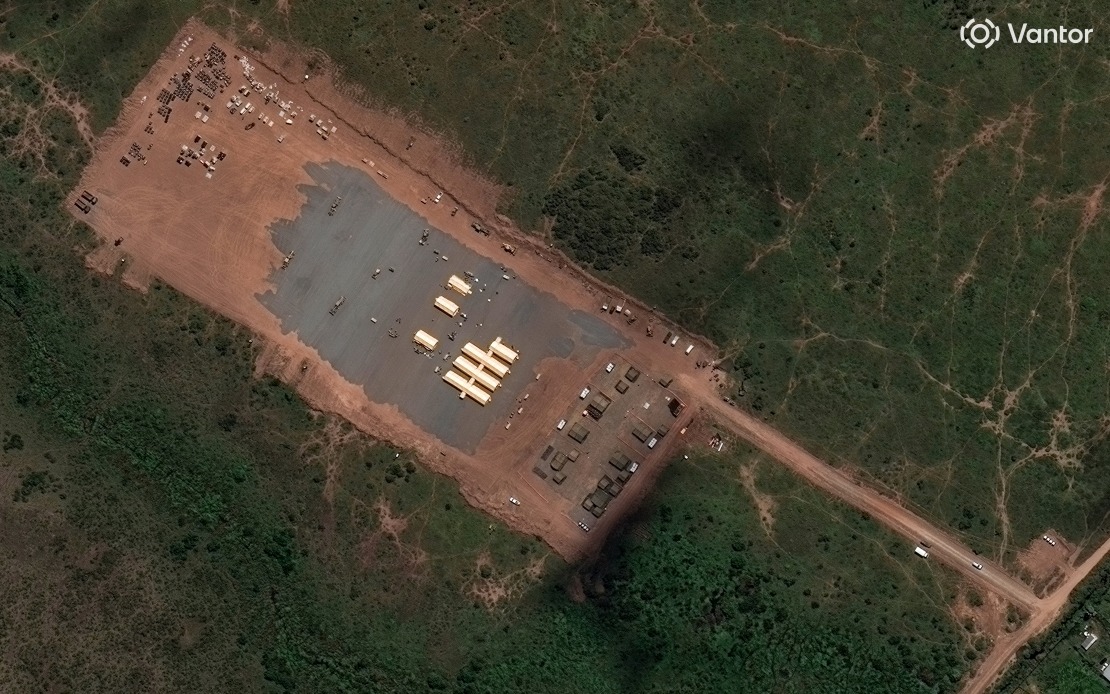
A Kenyan High Court has delivered a decisive judgment against the country's health minister for defying judicial orders regarding a polarising quarantine facility intended to isolate Americans exposed to Ebola. Judge Patricia Nyaundi determined on Monday that Aden Duale had breached court directives by permitting construction work to proceed at the Laikipia Air Base site near Nanyuki, roughly 200 kilometres north of Nairobi, notwithstanding clear judicial instructions to halt the project.
The contempt finding carries significant legal implications for Duale, who faces possible sanctions following a sentencing hearing scheduled for Tuesday. In her ruling, Judge Nyaundi explicitly noted that by commissioning ongoing construction activities at the facility, Duale had persistently violated court orders issued on 28 May and reaffirmed on 2 June. The judicial language underscores the severity of the minister's actions in continuing state resources and oversight toward a project that remained under suspension.
At the heart of this dispute lies a proposed 50-bed isolation and quarantine complex designed to house American personnel who may have encountered Ebola virus during disease response operations related to the outbreak ravaging the Democratic Republic of the Congo and neighbouring regions. The facility's strategic location at an air base approximately eight kilometres from Nanyuki reflects its intended function as a containment point separate from Kenya's general population. However, this operational purpose has done little to mollify domestic opposition.
The controversy surrounding the installation has evolved into one of Kenya's most fractious public health matters since the court's original suspension. Constitutional rights advocates at the Katiba Institute successfully challenged the project by arguing that authorities had circumvented established legal frameworks and neglected adequate public consultation. The organisation raised concerns about potential constitutional violations, undisclosed public health risks, and the absence of transparent decision-making processes that would normally accompany such sensitive infrastructure.
The political dimensions of the dispute became apparent when President William Ruto publicly acknowledged that he had approved the facility following a direct request from US President Donald Trump. Characterising the arrangement as an extension of Kenya's longstanding health partnership with Washington, Ruto's disclosure transformed what might have seemed a routine technical matter into a question of national sovereignty and international relations. This revelation fuelled criticism from opposition lawmakers and civil society organisations who questioned whether Kenya's government had genuinely pursued the project's best interests or merely deferred to American preferences.
Government defenders have maintained that Kenya's geographical and economic position as a regional transportation, diplomatic and commercial nexus creates genuine epidemiological vulnerability. Officials argue that possessing dedicated capacity to detect, isolate and respond to Ebola outbreaks represents prudent public health planning rather than an unnecessary imposition. The United States Embassy in Nairobi has similarly asserted that the facility poses no threat to adjacent communities and contributes meaningfully to strengthening the region's collective disease surveillance and response infrastructure.
Yet widespread community resistance in Laikipia County tells a different story among those living nearest the facility. Local populations have organised sustained protests, arguing that authorities have dismissed legitimate concerns and proceeded despite clear judicial directives to suspend work. The demonstrations have occasionally turned violent, with police, eyewitnesses and human rights organisations documenting at least three deaths resulting from confrontations between security forces and protesters opposed to the installation.
This case holds significant relevance for Malaysia and other Southeast Asian nations monitoring evolving relationships between major powers and regional health governance. The Kenyan situation illustrates tensions between international health cooperation and domestic democratic processes, particularly when foreign initiatives bypass standard consultation mechanisms. As countries throughout Asia navigate similar pressures regarding international health infrastructure and pandemic preparedness arrangements, the Kenyan precedent demonstrates the potential consequences of inadequate transparency and public engagement.
The judicial intervention by the Kenyan High Court has reasserted the importance of institutional checks on executive authority, especially regarding sensitive projects with significant community implications. Judge Nyaundi's contempt finding establishes that ministerial discretion does not override supreme court authority, a principle with broader constitutional ramifications across the Commonwealth legal system shared by Malaysia and Kenya. The decision reflects judicial commitment to enforcing compliance with lawful orders despite potential diplomatic or international consequences.
The case also exposes broader questions about how developing nations can meaningfully engage in international health cooperation while protecting domestic democratic processes. Kenya faces genuine epidemiological risks that justify preparedness investment, yet the implementation approach has damaged public trust and generated protracted legal conflict. Regional governments observing this situation may conclude that adequate stakeholder consultation and transparent decision-making, while sometimes more cumbersome, ultimately prove less costly than protracted litigation and social unrest.
As the contempt proceedings continue, the underlying dispute remains unresolved. The facility's ultimate construction status will depend on subsequent court decisions and possible legislative interventions. Regardless of the final outcome, the case has already shaped national conversation about the appropriate balance between international cooperation, executive authority and constitutional governance in matters affecting public health and community welfare.

