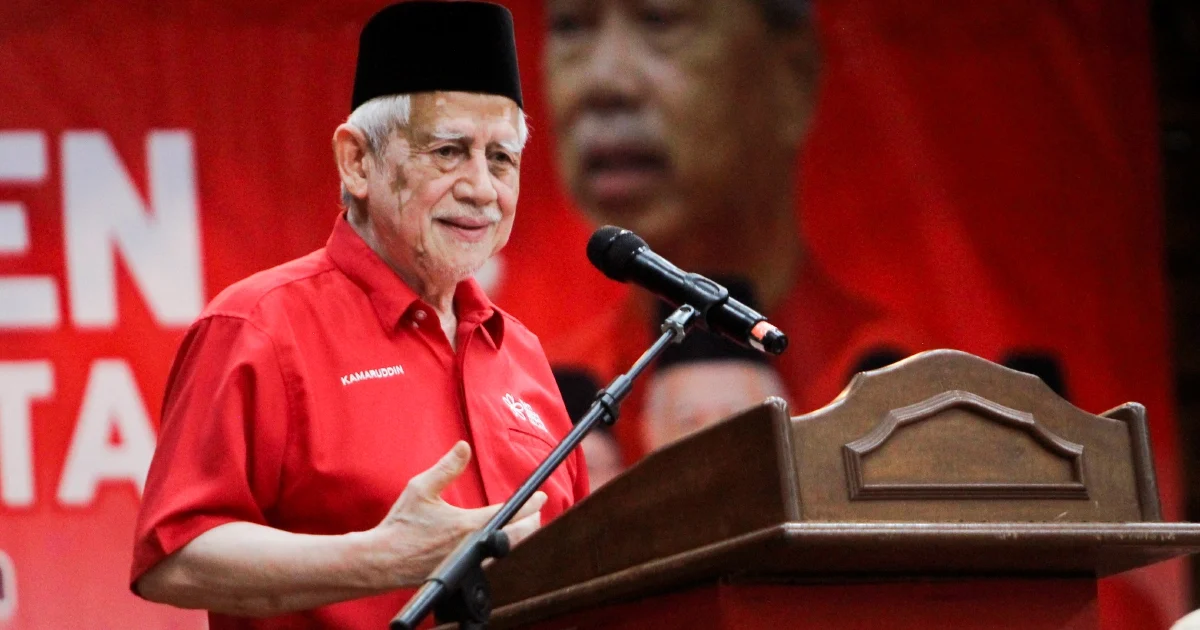
Kelantan's Bersatu faction has demonstrated composure following Perikatan Nasional's latest restructuring announcement, which saw the removal of two prominent figures from the coalition's leadership hierarchy. The decision to drop Datuk Seri Mohamed Azmin Ali and Datuk Dr Mohd Radzi Md Jidin represents a significant shift in PN's organisational approach, yet observers in the state capital note that grassroots sentiment remains settled rather than fractious.
The timing of this leadership reshuffle reflects ongoing internal deliberations within the broader PN alliance. Both Azmin and Radzi had occupied positions of influence within the coalition's structure, meaning their departure signals either a strategic recalibration or resolution of underlying tensions that may have simmered beneath the surface for months. Kelantan Bersatu's measured response suggests that state-level party machinery was either anticipating this outcome or maintains sufficient internal cohesion to weather such transitions without visible discord.
Understanding the Kelantan context requires recognition of the state's distinctive political landscape. As a Bersatu stronghold and historically a PAS domain, Kelantan represents one of PN's core territories. Any disruption at the federal level traditionally carries implications for state operations, yet the apparent equanimity displayed by Kelantan's membership indicates confidence in their local structures' resilience. This separation between federal machinations and state-level stability often proves more achievable in regions where a single party maintains overwhelming dominance.
The removal of high-profile national figures from leadership positions invariably raises questions about succession pathways and the distribution of influence within coalition structures. In Perikatan Nasional's case, these decisions likely reflect calculations about party positioning ahead of future electoral contests or internal power struggles that demanded resolution. For Kelantan Bersatu specifically, the absence of visible distress suggests that neither Azmin nor Radzi held critical leverage over local party operations or resource allocation at the state level.
Historically, leadership changes within multi-party coalitions create opportunities for rival factions to assert dominance or for discontented members to voice grievances. The fact that Kelantan Bersatu has not seized upon this moment to stage public protests or issue demanding statements indicates either exceptional party discipline or genuine acceptance of the leadership transition's necessity. This restraint carries its own political message—that the party maintains sufficient internal consensus to avoid weaponising federal-level instability for parochial advantage.
The broader implications for PN's cohesion cannot be dismissed. As a coalition comprising multiple political entities with divergent interests and power bases, Perikatan Nasional depends heavily on subordinate units accepting central decisions without constant friction. Kelantan Bersatu's muted response thus serves as a barometer of the coalition's overall stability. If member-parties at the state level consistently resist federal-level decisions through public campaigns or faction-building, PN risks fragmenting into parallel power centres incapable of unified action.
For Malaysian politics more broadly, this episode illustrates how the coalitional landscape continues evolving. Unlike earlier eras when party structures maintained rigid hierarchies, contemporary Malaysian politics frequently witnesses members or factions pushing back against decisions perceived as detrimental to their interests. The acceptance displayed by Kelantan Bersatu challenges assumptions that every leadership change automatically triggers destabilising ripple effects throughout coalition structures, suggesting instead that party leaders possess greater flexibility in managing transitions than sometimes assumed.
The specific roles previously occupied by Azmin and Radzi warrant examination. Their removal from the leadership line-up may reflect decisions about competency, electoral viability, or ideological positioning ahead of the next general election. PN's coalition partners evidently reached consensus on this matter—or at minimum, did not resist with sufficient force to render the decision controversial. Kelantan Bersatu's quiet acceptance indicates that local party leadership either concurred with the decision's wisdom or recognised the futility of opposition.
Looking forward, Kelantan Bersatu's posture suggests the coalition can navigate internal restructuring without the public acrimony that often accompanies such transitions. This capacity for orderly succession and position-shifting differentiates professional political organisations from those vulnerable to every personnel change triggering destabilisation. Whether this represents genuine unity or merely the appearance of consensus maintained for strategic purposes remains open to interpretation, but the practical outcome—stable state-level operations despite federal-level adjustments—carries immediate significance for PN's governing capacity and coalition prospects.