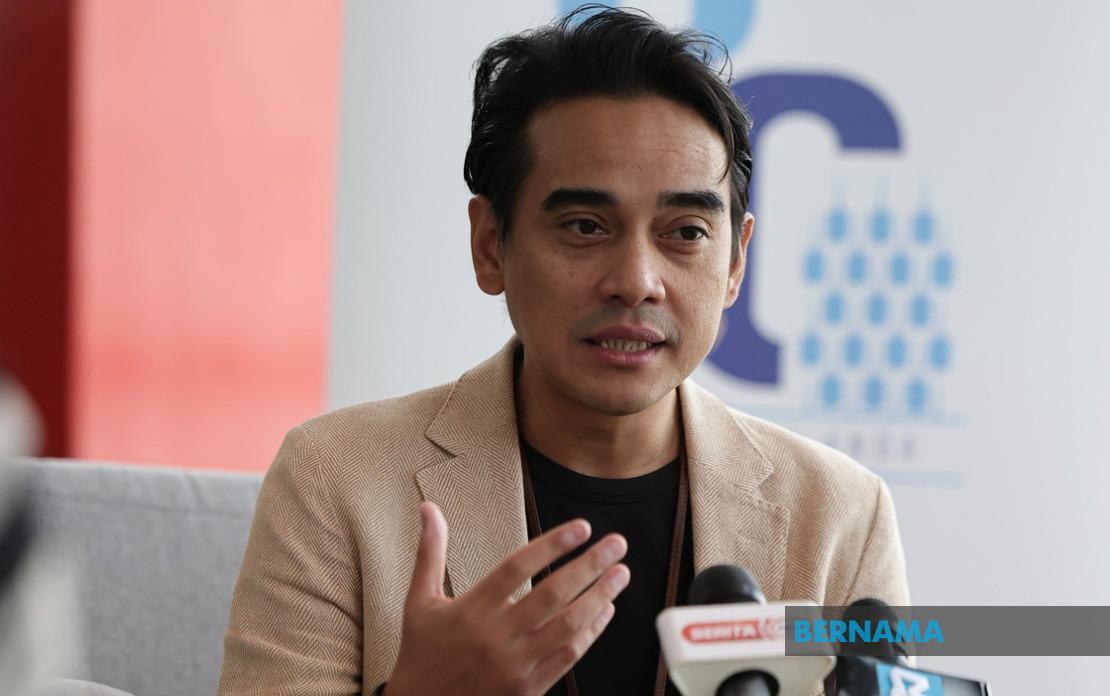
The future of journalism in Malaysia hinges on media practitioners' willingness to integrate artificial intelligence into their daily work, according to Ashwad Ismail, Director-General of Broadcasting. Speaking during an appearance on Bernama TV's The Nation programme, Ismail framed the technological shift not as an existential threat but as an inevitable evolution that will separate those who adapt from those who fall behind. His comments arrive amid broader industry anxieties across Southeast Asia about automation and job displacement, making his perspective particularly relevant for Malaysian newsrooms already navigating rapid digitalization.
Ismail's central argument challenges a widespread misconception that has taken hold in journalism circles. Rather than robots eliminating journalistic positions, he contends that individual journalists lacking AI proficiency will find themselves outcompeted by colleagues who harness these tools effectively. This distinction is crucial—it shifts responsibility from abstract technological forces to personal professional development. For Malaysian journalists already grappling with stagnant wages and precarious employment, the message carries an implicit warning: acquiring AI literacy is no longer optional but essential for career longevity. The framing reflects a reality increasingly evident in global newsrooms, where reporters and editors equipped with AI skills command higher salaries and greater job security.
The Director-General emphasized that artificial intelligence should complement rather than replace journalistic judgment and human connection. He articulated a vision where AI handles routine tasks—data analysis, initial story structuring, fact-checking, and research acceleration—freeing journalists to focus on investigation, interpretation, and the relationship-building that defines quality reporting. This distinction matters significantly for Southeast Asian contexts where hyperlocal reporting and community-embedded journalism remain vital but resource-constrained. By automating mundane processes, newsrooms theoretically gain capacity to deepen coverage of underreported local issues, though only if editorial leadership commits to such reallocation.
Acknowledging industry concerns, Ismail identified the dual challenge facing Malaysian media: practitioners' resistance to technological change and genuine fears about employment contraction. These anxieties are not unfounded. Media organizations globally have reduced editorial staff while implementing AI systems, creating legitimate worry that efficiency gains translate to job losses rather than role transformation. Malaysian newsrooms, already lean from decades of advertising revenue decline and competition from digital platforms, face particular pressure. The question becomes not whether AI will be adopted but whether the transition will create new opportunities or simply compress an already struggling workforce.
Ismail advocated for establishing clear governance frameworks around newsroom AI deployment. Such guidelines, he argued, would enable responsible technology adoption while maintaining journalistic integrity. This reflects emerging best practices seen in major international newsrooms, where AI policies address algorithm bias, transparency in automated reporting, and human oversight requirements. For Malaysian media organizations—many of which lack formal digital strategies—developing such frameworks requires investment in staff training, technology infrastructure, and potentially external expertise. The regulatory vacuum represents both opportunity and risk; proactive organizations could establish standards that competitors must eventually match, while laggards risk both legal exposure and reputational damage.
A particularly striking element of Ismail's comments involved his assertion that AI will enhance journalistic products rather than diminish them. Productivity gains from automation could theoretically enable Malaysian newsrooms to expand coverage, investigate more complex stories, and serve audiences more comprehensively. Yet realizing this potential requires deliberate editorial choices. Without intentional strategy, efficiency merely becomes cost-cutting. The Director-General's optimism, while refreshing, implicitly assumes that media organizations will reinvest savings into journalism rather than shareholder returns—an assumption that contradicts recent industry history across the region.
Ismail's second major theme centered on rebuilding public trust through strengthened community journalism and authentic engagement. This pivot is significant because it acknowledges that technological sophistication alone cannot restore credibility that many Malaysian audiences believe has eroded. By emphasizing hyperlocal reporting and meaningful community connection, he positioned AI not as a substitute for trust-building but as an enabler of it. Journalists equipped with AI tools could theoretically cover local government more comprehensively, investigate municipal corruption more efficiently, and document community voices more systematically—precisely the reporting that builds sustained audience loyalty and counters polarization.
The human element, Ismail stressed, remains irreplaceable. This assertion carries particular weight in Malaysia, where media trust has fractured along political and sectarian lines, and where audiences increasingly perceive institutional journalism as captured by establishment interests. No algorithm can substitute for a reporter genuinely embedded in a neighborhood, attending community meetings, understanding local context, and maintaining relationships with residents. The paradox Ismail articulated—that AI enhances journalism by freeing journalists to focus on human connection—represents the industry's best hope for a sustainable future, though realizing it requires cultural shifts in newsroom management and resource allocation.
The context for these comments extends to the broader HAWANA 2026 conference summit, where more than 1,200 media professionals and ASEAN delegates are expected to gather. The conference, which Prime Minister Datuk Seri Anwar Ibrahim will officially open at PICCA Convention Centre @ Arena Butterworth, Penang on June 20, signals institutional recognition that AI's integration into media constitutes a critical regional concern. The presence of ASEAN delegates suggests that this transition challenges journalists across Southeast Asia, not merely Malaysia. Countries including Indonesia, Thailand, and Vietnam face similar pressures to modernize while maintaining editorial independence and journalistic quality—suggesting that regional dialogue and shared standards-setting may prove valuable.
For Malaysian media organizations, Ismail's message amounts to a call for immediate action. Newsrooms should assess current AI capabilities, identify skill gaps, develop training programs, and establish governance frameworks before technological drift forces reactive changes. Journalists themselves must overcome skepticism and begin experimenting with AI tools in low-stakes environments, building confidence and competence incrementally. Media associations and industry bodies could facilitate knowledge-sharing and establish ethical guidelines, reducing individual organizational burden. The window for managed transition remains open but narrowing; delay risks making Malaysian newsrooms dependent on external solutions rather than building internal expertise.
The stakes extend beyond individual careers or organizational competitiveness. Malaysian democracy depends partly on robust, capable journalism that can investigate power, document social conditions, and provide citizens reliable information. If AI adoption concentrates in well-resourced outlets while struggling regional and hyperlocal operations languish, information inequality will deepen. Conversely, if AI tools democratize the ability to gather, analyze, and distribute news, coverage could expand significantly. Ismail's implicit challenge to the industry is whether it will manage this transition deliberately or allow market forces to determine outcomes. His optimism about AI's potential to strengthen journalism depends entirely on the choices Malaysian media leaders make in the coming months.