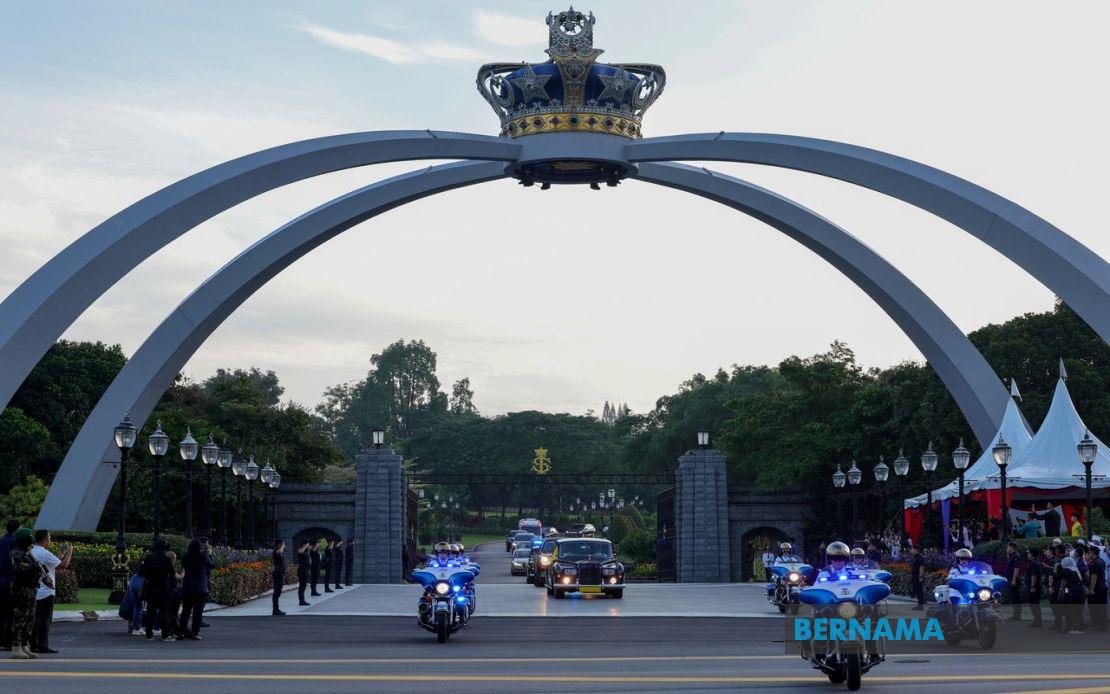
The formal installation of Johor's next Menteri Besar is set to proceed at Istana Bukit Serene in the state capital at 3 pm today, the Johor Palace confirmed through official channels. While the royal palace announced the ceremony would take place at the historic seat of the Sultan, the actual identity of the incoming chief minister remained unconfirmed until the official announcement.
Accorditation for media coverage has been coordinated with journalists permitted to record proceedings from the Crown Arch entrance of the palace. The announcement came via WhatsApp invitation circulated by palace officials, with the palace formally confirming the July 12 appointment time without additional elaboration on the ceremony's format or duration.
Mediation between the palace and political leadership intensified throughout the day as news media personnel positioned themselves at strategic locations. Reporters and cameramen gathered from midday onwards at both the official Menteri Besar residence in Saujana and at the palace gates, indicating heightened political activity around the anticipated transition. The concentration of press attention underscored the significance of the impending transfer of executive power in Malaysia's second-largest state by population.
Preceding the formal swearing-in, Sultan Ibrahim Iskandar received Barisan Nasional chairman Datuk Seri Ahmad Zahid Hamidi at Istana Pasir Pelangi earlier in the day. The substantive discussion, which consumed nearly an hour of the Sultan's schedule, included Johor BN chairman Datuk Onn Hafiz Ghazi and reflected the consultative protocols observed before appointing state leadership. The extended audience suggested detailed deliberations regarding the incoming administration's composition and priorities.
The political circumstances surrounding this transition flow directly from the Johor state election held on July 11, in which Barisan Nasional achieved a decisive outcome that substantially reinforces the coalition's governing mandate. The coalition captured 48 out of 56 contested state assembly seats, delivering a supermajority that reflects the electorate's confidence in BN's direction for the state and provides considerable legislative flexibility for government initiatives. This commanding electoral performance stands in marked contrast to previous state elections and signals renewed voter appetite for the traditional coalition's governance model in Johor.
Barisan Nasional's substantial victory in Johor carries implications extending well beyond the state's borders. As the nation's most economically significant state after Selangor and a traditional BN stronghold, Johor's electoral result strengthens the coalition's position in federal politics and validates its recent strategy of pursuing separate state elections on its own terms. The outcome provides momentum for BN ahead of eventual federal-level contests and demonstrates residual electoral support among Malaysian voters despite the coalition's historical setbacks.
The swearing-in ceremony represents the formal constitutional completion of the electoral mandate, transforming BN's legislative majority into executive authority through the appointment of the Menteri Besar. The ritual affirms the continuity of constitutional monarchy and parliamentary democracy in Malaysia, whereby the Sultan exercises reserve powers to appoint the chief minister from among elected representatives commanding legislative confidence. This formal transfer, though procedurally routine, carries symbolic weight in reaffirming democratic transitions and institutional continuity.
For Johor specifically, the new administration inherits a state confronting persistent economic restructuring demands. The incoming leadership must address long-standing infrastructure requirements, labour market dynamics shaped by cross-border movements with Singapore, and environmental sustainability challenges characteristic of rapid industrialisation. The supermajority achieved provides the new government substantial discretionary capacity to pursue transformative policies without constant legislative constraint.
The timing of Johor's state election, conducted independently from federal polling cycles, reflects Malaysia's constitutional framework permitting state-level electoral autonomy. This separation allowed Johor to seek fresh mandates while federal structures remained unchanged, a mechanism utilised strategically by the incumbent coalition. The separate electoral calendar also permits state governments to build legislative records independently, though often in coordination with federal-level objectives.
Media monitoring and public interest in the swearing-in ceremony underscores the enduring fascination with high-level political transitions in Malaysia. Even routine constitutional proceedings attract substantial press attention, reflecting the intersection of traditional monarchy, electoral democracy, and party politics that characterises Malaysian political culture. The afternoon ceremony will conclude the electoral process formally, transitioning from campaign rhetoric to the practical demands of state administration.

