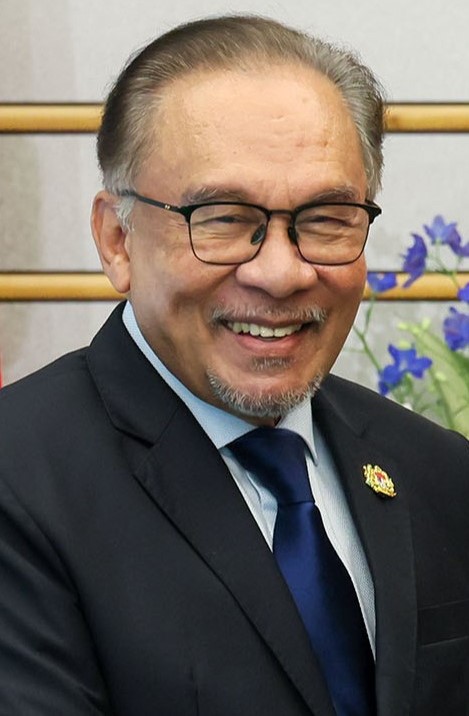
Johor's menteri besar Onn Hafiz has mounted a spirited defence of his state government's relationship with federal authorities, rejecting assertions that the Johor administration has been uncooperative or dismissive of Kuala Lumpur's directives. The response represents an escalation in the public exchange between Malaysia's second-largest state and the federal administration in Putrajaya, with questions about collaborative governance mechanisms and resource-sharing arrangements now firmly in the spotlight.
The menteri besar's rebuttal comes after criticism from the Prime Minister's office characterising Johor's stance towards federal programmes as obstructionist and marked by administrative arrogance. Onn Hafiz has systematically challenged this characterisation, pointing to concrete examples of ongoing projects and initiatives where state officials have worked closely alongside federal counterparts. The dispute, while appearing to centre on tone and operational nuance, touches on fundamental questions about the distribution of power and responsibility between state and federal governments under Malaysia's constitutional framework.
Central to Onn Hafiz's defence is a detailed inventory of collaborative efforts spanning economic development, infrastructure implementation, and social welfare delivery. The menteri besar has highlighted instances where Johor has aligned its state-level policies with federal economic strategies, demonstrating administrative coordination that challenges the portrayal of obstinacy. These examples underscore the complexity of federal-state relations in Malaysia, where political alignment does not automatically guarantee smooth cooperation and where competing priorities can create friction even between theoretically allied administrations.
The tension between Putrajaya and Johor is particularly significant given the state's economic importance to Malaysia's overall development trajectory. As a major contributor to the nation's gross domestic product and home to critical manufacturing and petrochemical sectors, Johor's governance stability and its willingness to cooperate on federal initiatives directly affect Malaysia's macroeconomic prospects. Any prolonged friction between state and federal administrations could potentially create implementation bottlenecks for national projects, particularly those requiring significant state-level coordination or that depend on state resources.
Onn Hafiz's administration has sought to reframe the narrative by emphasising instances where Johor has proactively supported federal programmes while simultaneously advocating for state-specific interests. This dual positioning reflects the inherent tension in federal systems where state governments must balance loyalty to broader national agendas with accountability to their own constituencies. The menteri besar appears to be arguing that defending state interests does not constitute uncooperativeness, but rather responsible governance that serves Johor's development needs.
The public nature of this dispute suggests deeper concerns about communication channels and decision-making processes between the state and federal capitals. When disagreements reach the level of public statements and counterstatements, it often indicates that behind-the-scenes diplomatic efforts have not fully resolved underlying tensions. The visibility of this exchange may itself be counterproductive, as public posturing can entrench positions and make compromise more difficult to achieve without loss of face on either side.
For Malaysian observers, the Johor-Putrajaya dynamic offers important lessons about how federal systems function in practice, particularly when political parties at state and federal levels maintain different leadership priorities or when resource constraints force difficult allocation decisions. The dispute is not simply about personalities or egos, though these factors inevitably play a role. Rather, it reflects structural questions about how Malaysian federalism distributes authority, resources, and accountability between different levels of government.
The implications extend beyond Johor itself. Other state governments, particularly those governed by different political coalitions or facing their own resource constraints, will be watching how this dispute develops and resolves. The precedent set by how federal and state authorities handle disagreements can influence the broader template for centre-state relations across Malaysia. A resolution that respects both federal prerogatives and legitimate state autonomy would strengthen the overall health of Malaysian federalism, while prolonged acrimony could create opportunities for future conflicts in other states.
Onn Hafiz's willingness to engage in public debate over this matter suggests confidence in his administration's record on cooperation and a belief that detailed factual claims about collaborative efforts will resonate more persuasively than deferential silence. This approach stands in contrast to earlier eras of Malaysian politics when state governments might have absorbed federal criticism without public rebuttal. The shift towards more direct, evidence-based public exchanges reflects broader changes in Malaysian political communication and the enhanced visibility of federal-state tensions in the media landscape.
Moving forward, both the state and federal governments face pressure to demonstrate their commitment to cooperative governance. The Prime Minister's office will need to either substantiate specific claims of non-cooperation or accept the menteri besar's counter-narrative. Similarly, Onn Hafiz will need to ensure that rhetorical defences translate into demonstrable improvements in implementation coordination and responsiveness to federal directives. For Malaysia's development trajectory and investor confidence in the country's governance systems, evidence of functional federal-state cooperation is arguably more valuable than winning the current rhetorical exchange.