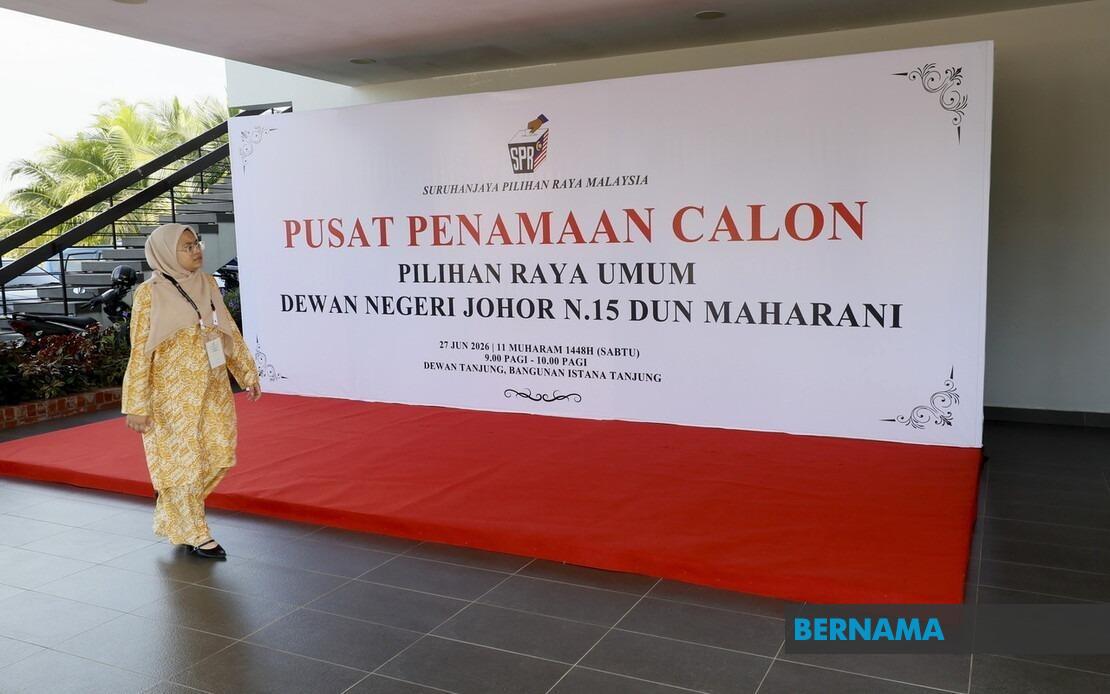
The 16th Johor State Election formally commenced today as nomination papers opened at 56 polling centres throughout the state, launching what is shaping up to be a consequential electoral contest for Malaysia's southern manufacturing powerhouse. Prospective candidates have a one-hour window, ending at 10 am, to lodge their nomination documents with Returning Officers, after which the Election Commission will announce the official slate of eligible contestants. This marks the formal beginning of the electoral race following the dissolution of the Johor State Legislative Assembly on June 1, setting in motion a two-week campaign sprint leading to polling day on July 11.
The scale of this election underscores Johor's political significance within Malaysia's electoral landscape. A total of 2,727,926 registered voters will participate, comprising 2,703,175 ordinary voters alongside 12,041 military personnel and their families, plus 12,710 police personnel and their families. This electorate will determine the composition of all 56 state seats, making Johor's outcome potentially influential in shaping broader political dynamics affecting federal governance and coalition stability. The turnout across such a large voter base carries implications not just for the state itself but for how political alignments might shift at the national level in coming years.
The candidate field reflects a consolidation of Malaysia's major political blocs into clearly defined competing coalitions. Pakatan Harapan is contesting all 56 seats through its component parties—PKR fielding 20 candidates, Amanah 19, and DAP 17. This represents a unified opposition front maintaining its presence across every constituency. Barisan Nasional, historically dominant in Johor with 40 of the previous 56 seats, is similarly fielding candidates nationwide through UMNO's 36 nominees, MCA's 16, and MIC's four, signalling confidence in retaining its traditional stronghold status in the state. The competition between these two major coalitions will form the election's central narrative.
Perikatan Nasional's entry into the contest introduces a potentially fragmenting dynamic that may reshape Johor's electoral mathematics. The coalition is contesting through multiple channels: PAS in 11 seats, Bersatu in 16, the Malaysian Indian People's Party in five, and Pejuang in one seat. This multi-party approach suggests PN is attempting to build appeal across different demographic segments while competing in strategically selected constituencies where it perceives openings. Their presence, particularly Bersatu's substantial slate, could split opposition to BN in certain areas or provide alternative choices for voters dissatisfied with the two major coalitions.
Several smaller parties are making their mark on this electoral cycle, reflecting the diversification of Malaysia's political marketplace. MUDA is contesting four seats, continuing its attempt to establish a foothold beyond its initial entry point in the 2022 general election. The Socialist Party of Malaysia (PSM) is fielding a single candidate, maintaining its principled if limited participation in electoral politics. Most notably, Bersama, a new entrant to Malaysian politics, is making its debut by contesting 15 seats, suggesting organisational ambitions and resources that distinguish it from typical fringe movements. These newcomers inject unpredictability into what might otherwise be a straightforward two-coalition race.
As of yesterday morning, the nomination process has generated substantial interest, with 593 nomination forms already distributed and 133 prospective candidates having confirmed their candidacy by submitting required election deposits. These figures indicate active participation across the political spectrum and suggest that most constituencies will feature competitive contests. The diversity of candidates—combining new faces, sitting representatives, and returning former elected officials—reflects a political landscape where experience and fresh perspectives coexist as competing strategies for voter appeal.
The Election Commission has established a clear campaign framework governing the 14-day period from today through July 10 at 11:59 pm. Early voting is scheduled for July 7, accommodating voters unable to participate on the main polling day of July 11. This calendar compresses the campaign into a relatively brief timeframe, requiring political parties to execute efficient messaging strategies and mobilise their organisational capabilities swiftly. For campaigns operating at scale across 56 constituencies, the compressed timeline rewards well-resourced, tightly coordinated operations.
Practical preparations underscore the scale of this electoral exercise. The Election Commission has emphasised compliance with the Election Offences Act 1954 and local regulations, including restrictions on musical instruments and vehicle-mounted loudspeakers during campaign activities. Weather monitoring has identified expected morning rainfall and afternoon thunderstorms across parts of Johor, potentially affecting nomination day operations and requiring contingency planning. More substantially, police have deployed 4,832 personnel to manage security and traffic, with 19 major roads near nomination centres subject to closures and diversions, reflecting the coordination demands of simultaneously processing nominees across the entire state.
Historically, Johor has been Barisan Nasional's bastion, and the previous assembly composition reflected this dominance. BN held 40 of 56 seats before dissolution, with Pakatan Harapan occupying 12, Perikatan Nasional three, and MUDA one. This configuration suggests BN's continued strength but also indicates that opposition forces have established meaningful representation, winning roughly one-fifth of seats. The electoral contest today will determine whether the previous balance holds, shifts in either coalition's direction, or whether new entrants manage to establish themselves as consequential political actors in the state. Given Malaysia's political volatility, particularly regarding coalition formations and defections, Johor's result may carry unexpected implications for national-level stability and governance calculations.
For Malaysian observers beyond Johor, this election serves as a political barometer reflecting voter sentiment at a time when the country continues navigating complex economic and governance challenges. Regional economic dynamics, cost-of-living pressures, and assessments of governmental performance at both state and federal levels shape voter calculations. How Johor's electorate responds to these considerations—through maintaining existing alignments, shifting support between established coalitions, or embracing new political entrants—will offer insights into broader currents within Malaysian politics as the country looks toward its next general election.

