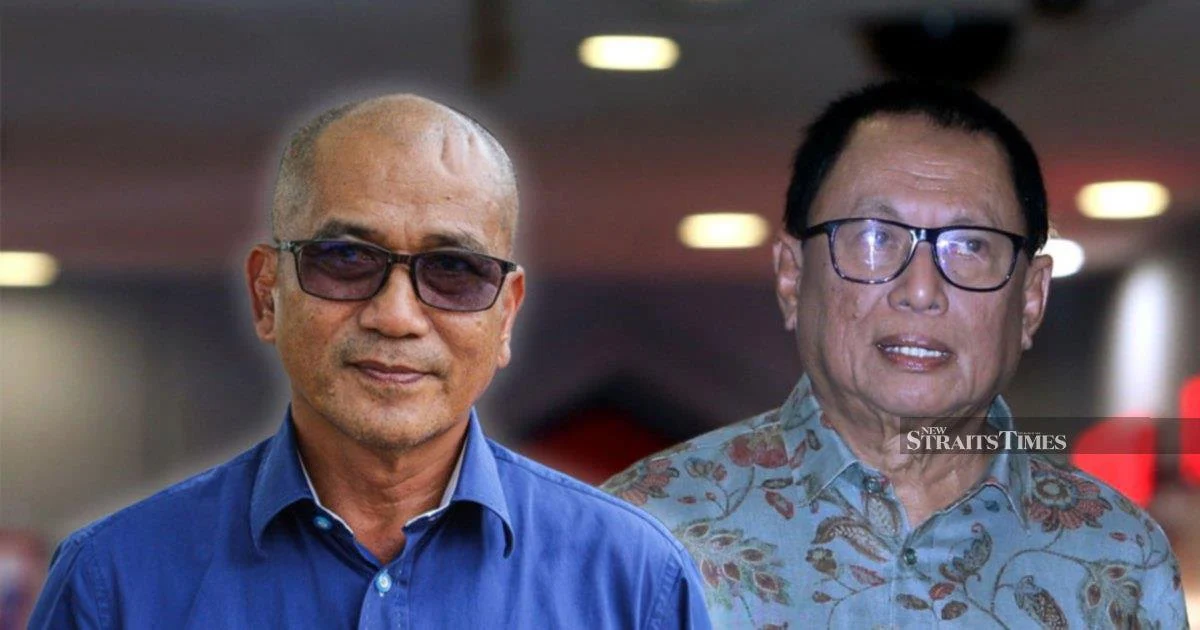
Senior figures within Johor's Umno hierarchy have moved swiftly to counter assertions made by Datuk Dr Mohd Puad Zarkashi, the former speaker of the Johor state assembly, regarding circumstances surrounding the dissolution announced on June 1. The party leadership in the southern state has characterised his statements as constituting grave slander, signalling the depth of friction within the organisation over the matter.
The dissolution of the Johor state assembly remains a sensitive topic within Umno circles, particularly given the internal complexities and factional considerations that have long characterised state-level politics in Peninsular Malaysia's largest economy. The involvement of a high-ranking institutional figure such as Puad Zarkashi—whose position as speaker placed him at the heart of legislative proceedings—adds significant weight to what has become a public airing of grievances between party elites.
Datuk Dr Mohd Puad Zarkashi's departure from his role as speaker and subsequent willingness to voice criticism suggests deteriorating relationships among Johor's political establishment. Former speakers typically maintain institutional restraint; his decision to make public allegations indicates the severity of underlying disagreements about how the assembly dissolution was handled and the decisions that precipitated it. This fracture within the top echelons of state leadership carries implications for political stability in a state whose economic significance makes its governance a matter of national consequence.
The timing of Puad Zarkashi's comments raises questions about internal decision-making processes within the Johor administration during the lead-up to the June 1 announcement. The state assembly dissolution, typically a carefully managed political manoeuvre, appears to have generated considerable consternation among figures who were either excluded from consultations or disagreed with the approach adopted. His willingness to speak publicly suggests that informal channels for resolving such disputes may have broken down.
For Malaysian observers, Johor's political dynamics merit close attention given the state's role as an economic powerhouse and its significance within the broader Umno organisational structure. The party's management of internal conflicts in the state could have ripple effects on national party cohesion, particularly as Malaysia navigates a complex post-election environment where coalition dynamics remain fluid. Umno's effectiveness in managing dissent within its own ranks is increasingly scrutinised by members and the broader electorate.
The characterisation of Puad Zarkashi's allegations as slanderous rather than engaging substantively with the specific claims represents a particular rhetorical stance adopted by current state leadership. This approach—dismissing rather than refuting—suggests either confidence that the allegations lack merit or a desire to avoid detailed public exposition of the decision-making process. Either interpretation carries implications for perceptions of transparency within Johor's administration.
Historically, Johor's Umno has functioned as one of the party's most stable and powerful state divisions, with deep-rooted organisational structures and considerable political capital. Disagreements among senior figures, when they spill into public view, signal potential vulnerabilities within the machinery that has long sustained the party's dominance in the state. Puad Zarkashi's public stance may embolden other dissatisfied figures to voice concerns previously confined to private conversations.
The broader context of Malaysian state politics demonstrates that assembly dissolutions—whether presented as strategic repositioning or responses to internal challenges—frequently generate controversy when the rationales remain opaque to the public. The Johor situation exemplifies how procedural decisions at state level can become focal points for organisational tensions. When former institutional actors like speakers take public positions, it suggests that ordinary party channels for conflict resolution have been exhausted.
For Umno's leadership beyond Johor, the situation presents a test of the party's capacity to manage internal disputes whilst maintaining public confidence in its governance. How the party resolves tensions between Puad Zarkashi and current state leaders will likely influence perceptions of Umno's organisational health more broadly. The party cannot indefinitely rely on dismissing internal criticism as slander; substantive responses to legitimate governance questions strengthen rather than weaken institutional credibility.
The involvement of figures at this level of seniority indicates that the June 1 dissolution involved considerations beyond routine administrative scheduling. Whether the resolution involves accommodation of Puad Zarkashi's concerns or further entrenchment of positions, the episode underscores that Johor's political environment, whilst traditionally stable, is not immune to the factional tensions characterising Malaysian politics more widely. The state's ongoing political trajectory will warrant continued attention from observers of Malaysian governance.

