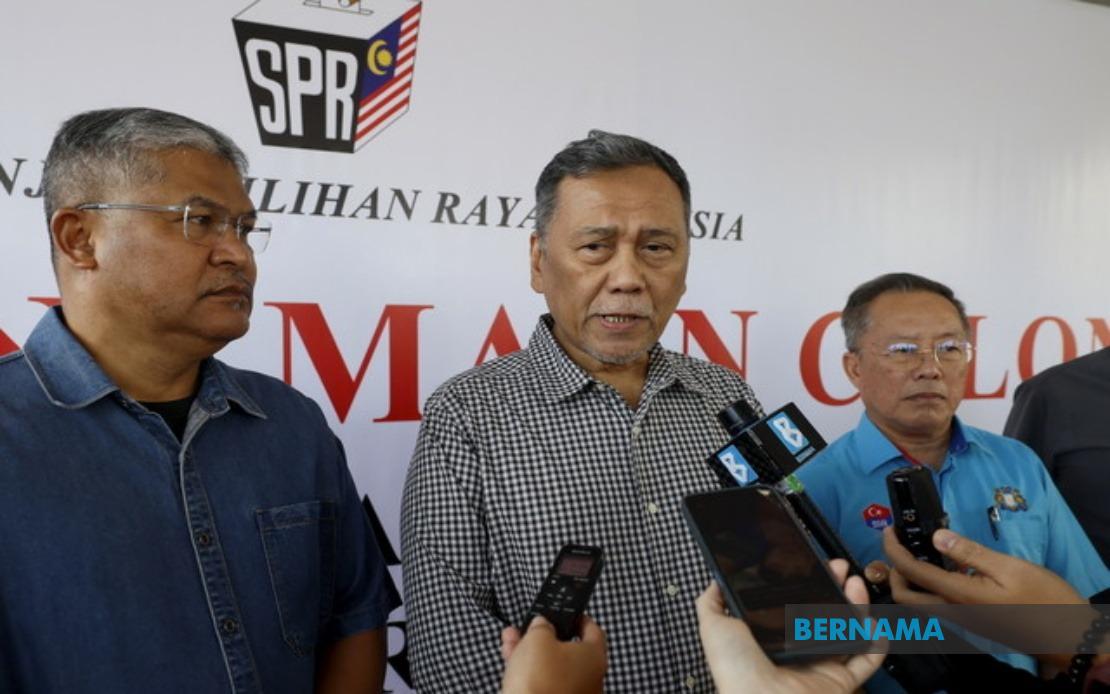
With just hours until the nomination process begins, Malaysia's Election Commission has reported brisk but incomplete uptake among prospective candidates contesting the Johor state election. As of mid-morning on June 26, a total of 593 nomination forms have been distributed across returning officer offices throughout the state, yet only 133 prospective candidates have formally confirmed their intention to contest by lodging the mandatory deposit payment.
Election Commission chairman Datuk Seri Ramlan Harun indicated that these figures represent a preliminary snapshot rather than a final count, emphasizing that candidates still retain several hours to complete the necessary paperwork. The nomination process formally commences the following morning, providing a final window for those seeking to register their candidacy. Ramlan expressed optimism that additional candidates would complete their deposits before the deadline, potentially reducing logistical complications when nomination centres open across all 56 constituencies in the state.
The Election Commission has undertaken substantial preparations to manage the nomination process efficiently and securely. Ramlan disclosed that the EC conducted two consecutive days of trial operations at nomination centres statewide to identify and resolve potential bottlenecks. These rehearsals were aimed at ensuring that staff at each centre understand procedures, security protocols, and crowd management protocols. The comprehensive preparation reflects the complexity of administering simultaneous nominations across dozens of locations while maintaining electoral integrity and public safety.
Security remains a central concern as nomination day approaches. The Election Commission has issued detailed directives to all political parties, candidates, and their supporters regarding conduct throughout the nomination period. Ramlan specifically cautioned against provocative behaviour and emphasized strict adherence to electoral regulations, warning that violations could jeopardise the peaceful atmosphere required for democratic processes. This messaging reflects past experiences in Malaysian elections where nomination days have occasionally witnessed confrontations between rival camps.
The physical layout at nomination centres has been deliberately designed to minimise friction between competing parties. According to Zainal Eran, the returning officer for the Maharani constituency, strict protocols will govern who enters the nomination centre itself. Only the candidate, their proposer, and a single authorised supporter will be permitted inside the centre during the nomination submission process. This restriction aims to prevent crowding and maintain a formal, controlled environment conducive to efficient administration.
Supporters of political parties will be accommodated in designated outdoor areas fronting the nomination centres, separated from one another by physical barriers. This spatial segregation serves multiple purposes: it prevents spontaneous confrontations between opposing factions, allows supporters to demonstrate their backing for candidates without disrupting the nomination process, and enables security personnel to monitor gatherings more effectively. The arrangement represents a deliberate compromise between democratic participation and orderly administration.
The diverse coalition composition of the major contenders reflects Johor's complex political landscape. Pakatan Harapan will contest all 56 seats through a tri-partite alliance, with PKR fielding 20 candidates, Amanah 19, and DAP 17. This coordinated approach prevents vote-splitting among opposition voters and signals unified messaging on common platforms. Barisan Nasional likewise contests all seats but maintains a larger presence through its traditional component parties, with UMNO providing 36 candidates, MCA 16, and MIC four.
Perikatan Nasional presents a more fractionalised approach, with four separate components contesting different numbers of seats. PAS will field 11 candidates, Bersatu 16, the Malaysian Indian People's Party five, and Pejuang one. This distribution suggests negotiated settlements regarding constituency allocation rather than a blanket state-wide strategy, potentially indicating either internal coalition tensions or pragmatic acceptance of varying component strengths across different areas. The overall Perikatan allocation of 43 seats demonstrates its determination to present a credible alternative to the two major coalitions.
Several smaller parties will also contest, expanding the competitive landscape beyond the traditional three-way struggle. The Malaysian United Democratic Alliance will field four candidates, Parti Sosialis Malaysia one, while Parti Bersama Malaysia makes its electoral debut with 15 candidates. The emergence of Parti Bersama Malaysia as a new contender introduces an unpredictable element, as its performance and capacity to mobilise voters remain unknown. These smaller parties may function as spoilers in closely contested constituencies or could consolidate marginal votes if they develop significant grassroots presence.
The electoral calendar now moves rapidly toward critical milestones. Having dissolved the Johor State Legislative Assembly on June 1, the Election Commission scheduled nomination for June 27, early voting for July 7, and election day for July 11. This compressed timeframe of approximately two weeks from nomination to polling day reflects the EC's priority in returning the state to full governance while minimising the caretaker period. The tight schedule also constrains candidates' ability to conduct extensive campaigns, potentially favouring better-organised parties with existing volunteer networks and media infrastructure.
For Malaysian political observers and Southeast Asian analysts, the Johor election carries significance beyond its immediate state implications. As one of Malaysia's most economically important states and a traditionally conservative stronghold, Johor's electoral outcome will influence calculations regarding subsequent federal-level political possibilities and coalition viability. The performance of Pakatan Harapan's tri-partite arrangement, the resilience of Barisan Nasional in its historical base, and the capacity of Perikatan Nasional to consolidate as a credible governing alternative will all generate insights into the nation's broader political trajectory.
With nomination centres now hours away from opening their doors, the focus shifts from administrative preparation to political competition itself. The gap between 593 forms sold and 133 deposits paid suggests some candidates remain undecided or face last-minute organisational challenges. The coming hours will reveal whether additional candidates rush to confirm their participation, or whether the preliminary figures largely remain stable. Either scenario will provide insight into organisational capacity and genuine electoral competition intensity across Johor's constituencies.

