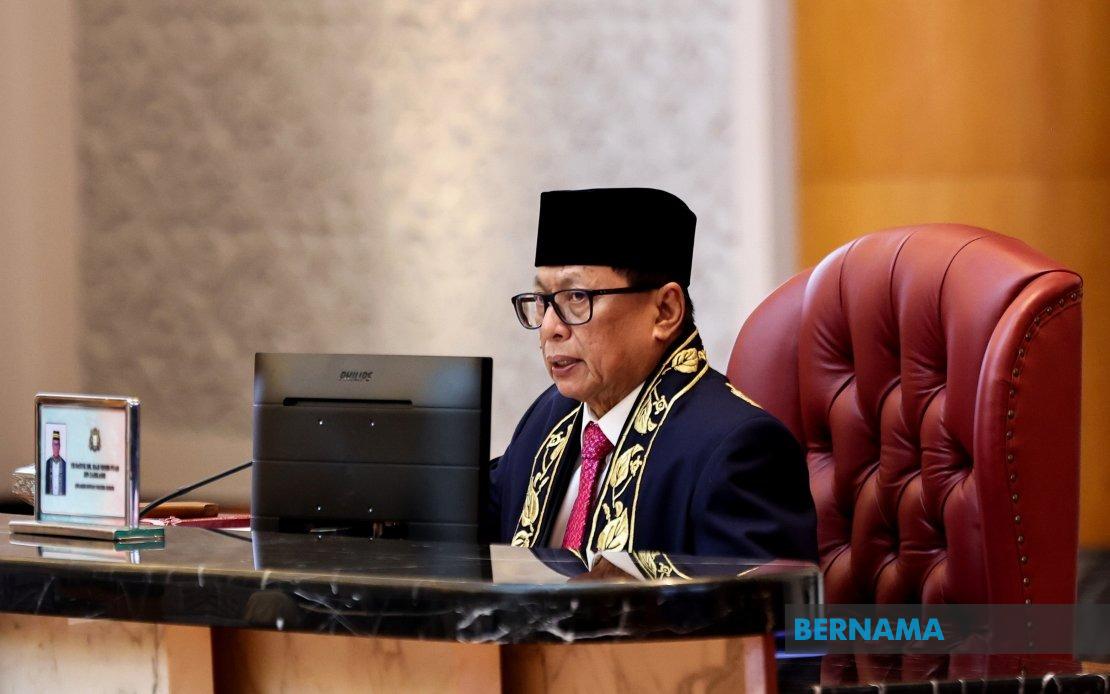
The political landscape in Johor is set to shift with the announcement that Datuk Dr Mohd Puad Zarkashi, the incumbent assemblyman for Rengit and speaker of the state legislature, will not seek re-election when voters go to the polls on July 11. The 69-year-old legislator made the decision public through a Facebook statement on June 17, confirming what insiders had suspected—that generational change is coming to the state's political hierarchy.
Mohd Puad's withdrawal from the race reflects a carefully considered strategy rather than an abrupt departure. He disclosed that he had reached this conclusion approximately a year prior and formally communicated his intentions to UMNO president Datuk Seri Dr Ahmad Zahid Hamidi and Johor UMNO chairman Datuk Onn Hafiz Ghazi a mere fortnight before making the announcement public. This measured approach suggests internal party discussions had already paved the way for his successor, allowing the ruling coalition to manage the transition smoothly rather than face a late-stage vacuum.
The mathematics of his decision are straightforward. At 69 years old, Mohd Puad reasoned that remaining in office would take him through to age 74 at the conclusion of a five-year term, a prospect he deemed inappropriate for someone seeking to serve in elected office. This rationale speaks to broader conversations within Malaysian politics about age limits and generational responsibility. By voluntarily stepping aside before facing electoral pressure, Mohd Puad positions himself within an emerging narrative of dignified succession rather than the forced retirements or electoral losses that have characterised some transitions in Malaysian state politics.
Mohd Puad's decision carries broader implications for how UMNO and the Johor government approach renewal. He explicitly advocated that seats should be reserved for those aged 50 and younger, articulating a clear vision for party rejuvenation. This stance becomes particularly significant given his high-profile role as speaker, a position that commands respect and visibility within the legislature. His voluntary departure from frontline electoral politics could signal to older politicians within the party that graceful exits are not merely acceptable but encouraged.
The call for younger leadership extends beyond mere age considerations. Mohd Puad outlined specific qualities that should guide candidate selection, emphasising education, moral character, dedication to the party's ideological struggle, and comprehension of the nation's strategic direction. These criteria move the conversation away from seniority or entitlement and toward merit-based selection, though whether such standards are consistently applied across the party remains to be observed in the candidate nominations that follow.
Mohd Puad's tenure in Rengit demonstrated respectable electoral performance. In the 2022 state election, he secured victory with a 1,920-vote majority, a margin that suggested solid grassroots support but hardly insurmountable territory. Whether this relatively narrow victory margin influenced his decision to step aside, or whether his reasoning was genuinely rooted in age and principle, remains somewhat ambiguous. The subsequent development of Rengit as a competitive battleground could prove instructive.
His position as Legislative Assembly speaker adds another dimension to his departure. The speaker's role, typically held by a senior and trusted member of the ruling coalition, carries ceremonial and procedural significance beyond normal backbench representation. By vacating both his Rengit seat and implicitly his speaker position, Mohd Puad creates space for Datuk Onn Hafiz Ghazi to restructure the leadership team. Whether Onn Hafiz chooses to promote a younger legislator to the speaker's chair or manages the succession differently will indicate how serious the state government is about the generational shift Mohd Puad advocates.
The timing of this announcement merits consideration. With nomination day scheduled for June 27 and polling set for July 11, the state government and UMNO have roughly two weeks to identify and prepare Mohd Puad's replacement in Rengit. This compressed timeline suggests the decision was made sufficiently in advance to allow orderly succession planning, reducing the likelihood of internecine party disputes over the seat. In Malaysian state politics, where intra-party struggles for nominations frequently generate headlines and resentment, orderly transitions are considerably less common than chaotic ones.
Mohd Puad's appreciation for Sultan Ibrahim, King of Malaysia, expressed in his statement, reflects the formal protocols of Malaysian politics but also acknowledges the constitutional role of the monarchy in appointing legislative speakers. His gratitude suggests he views his speaker position as an honour bestowed by the palace, appropriate sentiment for a dignified exit from a prominent post. This courtly language also signals respect for institutional continuity and constitutional processes.
Looking forward, the Rengit seat will test whether the Johor electorate responds positively to younger UMNO candidates or whether voters prioritise incumbency and familiarity. The broader question for Malaysian politics is whether Mohd Puad's principled withdrawal will become a model for other older politicians or remain an isolated act of statesmanship. His decision arrives amid rising criticism of gerontocratic governance across the region, making his move potentially significant beyond Johor's borders.
For Johor UMNO, Mohd Puad's exit opens both opportunity and challenge. The opportunity lies in presenting fresh faces and new ideas to voters fatigued by long-serving incumbents. The challenge involves managing expectations among senior party members who may feel their decades of service should entitle them to continued representation. How Onn Hafiz navigates this balance will substantially influence the state government's credibility heading into the July 11 polls and beyond.