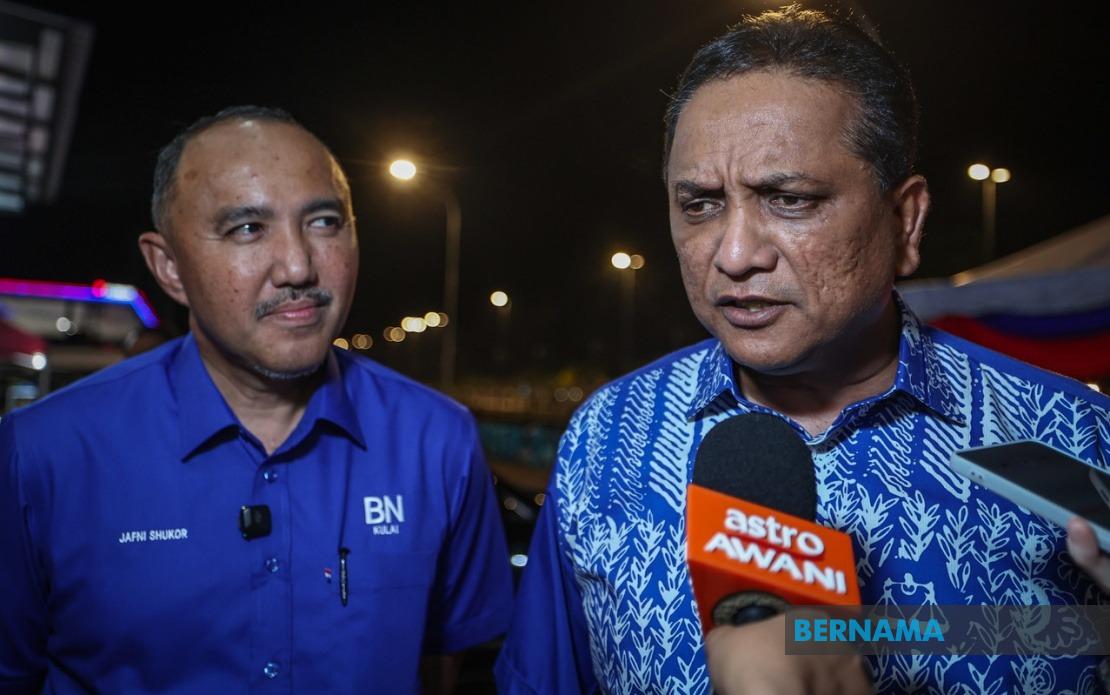
Senior UMNO figure Datuk Seri Reezal Merican Naina Merican has dismissed recent allegations that the Regent of Johor, Tunku Mahkota Ismail, has transformed the state administration into a "palace puppet," characterising such claims as grossly distorted and without substantive foundation. Speaking in Johor Bahru on June 25, the UMNO Supreme Council member stressed that the Regent's vocal engagement on matters of state development ought not be misconstrued as an overreach of authority, but rather understood as a legitimate expression of his constitutional duty to the Johor populace.
The controversy intensified following the departure of Datuk Dr Mohd Puad Zarkashi from UMNO, during which the former Speaker of the Johor State Legislative Assembly levelled allegations against Menteri Besar Datuk Onn Hafiz Ghazi. Reezal Merican's intervention represents an attempt by party leadership to neutralise the narrative before the state election, which the Election Commission has scheduled for July 11, with nominations to take place on June 27. The timing of these political manoeuvres suggests deepening factional tensions within Johor's ruling coalition during a critical electoral period.
Reezal Merican articulated a constitutional defence of the Regent's position, arguing that decisions and directives issued by Tunku Mahkota Ismail are both his prerogative and obligation within the framework of state governance. He framed the Regent's role as essential to institutional checks and balances, positioning the palace as a necessary counterweight to executive power wielded by the Menteri Besar, state administration, and the State Secretary's office. This characterisation seeks to redefine what opponents perceive as excessive influence into an ordinary feature of constitutional monarchy operating in Malaysia's federal system.
The UMNO politician pointedly denied that such dynamics represent party subordination to palace interests, asserting he has encountered no evidence within party councils that Johor UMNO operates as an instrument of royal direction. His statement appears designed to reassure party members and the broader electorate that democratic processes within the state remain intact and that the party maintains institutional independence despite the Regent's prominent role in state affairs. Yet the very necessity of such clarifications underscores underlying anxieties about power distribution within Johor's political establishment.
Reezal Merican further questioned the motivations of Mohd Puad in raising such allegations, particularly at a juncture when Johor stands on the precipice of electoral renewal. He suggested that introducing royal institutions into partisan political discourse represented a calculated manoeuvre rather than a genuine governance concern. This counterattack strategy attempts to delegitimise the critic rather than substantively engaging with underlying questions about institutional boundaries and executive authority in the state, a common deflection tactic in Malaysian political disputes.
The controversy reveals fault lines within Johor's ruling establishment that have implications extending beyond the state's borders. As one of Malaysia's economically significant states and a traditional stronghold of Malay-Muslim political dominance, Johor's internal divisions carry weight for national coalition stability. The Regent's assertive public profile has emerged as a defining feature of contemporary Johor governance, with his pronouncements on development projects, administrative matters, and state policy receiving considerable media attention. This prominence, whether viewed as principled oversight or inappropriate interference, reflects broader debates within Malaysia about the relationship between constitutional monarchies and elected executive bodies.
The allegations against Menteri Besar Onn Hafiz Ghazi, though not fully elaborated in public discourse, suggest accumulating frustrations within UMNO ranks regarding decision-making processes and autonomy. Mohd Puad's decision to exit the party signals that internal party mechanisms have failed to resolve these tensions, forcing concerns into the public sphere during an election campaign. Such departures immediately before electoral contests are typically symptomatic of deeper institutional malfunction and competing visions for the state's political future.
For Malaysian observers, this episode illuminates the complex interplay between hereditary institutional authority and democratic governance structures. Unlike many regional peers, Malaysia's constitutional monarchies retain constitutive roles in state administration, creating potential friction when royal preferences diverge from elected officials' policy positions. Johor's particular context—where the Regent has demonstrated willingness to exercise these prerogatives visibly and frequently—exemplifies contemporary tensions between traditional authority and modern democratic expectations. The Regent's interventions, whether characterised as protective oversight or inappropriate control, fundamentally shape Johor's governance trajectory.
Reezal Merican's defence strategy reflects UMNO's broader vulnerability heading into the election. Rather than comprehensively addressing substantive governance questions, his response emphasises party loyalty and constitutional orthodoxy. This approach may prove insufficient if public concern regarding executive autonomy persists. The coming election will test whether voters reward UMNO's traditional dominance in Johor or if accumulated frustrations—whether about Regent influence, administrative effectiveness, or leadership competence—translate into electoral consequences. The state's outcome could significantly influence Malaysian national political dynamics and reinforce or challenge existing power configurations within the ruling coalition.

