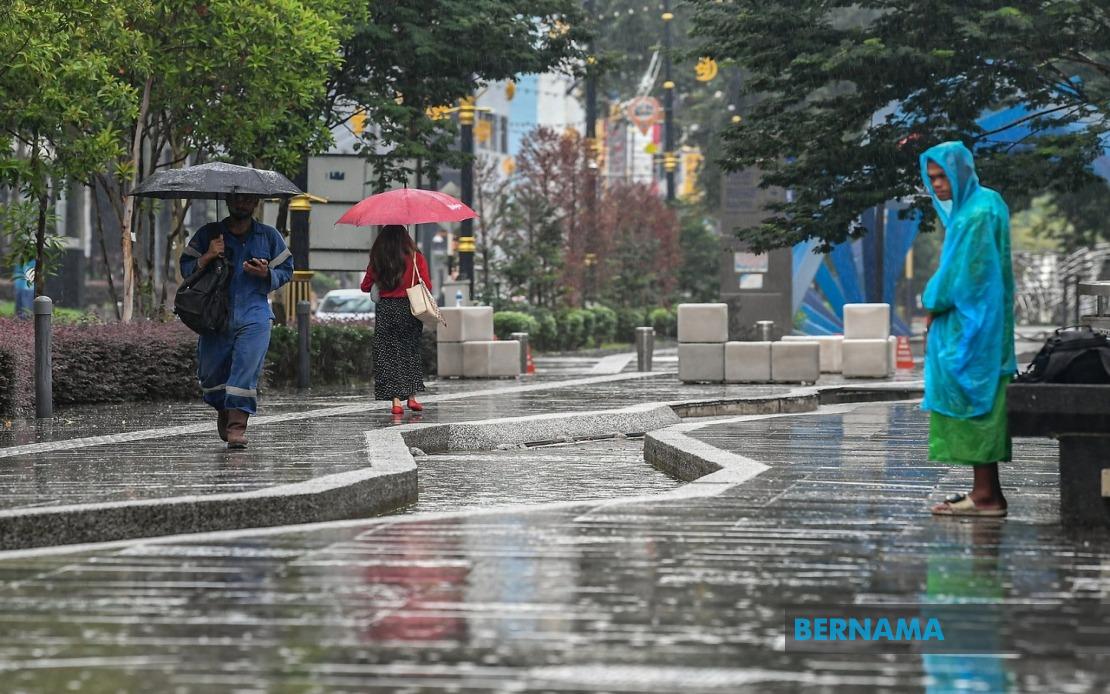
Weather conditions will prove unforgiving for prospective candidates and their supporters across much of Johor on nomination day, with rain expected to drench seven of the state's ten districts during the morning hours when candidates must formally register their candidacies. The Malaysian Meteorological Department's Johor director Azlai Ta'at disclosed that Johor Bahru, Muar, Batu Pahat, Kota Tinggi, Pontian, Tangkak and Kulai will all experience rainfall, potentially complicating logistics for campaign teams attempting to mobilise supporters and conduct last-minute preparations ahead of the formal registration process.
In contrast, clearer skies are anticipated across Segamat, Kluang and Mersing throughout the morning period, offering these three districts better conditions for nomination activities. The temperature band across the state will remain relatively consistent with typical Malaysian climate patterns, hovering between 24 and 25 degrees Celsius at minimum and climbing to between 31 and 34 degrees Celsius at their peak, with Segamat likely to experience the hottest conditions reaching up to 34 degrees. Authorities have urged the general public, particularly those accompanying candidates and supporting various political factions, to monitor weather developments carefully given the potential for rapid atmospheric changes during the equatorial season.
The nomination centres, numbering 56 across all state constituencies, will operate on a compressed timetable with registration permitted only between 9 am and 10 am. This narrow window means returning officers must process all applications and announce which candidates have successfully met eligibility requirements within an exceptionally tight timeframe. The brevity of this window underscores the logistical challenge that weather disruptions could create, particularly for candidates travelling between multiple constituencies or those from rural areas where transportation may be complicated by heavy downpours.
Thunderstorms will likely dominate the afternoon and evening landscape, marking an inauspicious beginning for the formal campaigning period that officially commences once the nomination process concludes. MetMalaysia has specifically flagged the likelihood of thunderstorm activity in Johor Bahru, Segamat, Kluang, Kota Tinggi, Pontian, Mersing and Kulai during afternoon hours, whilst Batu Pahat and Tangkak are anticipated to experience rain showers rather than full thunderstorms. Muar presents the exception, with forecasters expecting hot conditions without significant precipitation, potentially offering a more favourable environment for early campaign activities in that district.
The 16th Johor state election will witness considerable competition across all 56 seats, with three major political coalitions and several independent parties contesting virtually every constituency. Pakatan Harapan fields a full slate across all seats, combining 20 candidates from PKR, 19 from Amanah and 17 from DAP, representing the opposition's most comprehensive challenge in recent electoral cycles. Barisan Nasional maintains its traditional structure by fielding 36 UMNO candidates alongside 16 from MCA and four from MIC, collectively covering all constituencies and reflecting the coalition's continued institutional dominance in Malaysian electoral politics.
Perikatan Nasional presents a more fragmented challenge, with PAS contesting 11 seats, Bersatu 16, the Malaysian Indian People's Party five and Pejuang a single constituency, resulting in substantially fewer total candidates than either of the two larger coalitions. The Malaysian United Democratic Alliance adds marginal representation with four candidates, whilst Parti Sosialis Malaysia fields one candidate and Parti Bersama Malaysia makes its inaugural electoral appearance by contesting 15 seats, demonstrating the continued proliferation of political parties seeking to establish themselves within Malaysia's multi-party system.
The electoral commission has structured the voting process to span multiple days, with early voting allocated for July 7 and the main polling day scheduled for July 11. This extended timeline permits voters unable to cast ballots on the primary election day to participate in advance voting, potentially enhancing overall voter participation and reducing congestion at individual polling stations during the main event. The spacing also provides campaign teams with additional time for ground operations, though weather conditions across multiple days could affect voter mobilisation efforts throughout the campaign period.
The electoral roll encompasses nearly 2.73 million registered voters, comprising primarily ordinary civilians alongside smaller cohorts of military personnel and their spouses, along with police personnel and their spouses who qualify as electoral participants. This substantial voter base reflects Johor's significance within Malaysia's political geography, making the state a considerable prize for any political coalition seeking to strengthen its parliamentary representation and claim electoral momentum heading into potential future national elections. The state's demographic composition and political history render it persistently competitive, with significant constituencies containing diverse ethnic and socioeconomic communities whose voting patterns have shifted considerably across recent election cycles.
For Malaysian political observers and international analysts tracking electoral trends across the region, the Johor election serves as a crucial bellwether for broader sentiment within the peninsula's most economically developed and geographically substantial state. The nomination day weather disruptions, whilst seemingly minor operational obstacles, may inadvertently reveal which political organisations maintain superior ground infrastructure and logistical capabilities to mobilise supporters despite environmental challenges. Such operational competence frequently correlates with broader campaign effectiveness and ground-level organisational strength, metrics that often prove significant in determining electoral outcomes beyond purely ideological or policy considerations.

