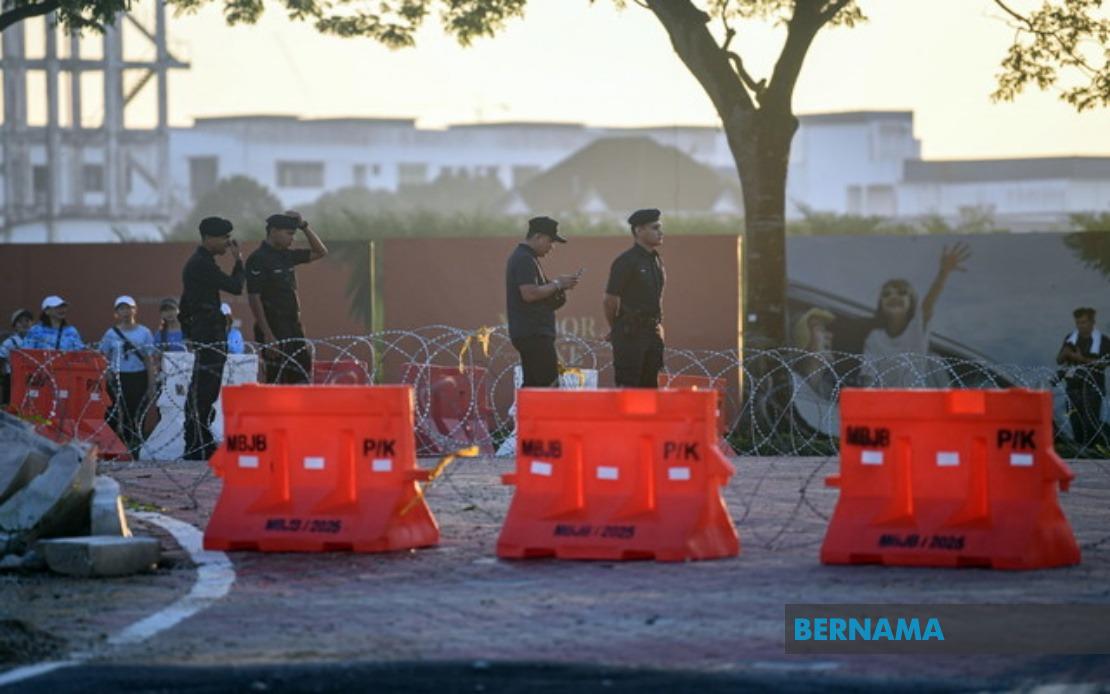
The Johor state election's nomination day proceeded without disruption on June 27, as favourable weather and efficient organisation enabled the Election Commission to manage the filing of candidacies at 56 nomination centres distributed across the state. The process, which ran from 9am to 10am, established a professional atmosphere at each venue, with EC officials conducting final preparations and receiving nomination documents in an orderly fashion. Adequate security arrangements were implemented throughout the state to prevent any breach of protocol and ensure the democratic process remained undisturbed.
Party enthusiasm was evident from early morning, with supporters of various candidates assembling at polling stations as early as 7.30am to demonstrate backing for their preferred contenders. This pre-dawn gathering reflected the competitive nature of the contest and the level of grassroots engagement expected in state-level contests within Malaysia. The visible energy among party workers and supporters indicated that the election campaign would generate considerable interest among voters across the state.
The Malaysian Meteorological Department provided weather forecasts that proved reassuring for the nomination process, indicating that most Johor districts would experience dry conditions throughout the morning hours. Afternoon thunderstorms were predicted for selected locations, but these weather patterns did not interfere with the day's administrative proceedings. The absence of severe weather complications meant that nomination activities could proceed without logistical obstacles, allowing candidates to file their papers without facing unexpected delays or difficulties.
Johor's legislative assembly comprises 56 elected seats, following the dissolution announced on June 1. The Election Commission subsequently scheduled early voting for July 7, with the main polling day fixed for July 11. This timeline provides voters with adequate opportunity to assess candidates during the intervening campaign period and allows early voters—particularly those with mobility constraints or prior commitments—to participate in the democratic exercise. The schedule demonstrates the EC's effort to balance campaign momentum with practical accessibility considerations for all eligible voters.
Electoral statistics reveal substantial participation potential, with the EC registering 2,727,926 eligible voters throughout the state. This figure comprises 2,703,175 ordinary citizens, alongside 12,041 military personnel and their spouses, and 12,710 police personnel and their spouses. The inclusion of security personnel and their families within the voting franchise reflects Malaysia's commitment to ensuring that all citizens, regardless of employment sector, retain their democratic rights. This comprehensive voter roll underscores the inclusive nature of democratic participation across different segments of Malaysian society.
The nomination process represents a critical juncture in any electoral exercise, as it formally establishes which candidates will appear on ballot papers and determines the competitive landscape facing voters. Johor's 56 nomination centres facilitated the simultaneous processing of candidacies across geographically dispersed communities, from urban Johor Bahru to more rural constituencies. This decentralised approach reduces bottlenecks and allows candidates from distant areas to file nominations without excessive travel burdens, thereby promoting broader participation in the contest.
For Malaysian observers tracking electoral developments in the nation's second-largest state by population, this nomination process signals the beginning of the formal campaign phase. Johor's elections carry significance beyond the state itself, as they often provide indicators of voter sentiment that influence broader national political calculations. The turnout and engagement demonstrated during the nomination process may offer preliminary insights into the level of voter interest expected during the July 11 poll and the intensity of competition among contending parties.
The smooth administration of the nomination process reflects the Election Commission's operational capacity and experience in managing large-scale electoral exercises. The careful coordination required to oversee simultaneous procedures across 56 separate venues while maintaining uniform standards and security protocols demonstrates institutional competence. Such logistical precision proves essential for maintaining public confidence in electoral integrity and ensuring that all candidates operate within a fair and transparent framework.
The upcoming campaign period will test the resilience of democratic discourse in Johor, as candidates and parties engage voters through various channels. Early voting on July 7 will provide an initial indication of participation rates, while the main polling on July 11 will determine the composition of the state assembly for the subsequent term. The nomination day's successful execution has set a constructive tone for the democratic process ahead, suggesting that the election will proceed through remaining stages with similar professionalism and order.

