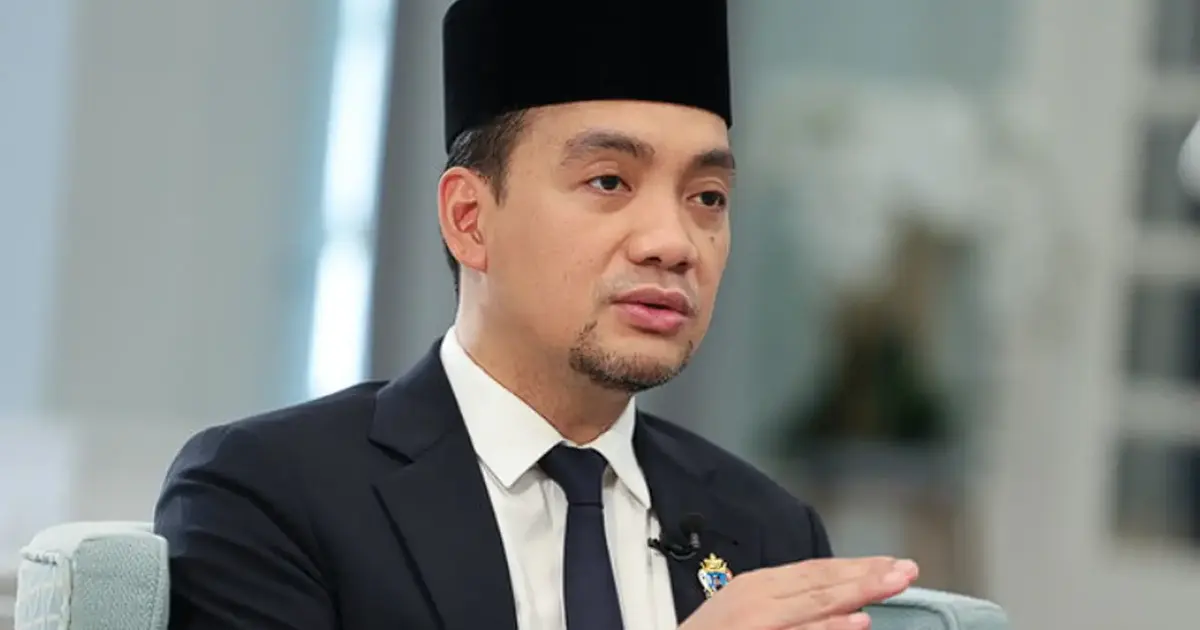
Johor's caretaker menteri besar Onn Hafiz has pushed back against suggestions that the Sultan's approval for the state assembly's dissolution represents undue political interference by the palace, insisting instead that the process is fundamentally constitutional in nature and an essential component of Malaysia's system of governance.
The distinction Onn Hafiz draws between political interference and constitutional obligation carries significant implications for understanding how Malaysia's constitutional monarchies operate within the federal system. In Johor, as in other states with hereditary rulers, the Sultan holds formal powers that must be exercised in specific contexts, including the authority to approve or withhold consent for the dissolution of the state assembly. This power, while clearly vested in the Sultan, operates within carefully defined constitutional parameters that are not discretionary but mandatory.
The clarification becomes particularly important given the sensitivities surrounding palace involvement in state-level politics across Malaysia. Public and political discourse has periodically flared whenever royal institutions appear to take positions that affect electoral outcomes or government formation. By characterizing the royal assent as procedural rather than discretionary, Onn Hafiz seeks to depoliticize what might otherwise be interpreted as an active royal choice to favor one political outcome over another. The technical distinction matters because it reframes the Sultan's role from that of a political actor making calculated decisions to that of a constitutional referee applying established rules.
In the Malaysian constitutional framework, particularly for states with sultans, the concept of royal assent is not novel but rather deeply embedded in the structures established during the federation's founding. When a menteri besar recommends the dissolution of the state assembly, the Sultan's approval is not something that can be withheld on political grounds without triggering a constitutional crisis. The Sultan must grant assent to acts performed by the Chief Minister within their lawful constitutional authority, much as the Yang di-Pertuan Agong must grant assent to legislation passed by Parliament. Without this automatic approval mechanism, the entire system of representative government would become unstable, as it would allow the ruler to effectively override decisions made through the proper political process.
Onn Hafiz's statement reflects a broader pattern of Malaysian political figures invoking constitutional formality when the palace becomes entangled in politically contentious decisions. This approach serves multiple functions: it acknowledges the Sultan's authority and dignity, it provides a technical explanation for outcomes that particular groups might oppose, and it attempts to insulate the palace from accusations of partisan political involvement. For readers across Southeast Asia, this illustrates how constitutional monarchies in the region navigate the tension between formal powers held by rulers and the democratic principle that elected officials should make strategic political decisions.
The timing of Onn Hafiz's clarification suggests that there had been discussion or speculation about whether the Sultan's approval for dissolution constituted something more than routine administrative assent. In parliamentary and state assembly systems across the Commonwealth, the dissolution of legislatures is typically considered a political decision made by the executive, not the ceremonial head of state. However, Malaysia's constitutional arrangement places additional formal steps in the hands of the ruler, creating a distinction between the Anglo-Westminster model and Malaysia's adapted version.
For Johor specifically, and for other Malaysian states with sultans, the interplay between menteri besars and sultans in matters of assembly dissolution remains an area where constitutional theory meets political reality in complex ways. When a government seeks dissolution, it is making a deliberate political choice, often calculated to improve its electoral position or capitalize on particular circumstances. Yet the formal involvement of the Sultan in granting assent means that the palace cannot be entirely removed from the political landscape, even if its role is technically confined to approval rather than decision-making.
Onn Hafiz's comments also carry implications for how political leaders in Malaysia's other states should frame similar interactions with their respective sultans. By establishing the precedent that royal assent is constitutional procedure rather than political judgment, state executives create clearer boundaries around what can and cannot be attributed to palace interference. This protective framing benefits both the political leadership and the institution of the monarchy itself, as it preserves the Sultan's dignity and authority while maintaining that these formal powers do not constitute active political participation.
The underlying constitutional principle that Onn Hafiz invokes reflects the principle of delegated authority within Malaysia's federal structure. Sultans in each state retain certain formal powers that must be exercised as part of the lawful functioning of state government. When these powers are exercised as prescribed by the constitution, describing them as interference mischaracterizes the nature of the relationship. The Sultan is not choosing to intervene but rather fulfilling a requirement of their constitutional office. This framing positions royal assent alongside other administrative formalities that are necessary to the functioning of government but not substantively political in nature.
For Malaysian readers and observers across the region, Onn Hafiz's explanation serves as a useful reminder that constitutional monarchies operate according to specific rules that can sometimes obscure rather than clarify the relationship between formal power and political influence. While the Sultan's assent may be legally automatic, the political significance of dissolving an assembly remains entirely with the menteri besar and the government making that decision. Understanding this distinction helps explain how institutions in Malaysia's constitutional system can appear to intersect in ways that might seem politically significant while remaining technically within the bounds of proper constitutional functioning.
The statement also reflects a deeper principle relevant to Malaysian federalism: that state rulers retain meaningful constitutional status even as their political influence has diminished over decades of democratic development. By invoking constitutional procedure, Onn Hafiz affirms the Sultan's formal role while simultaneously arguing that this role does not constitute political interference in the contemporary sense. This approach allows state governments to proceed with political decisions while maintaining the respect due to royal institutions, a balance that remains central to Malaysia's plural society.

