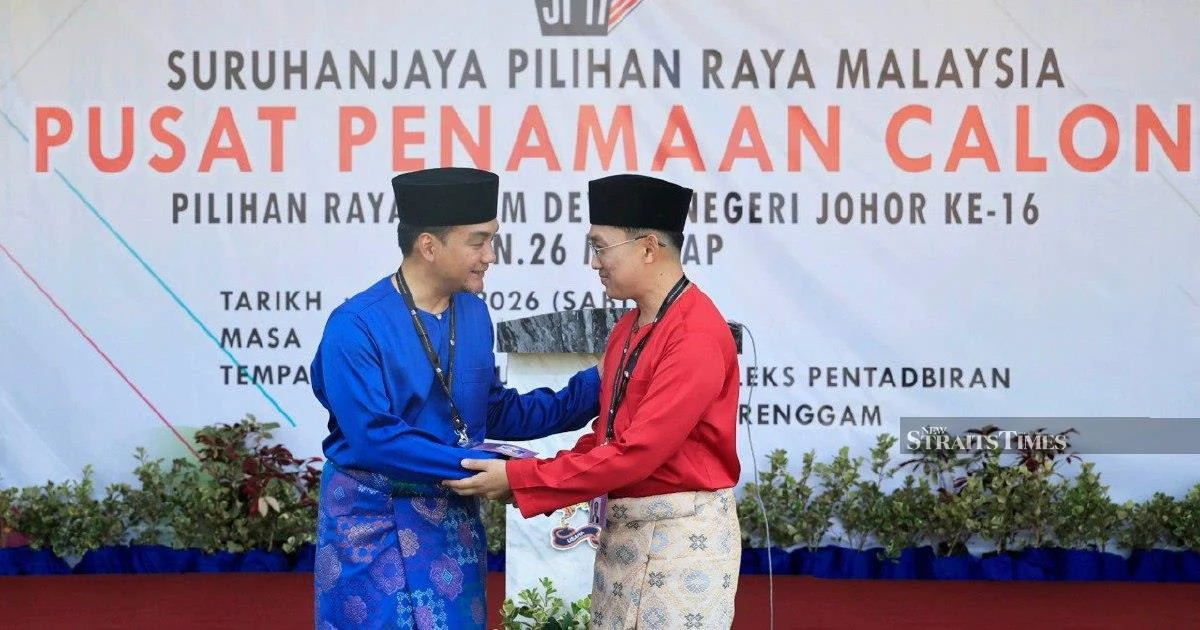
Caretaker Menteri Besar Datuk Onn Hafiz Ghazi is approaching his re-election campaign in Machap with measured expectations, refusing to assume victory despite his current position and the ruling coalition's organisational advantages heading into Johor's July 11 state election. At a campaign stop in Simpang Renggam, the senior Bersatu figure struck a notably humble tone, insisting that electoral outcomes remain fundamentally unpredictable and that complacency would be a dangerous strategic error.
Onn Hafiz's cautionary message reflects a broader anxiety within the Barisan Nasional machinery as Johor's political landscape shows signs of volatility. While the state government has maintained relatively stable governance, the dynamics of recent Malaysian electoral contests have demonstrated that incumbent advantages can evaporate rapidly when voters perceive governance failures, broken promises, or superior opposition narratives. The Machap constituency, which Onn Hafiz currently represents, carries particular significance as both a personal stronghold and a bellwether for broader state-level sentiment.
The mentri besar's emphasis on uncertainty also acknowledges the competitive intensity of opposition forces operating across Johor. The Democratic Action Party, Amanah, and other components of the opposition coalition have been methodically building grassroots networks and articulating alternative visions for state development. These groups recognise that Johor, as Malaysia's southernmost state and an economic anchor for the nation, represents strategically valuable territory. Recent by-elections and local contests throughout the country have shown that opposition movements can mobilise effectively even in traditionally Barisan-dominated areas.
The July 11 election occurs within a broader context of evolving Malaysian politics. The federal government's composition—built on Barisan-Perikatan cooperation frameworks—creates different political pressures than past election cycles. State governments led by Barisan members must simultaneously maintain credibility with local voters while navigating partnership arrangements at the federal level. For Onn Hafiz specifically, this balancing act involves demonstrating that his administration delivers tangible benefits to Johor residents whilst remaining aligned with broader coalition strategies.
Machap itself presents both opportunities and challenges for the caretaker mentri besar. The constituency encompasses urban and semi-rural areas with diverse demographic compositions and economic interests. Infrastructure development, education provision, healthcare access, and employment opportunities all factor into voter calculations. Opposition candidates will likely emphasise any perceived gaps in service delivery or development spending, whilst the Barisan campaign must showcase concrete achievements whilst promising accelerated progress if returned to power.
Onn Hafiz's political background also shapes the election dynamics. As a senior Bersatu figure, he represents a party that has undergone significant transformation following its exit from Pakatan Harapan and subsequent alignment with Barisan Nasional. This evolution generates both loyal supporters who view the repositioning as necessary pragmatism and critics who frame it as opportunistic. The July 11 contest will partly reflect voter sentiment regarding Bersatu's direction and Onn Hafiz's personal credibility within that shifting party framework.
The caretaker status itself introduces peculiar pressures into campaign dynamics. Caretaker mentris besar must observe certain restraint regarding resource deployment and policy announcements, creating an uneven playing field where opposition movements operating outside formal government structures enjoy certain tactical advantages. Onn Hafiz's campaign must therefore rely heavily on personal reputation-building, grassroots engagement, and the residual goodwill generated by previous governance. His measured tone suggests awareness that confidence alone cannot substitute for genuine voter satisfaction with his administration's record.
Election observers anticipate that Johor's July 11 contest will illuminate broader patterns within Malaysian state-level politics. The state accounts for approximately 80 state assembly seats divided among constituencies that range from competitive three-way contests to areas where one coalition enjoys overwhelming numerical advantage. Machap's result will provide early indication of whether voters are broadly satisfied with Barisan governance or whether opposition inroads are expanding. A comfortable Onn Hafiz victory would suggest stable Barisan dominance; a narrow result or upset would signal dangerous erosion in state government support.
The mentri besar's public cautioning also serves strategic purposes within coalition dynamics. By emphasising uncertainty and the need for maximum campaign effort, he can mobilise party machinery without fostering complacency. This messaging approach—common among experienced politicians—maintains organisational discipline whilst managing expectations that might otherwise prove destabilising if initial predictions prove overconfident. For Bersatu specifically, strong performance in Johor helps validate the party's strategic repositioning and strengthens Onn Hafiz's position within internal party hierarchies.
Regionally, Johor's election outcome carries implications for Southeast Asian political economy. As Malaysia's industrial powerhouse and primary economic driver, the state's stability and governance quality affect investor confidence, labour market dynamics, and infrastructure development trajectories. A Johor government perceived as effective and stable attracts capital inflows and multinational investment; conversely, political turbulence generates risk premiums that deter long-term commitments. Onn Hafiz's re-election, therefore, involves not merely personal political ambitions but broader considerations of state-level stability and development continuity.
Looking forward, the caretaker mentri besar's campaign will intensify considerably as polling day approaches. His measured rhetoric regarding election unpredictability will likely give way to more aggressive messaging emphasising Barisan achievements and contrasting opposition policy positions. However, the strategic foundation he has established through cautionary statements will provide flexibility if electoral dynamics prove less favourable than anticipated. In Malaysian politics, where regional variations and swing voting behaviour frequently frustrate predictions, such intellectual humility often proves politically advantageous.

