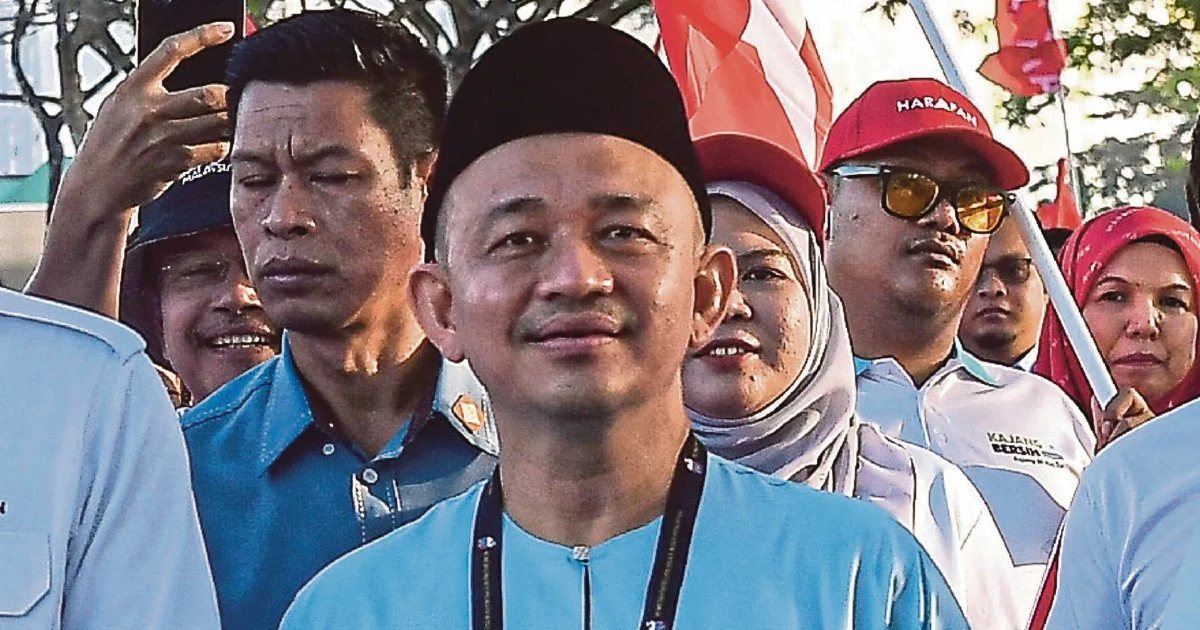
A Pakatan Harapan triumph in the upcoming Johor state election would mark a pivotal turning point in how the state approaches its development priorities, according to former education minister Dr Maszlee Malik, who has positioned the electoral contest as a moment of critical strategic choice for Johor's future trajectory.
Dr Maszlee's remarks underscore the wider debate within Pakatan circles about what a state-level victory would mean beyond parliamentary representation, framing the election as an opportunity to redirect Johor's governance framework and long-term planning. His emphasis on the significance of winning seats like Puteri Wangsa reflects the coalition's focus on metropolitan constituencies where middle-class voters and emerging urban demographics hold considerable sway over electoral outcomes.
The timing of these comments comes as Pakatan attempts to consolidate its position in one of Malaysia's most consequential states. Johor, as the nation's second most developed economy and a key manufacturing hub, carries outsized importance in federal political calculations. Any shift in the state's political control would reverberate through both regional governance structures and the broader balance of power at the national level, making even incremental territorial gains strategically significant.
For Malaysian observers tracking the peninsula's political landscape, Johor elections have historically served as barometers of shifting voter sentiment. The state's electorate has become increasingly diverse, with younger, urban-based voters demonstrating different priorities from traditional rural constituencies. Pakatan's campaign messaging, through voices like Dr Maszlee, appears calibrated to appeal to this demographic by articulating a vision of developmental modernisation rather than merely opposing incumbent approaches.
The reference to a "new chapter" for state development carries implicit criticism of current administrative direction, suggesting that a change of government would bring substantively different policies in areas such as infrastructure investment, economic diversification, education systems, and social services. This framing attempts to elevate the election beyond personality-driven politics toward policy-oriented discourse, though the efficacy of this approach remains contested among political analysts.
Johor's development priorities have traditionally centred on port infrastructure, petrochemical industries, and palm oil production, sectors vulnerable to global commodity fluctuations and geopolitical supply chain adjustments. A new administration, should Pakatan succeed, would inherit both these legacy industries and emerging challenges around digital transformation, renewable energy transition, and talent retention in a competitive Southeast Asian environment. Dr Maszlee's invocation of developmental transformation implicitly addresses these contemporary concerns.
The state's education sector, Dr Maszlee's former portfolio at federal level, likely features prominently in Pakatan's unspoken development agenda. Johor hosts several significant universities and technical institutions, yet questions persist about curriculum alignment with industry needs and graduate employability. A Pakatan administration might prioritise vocational training integration and STEM education expansion, areas where Dr Maszlee commanded attention during his ministerial tenure, though with mixed reception.
Electorally, Johor presents a complex terrain for Pakatan. The state has demonstrated surprising volatility in recent electoral cycles, with voters occasionally punishing established parties through protest voting or shifting coalition preferences. The coalition's challenge involves converting such tactical opposition into enduring political support, something that requires concrete development dividends materialising relatively quickly after any electoral victory.
International observers monitoring Malaysian regional politics have noted how state elections increasingly function as laboratories for policy experimentation and political innovation. A Pakatan-controlled Johor might pilot approaches to economic governance, transparency mechanisms, or civil service reform that could subsequently influence federal policy discussions, particularly if coalition fortunes improve at the national level.
The fiscal implications of a Johor transition also merit consideration. State budgeting priorities, revenue allocation, and development expenditure patterns would likely shift under new management, potentially affecting everything from port operations to agricultural subsidies. Multinational corporations and foreign investors monitoring Malaysia's governance stability track changes in state administrations closely, as these alterations can signal broader shifts in regulatory environment and business predictability.
Dr Maszlee's intervention in pre-election discourse also reveals internal Pakatan dynamics, where different faction voices and portfolios compete for prominence in articulating the coalition's overarching vision. His emphasis on development transformation rather than institutional accountability or anti-corruption messaging suggests deliberate strategic messaging aimed at specific voter segments prioritising economic progress over governance correction.
Looking forward, whether Pakatan succeeds or fails to capture the state seats in question, the contours of this election will likely shape Johor's political identity for at least the next electoral cycle. Voter expectations, once articulated through political messaging like Dr Maszlee's, create accountability benchmarks that incoming administrations must address, making campaign narratives about developmental transformation not merely rhetorical flourishes but implicit commitments to measurable governance outcomes that will ultimately determine whether electoral promises translate into tangible improvements in citizens' lived experience.

