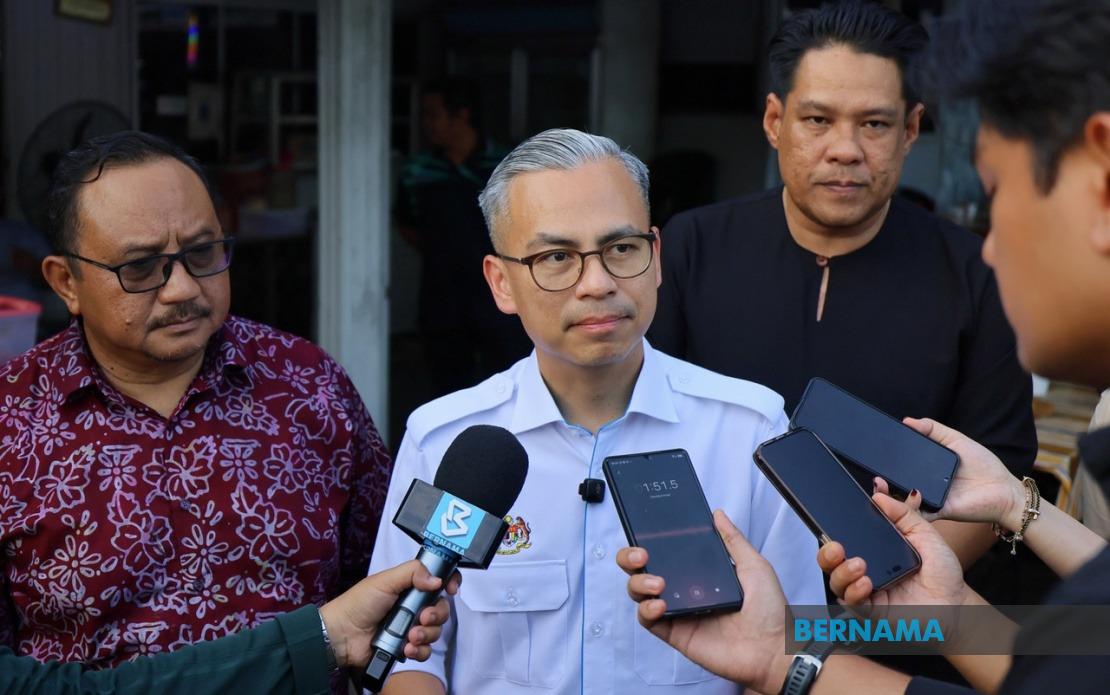
Ahead of tomorrow's nomination day for the Johor State Election, Communications Minister Datuk Fahmi Fadzil has issued a stern call for all political parties and their supporters to maintain ethical standards in their campaigning efforts. Speaking at an event in Batu Pahat, Fahmi emphasised that the democratic process requires candidates and activists to ground their campaign messages in verifiable information rather than resort to character attacks and misleading claims that undermine public trust.
The minister's warning reflects growing concerns about the tone and conduct of political discourse in Malaysia. With nomination day imminent and polling scheduled for July 11 following the dissolution of the State Assembly on June 1, the electoral period presents a critical moment for political parties to demonstrate that they can compete vigorously while maintaining respect for democratic norms. Fahmi's intervention signals that the government intends to monitor campaign conduct closely and will not tolerate behaviour that falls outside legal boundaries.
Fahmi made clear that the Election Commission and the Royal Malaysia Police are prepared to take swift legal action against any party or individual found committing offences during the election period. This includes violations related to the spread of false information, incitement, and breaches of electoral law. The dual emphasis on both institutions—the regulatory authority overseeing elections and the law enforcement apparatus—underscores the seriousness with which authorities plan to enforce compliance with campaign standards.
A particular focus of the government's election monitoring involves the digital landscape. The Malaysian Communications and Multimedia Commission, working alongside major social media platform providers, has ramped up surveillance to prevent the circulation of fabricated information. This collaborative approach recognises that false narratives often spread most rapidly online, where verification is difficult and emotional content tends to gain traction. The authorities have indicated special vigilance regarding sensitive topics related to the 3R framework—issues touching on Royalty, Religion, and Race—where misinformation can inflame communal tensions and undermine social harmony.
The government has also sought to create infrastructure that supports legitimate campaign communication and press freedom. A dedicated media centre in Johor Bahru has been established as the main hub for journalists covering the election. In addition, the National Information Dissemination Centre network provides at least one facility in each State Legislative Assembly constituency, allowing reporters to work, file stories, and access information without unnecessary obstacles. These provisions aim to ensure that the media can fulfil its watchdog role effectively while candidates can communicate their messages to voters through proper channels.
The ministry's initiatives extend beyond campaign conduct to addressing practical concerns raised by elected representatives. Batu Pahat Member of Parliament Onn Abu Bakar used the occasion of Fahmi's visit to raise complaints about internet disruptions and connectivity blind spots in his constituency. Such infrastructure issues directly affect voters' ability to access election information and campaign messages online, particularly in areas with patchy digital coverage. Fahmi responded by requesting the MCMC to investigate these complaints immediately, demonstrating that addressing technical barriers to electoral participation forms part of the broader election management strategy.
Onn's comments highlight how direct engagement between federal ministers and local representatives can facilitate the resolution of constituent grievances that might otherwise languish in bureaucratic channels. He noted that residents' complaints sometimes fail to reach decision-makers, so platforms like the communications ministry's community engagement programme serve a valuable purpose in directing concerns to appropriate authorities. This pathway is particularly important in smaller urban areas like Batu Pahat, where infrastructure development sometimes lags behind that of major cities.
The emphasis on fact-based campaigning also reflects evolving international standards for electoral integrity. Democracies worldwide have grappled with the challenge of maintaining campaign civility and truthfulness in an era of rapid information spread and declining traditional media gatekeeping. Malaysia's approach—combining regulatory monitoring, law enforcement readiness, and collaborative efforts with tech platforms—mirrors strategies adopted by other established democracies managing similar challenges.
For Malaysian voters, particularly those in Johor, these statements signal that their choice will be presented through messaging that has been, at least theoretically, subject to scrutiny for compliance with factual accuracy. The Election Commission and police presence throughout the campaign period should theoretically discourage the most egregious forms of electoral misinformation. However, the effectiveness of these safeguards depends on consistent enforcement and the willingness of political actors to voluntarily adhere to ethical standards even when undetected violations might benefit them electorally.
The backdrop of this election also matters for regional observers. Malaysia has long positioned itself as a democracy with credible institutions, and the conduct of the Johor state election will be watched as a barometer of electoral health. Southeast Asian democracies often face questions about the independence of election management bodies and the fairness of campaign environments, making Malaysia's explicit commitments to lawful, factual campaigning noteworthy for the region's democratic community.
Looking ahead to the campaign period between nomination day and July 11, all stakeholders—from candidates and party activists to media practitioners and ordinary voters—will navigate the balance between robust political competition and responsible discourse. The minister's statements serve as a public reminder of the rules and consequences, while the enhanced monitoring infrastructure indicates that authorities intend to back up these words with action. Whether this combination proves sufficient to maintain campaign standards will become apparent as the election progresses and real campaign dynamics unfold across Johor's constituencies.

