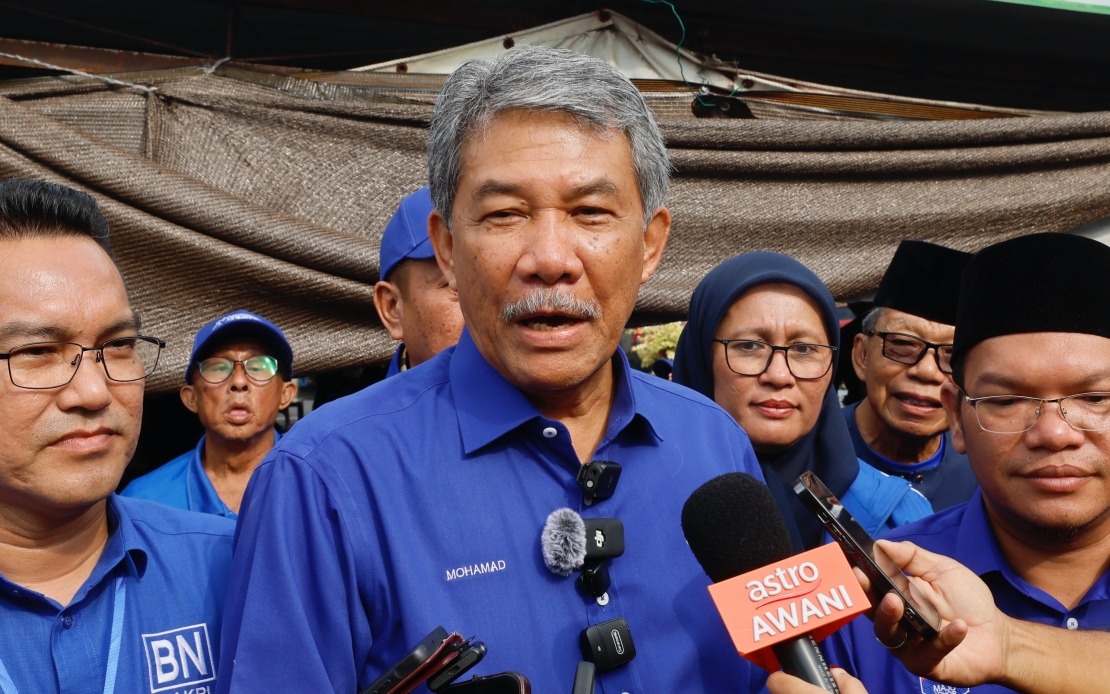
UMNO deputy president Datuk Seri Mohamad Hasan has urged all contesting parties in the Johor state election to conduct their campaigns with maturity and restraint, emphasizing that personal attacks should have no place in political discourse if Malaysia's national stability is to be preserved. Speaking during a voter engagement session at Tiram state constituency in Johor Bahru on July 6, Mohamad stressed that while parties are entitled to present their policy platforms and electoral offerings to the public, campaigning must not be allowed to undermine the cooperative working relationship maintained within the federal-level Unity Government.
The Foreign Minister drew a distinction between acceptable political banter and damaging personal attacks, suggesting that light-hearted inter-party exchanges are harmless as long as they do not descend into acrimony or character assassination. He emphasized that the substantive work of governance at the federal level—managing the country's affairs effectively and maintaining institutional harmony among coalition partners—takes precedence over electoral competition at the state level. This positioning reflects a broader tension within Malaysia's political landscape: the need to balance competitive democratic processes with the pragmatic demands of multi-party coalition government, a delicate balance that has characterized Malaysian politics since the formation of the Pakatan Harapan-UMNO-led Unity Government.
Mohamad also directly addressed circulating allegations that the Johor state election is being orchestrated to facilitate the release of former Prime Minister Datuk Seri Najib Tun Razak. He firmly rejected such claims as baseless, underscoring Malaysia's commitment to the rule of law and constitutional governance. His rebuttal carries particular weight given ongoing public discourse surrounding Najib's legal situation and the various mechanisms available within Malaysia's constitutional framework for executive clemency. The former premier has been serving a jail sentence following his conviction in the 1Malaysia Development Berhad (1MDB) scandal, one of the most significant corruption cases in Malaysian history.
In clarifying the legal and constitutional limitations of a state government's power, Mohamad explained that even if a Menteri Besar were elected with such intentions, a state chief minister possesses no authority to secure presidential pardons or clemency. He emphasized that such powers rest exclusively with the Federal Government, with the ultimate discretionary authority lying with the Yang di-Pertuan Agong as the fountain of justice. This educational component of his remarks serves to dispel misconceptions about institutional powers and reassure the electorate that constitutional checks and balances remain firmly in place. The statement implicitly warns against any attempt to politicize or circumvent established constitutional procedures, reinforcing that the supremacy of law and institutional integrity are non-negotiable principles in Malaysian governance.
The Johor state election represents a significant political event in Malaysia's current political cycle, with voting scheduled for July 11 following early voting on July 7. The contest encompasses 56 seats in the Johor State Legislative Assembly, with a total of 172 candidates representing various political parties across the competitive landscape. The scale of this election underscores its importance not merely as a state-level political contest but as a barometer of public sentiment and electoral dynamics within one of Malaysia's most strategically important states. Johor's economic significance, geographical proximity to Singapore, and substantial population make electoral outcomes there particularly consequential for national political trends.
Moreover, Mohamad's cautionary remarks reflect the delicate political equilibrium that the federal Unity Government must maintain. Since its formation, this coalition has brought together parties with different ideological orientations and historical rivalries, creating ongoing challenges in sustaining cohesion while allowing member parties to contest elections independently. The Johor election occurs within this context of coalition politics, where different parties are simultaneously part of a federal governing arrangement yet competing against one another at state level. This dual relationship creates inherent tensions, as electoral victories or defeats at state level can generate internal coalition friction or embolden critics within coalition ranks.
The emphasis on policy-centered campaigning rather than personal attacks carries implications for the tone and substance of political discourse in Malaysia more broadly. Mohamad's intervention suggests UMNO's concern that heated personal campaigns could poison the working atmosphere necessary for federal coalition governance, ultimately affecting the government's ability to deliver on economic policies, development initiatives, and social programs that require multi-party cooperation. By framing responsible campaigning as a patriotic duty toward maintaining national stability, he attempts to elevate the discussion beyond partisan advantage toward questions of national interest.
The timing of his remarks, just days before polling, indicates that concerns about campaign conduct remain acute. Political campaigns in Malaysia occasionally feature sharp personal rhetoric, defamatory claims, and character attacks that can inflame public opinion and damage institutional trust. Mohamad's appeal for restraint may also reflect awareness that aggressive campaigning could alienate moderate voters who value constructive governance over partisan conflict. For voters evaluating competing candidates and parties, such appeals to responsibility can influence how they assess electoral choices, weighing not only policy promises but also candidates' demonstrated commitment to institutional stability and respectful democratic norms.
The constitutional framework governing executive clemency that Mohamad referenced represents an important guardrail within Malaysia's political system. The Yang di-Pertuan Agong's prerogative of mercy, as enshrined in the Federal Constitution, provides a legitimate mechanism for addressing questions of justice and clemency while remaining outside the purview of electoral politics. By reiterating that such matters lie beyond state-level authority, Mohamad reinforces the constitutional architecture that prevents state governments from weaponizing executive clemency for political purposes. This explanation serves an educative function for the Malaysian public, clarifying institutional boundaries and preventing misunderstandings about the scope of state versus federal powers.
As Malaysia navigates the Johor state election, Mohamad Hasan's remarks crystallize the ongoing challenge facing the country's political system: maintaining competitive democracy while preserving the cooperative governance necessary in a multi-party coalition environment. His call for mature, policy-focused campaigning represents an appeal to political actors to exercise restraint and prioritize institutional stability alongside democratic competition. Whether parties heed this counsel will influence not merely the tone of the Johor campaign but also the broader health of Malaysia's political discourse and the government's capacity to function effectively across multiple levels simultaneously.

