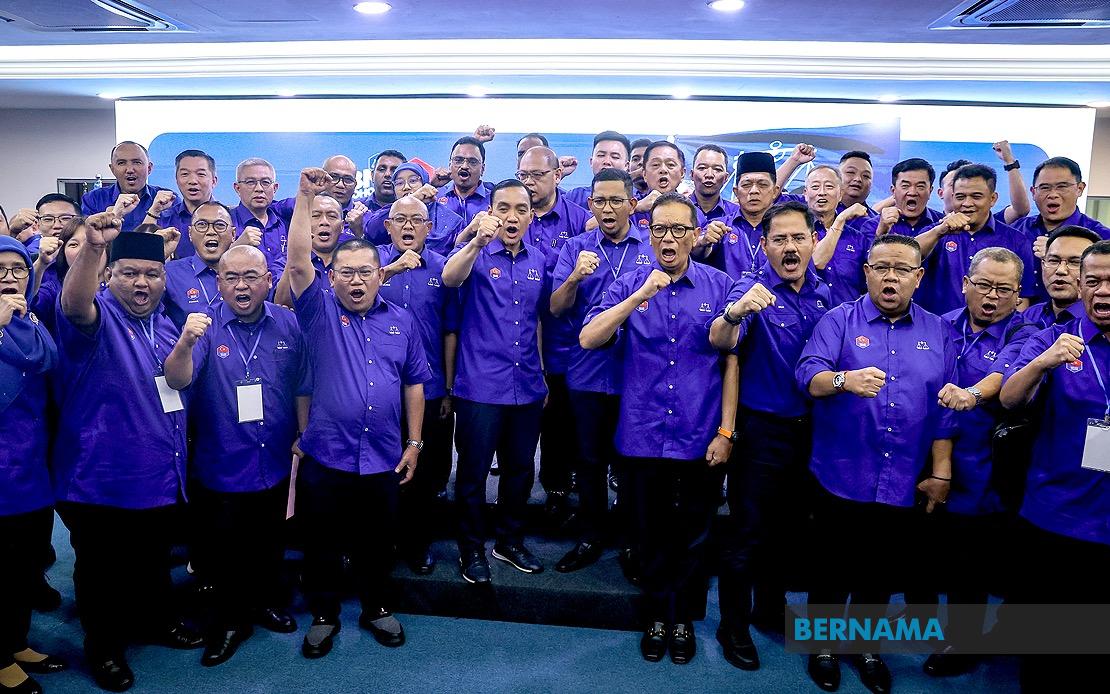
The Johor Barisan Nasional has completed its candidate selection process for the upcoming 16th state election, fielding competitors across all 56 state constituencies with a blend of seasoned political operators and emerging figures. The announcement, made by Johor BN chairman Datuk Onn Hafiz Ghazi during a formal ceremony in Johor Bahru, represents the coalition's strategy to balance continuity with selective renewal as it seeks to strengthen its grip on Malaysia's southern state.
The 56-candidate roster comprises 37 nominations from UMNO, 15 from the Malaysian Chinese Association (MCA), and four from the Malaysian Indian Congress (MIC), reflecting the traditional power-sharing arrangement within the BN structure. This composition maintains UMNO's dominant position within the coalition while ensuring the participation of its historic component parties. Datuk Seri Dr Ahmad Zahid Hamidi, BN chairman at the national level, provided his mandate and approval for the slate, underscoring the interconnected nature of state and federal coalition politics in Malaysia.
Among the most significant appointments is the return of Datuk Seri Dr Adham Baba to electoral politics after a gap of several years. The former health minister, who currently heads the Tenggara UMNO division, has been positioned to contest the Pasir Raja seat, a constituency he previously represented for two consecutive terms spanning 2008 to 2018. His political journey demonstrates the cyclical nature of Malaysian politics, where respected figures occasionally step back from frontline roles before returning. Adham's earlier service in Parliament, where he represented Tenggara for two separate terms from 2004 to 2008 and again from 2018 to 2022, provides him with significant legislative experience and party credibility.
Menteri Besar Datuk Onn Hafiz Ghazi will defend his Machap seat, which he successfully contested in the previous 2022 state election. His retention as the coalition's choice for the position demonstrates continued BN confidence in his leadership of the state government. Maintaining the Menteri Besar's constituency is symbolically important for BN, as it signals internal party stability and the legitimacy of the current state administration heading into a fresh electoral cycle.
However, the candidate list also reveals significant changes in the upper echelons of state politics. Datuk Seri Hasni Mohammad, the former Menteri Besar and current Benut assemblyman, did not secure renomination for this election cycle. His replacement, UMNO working secretary Datuk Mohd Sumali Reduan, represents the type of organizational continuity that the party often pursues when refreshing representation in specific constituencies. The decision to exclude an incumbent Menteri Besar from the candidate list suggests internal party deliberations about generational shifts and the need to create opportunities for advancing members.
The coalition's approach to retaining experienced legislators has been largely consistent, particularly at the executive council level. Nine of the ten former Johor executive councillors who participated in the 2022 state election have retained their candidacy, indicating that BN values continuity among its administrative cohort. This strategy minimizes organizational disruption and preserves institutional knowledge within state government structures. The single exception to this pattern is Khairin-Nisa Ismail @ Md On, the former State Women, Family and Community Development Committee chairman, who was not renominated to defend the Serom seat.
During his address, Onn Hafiz articulated a specific vision for how candidates should approach their campaigns and their responsibilities to constituents. He emphasized that candidate nominations represent not career advancement or privilege but rather a solemn trust requiring integrity in execution. This framing reflects broader concerns within Malaysian politics about maintaining ethical standards during electoral periods and ensuring that public service remains the primary motivation for candidacy. The emphasis on courteous, respectful, and prudent campaigning aligns with stated expectations for electoral conduct in Johor.
The candidate announcement carries implications beyond the state level. Johor's political dynamics have historically influenced broader Malaysian political trends, given the state's size, economic importance, and role as a traditional BN stronghold. How effectively BN consolidates support through this candidate slate will offer early indicators of coalition strength ahead of potential federal political developments. The balance of experience and fresh perspectives may test whether the coalition can simultaneously satisfy incumbent expectations and demonstrate openness to renewal.
For Malaysian observers, the composition of this slate also reflects the evolving electoral calculus within BN itself. The differential treatment of incumbent figures—some retained, others sidelined—suggests ongoing internal negotiations about merit, seniority, and political viability. UMNO's dominant presence within the candidate list reinforces its position as the coalition's anchoring force, while the inclusion of MCA and MIC candidates maintains the multi-ethnic character that BN historically emphasized. The strength of these component parties in the Johor slate will partly determine whether the coalition can project an inclusive political message during the campaign period and defend its representation across demographically diverse constituencies.

