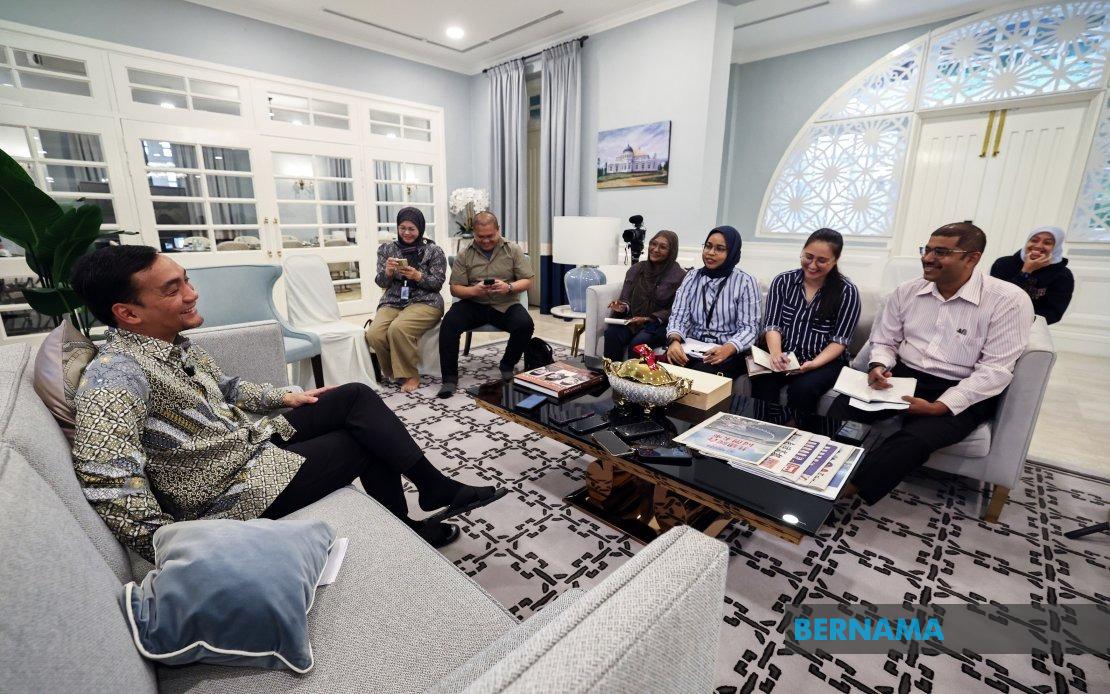
Johor Menteri Besar Datuk Onn Hafiz Ghazi has extended reassurance to Barisan Nasional members who failed to secure candidacies for the forthcoming state election, stressing that exclusion from the ballot represents merely a temporary setback rather than a final dismissal from party responsibilities. Speaking at his official residence in Saujana, the incumbent Machap assemblyman articulated a vision of continued engagement across multiple levels of party machinery, framing the selection process as part of a broader institutional challenge that demands flexibility and resilience from all members regardless of personal disappointment.
The Johor BN chairman recognised the inherent frustration accompanying candidate rejection whilst simultaneously repositioning such outcomes within the context of democratic party management. His remarks emerged during a media interview addressing concerns raised by individuals overlooked in the screening process, a perennial source of internal tension within political coalitions preparing for electoral contests. Onn Hafiz deliberately steered the conversation toward the notion that alternative avenues for contribution remain available, whether through parliamentary representation, administrative roles within party structures, or grassroots mobilisation efforts that demand sustained commitment.
Crucially, Onn Hafiz disclosed that the candidate selection exercise had reached approximately 80 per cent completion, yet maintained that substantive modifications could still occur prior to official watikah distribution. This disclosure carries particular significance in Malaysian political contexts, where the formal issuance of appointment letters represents the definitive moment of candidacy confirmation. The menteri besar's emphasis on the provisional nature of preliminary selections—including references to historical instances where previously distributed watikahs were subsequently rescinded—implies that fluidity and uncertainty characterise the final weeks before nomination day scheduled for June 27.
The selection methodology employed by Johor BN incorporates multidimensional criteria transcending conventional parameters such as age demographics or professional classifications. Onn Hafiz articulated the party's commitment to identifying candidates demonstrating genuine embeddedness within their respective constituencies, commanding community recognition and possessing the fundamental capacity to serve constituent interests effectively. This framework aligns with principles previously articulated by BN leadership regarding the identification of winnable, acceptable and likeable (WALI) candidates—a formulation emphasising electability whilst subordinating age considerations to demonstrable capability and local legitimacy.
The menteri besar's commentary on generational representation reveals sophisticated awareness of demographic realities shaping Johor's electoral landscape. Young voters and first-time electors constitute a pivotal voting segment, with individuals below forty years of age representing between twenty and forty per cent of the state's population. Despite this substantial proportion, engagement levels between youth demographics and elected representatives have reportedly intensified, suggesting that BN strategists recognise the necessity of cultivating youthful electoral support whilst simultaneously managing expectations among older party functionaries potentially displaced by younger candidates through regeneration initiatives.
Candidate selection determination operates through hierarchical institutional structures rather than individual discretion, with Onn Hafiz emphasising that final authorisation requires explicit endorsement from BN chairman and UMNO president Datuk Seri Dr Ahmad Zahid Hamidi alongside senior party leadership. This centralised approval mechanism reflects broader patterns within Malaysian political parties where selection decisions represent sensitive matters requiring political capital and strategic calculation at elite organisational levels. The involvement of multiple institutional actors consequently distributes both responsibility and blame across the leadership hierarchy, potentially mitigating resentment directed toward individual decision-makers.
The Johor state election scheduled for July 11 represents a consequential democratic exercise for a state that has constituted a BN stronghold historically. Onn Hafiz's solicitation for maximum voter participation—extending this appeal specifically to Johoreans employed in Singapore—underscores the strategic importance assigned to voter turnout metrics. Higher participation rates ostensibly enhance the legitimacy of electoral outcomes whilst potentially advantaging coalitions with superior grassroots mobilisation capabilities. The menteri besar's framing of electoral participation as a civic obligation reflects wider patterns wherein Malaysian political leaders emphasise the normative dimensions of voting engagement.
Under Onn Hafiz's stewardship, the Johor state government has positioned itself as committed to delivering tangible improvements in public service delivery and infrastructure development. His implicit promise of continued performance should BN secure renewed electoral endorsement establishes a performance-based legitimation framework distinct from ideological or party-loyalty-centred appeals. This pragmatic orientation potentially resonates amongst voters evaluating incumbent coalitions primarily through criteria of administrative effectiveness and visible development outcomes rather than abstract political principles.
The candidate selection controversy encapsulates broader tensions within Malaysian political coalitions concerning the balance between internal democratisation and elite-controlled decision-making structures. Rejected aspirants frequently harbour grievances potentially translating into reduced campaign enthusiasm or, in extreme instances, defection to opposition formations. Onn Hafiz's preemptive messaging attempting to reframe rejection as temporary dislocation rather than permanent exclusion represents a calculated effort to preserve internal cohesion during the electorally consequential period preceding July 11. The efficacy of such reassurance, however, remains contingent upon whether disappointed members ultimately perceive genuine opportunities for renewed party participation in subsequent electoral cycles or hold-level administrative roles.