The upcoming state elections in Johor and Negeri Sembilan will serve as testing grounds for an ambitious new anti-misinformation framework developed by the Malaysian Media Council, marking an attempt to institutionalise rapid fact-checking during high-stakes electoral campaigns. The MMC has designed the Rapid Response Election Initiative to tackle a growing problem: the speed and scale at which false information, synthetic media, and AI-generated content can spread during voting periods. With Johor voters heading to the polls on July 11 and Negeri Sembilan following on August 1, the council will have a rare opportunity to refine its approach in real time, applying lessons learned from the first election directly to the second.
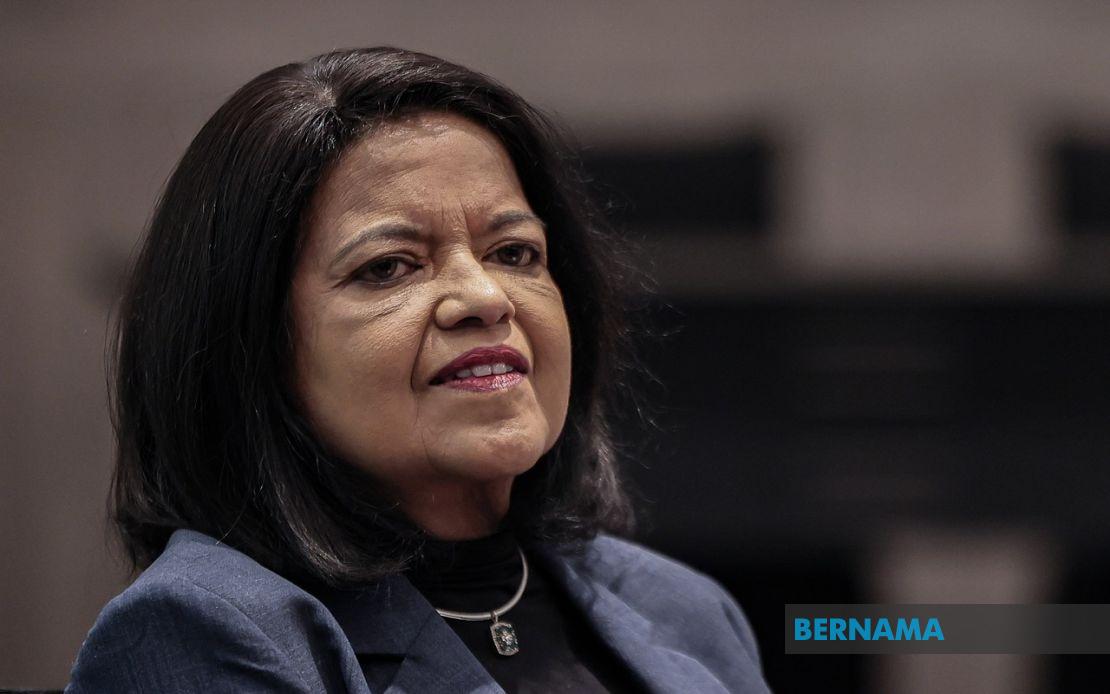
According to MMC chairperson Tan Sri Nallini Pathmanathan, the tight succession of these two polls creates an ideal laboratory for testing operational procedures before potentially rolling out the mechanism nationwide. Speaking at a Media Dialogue Session in Butterworth alongside Communications Minister Datuk Fahmi Fadzil, Nallini outlined how the council envisions the mechanism working across a coordinated ecosystem of government and media stakeholders. The initiative addresses a specific category of misinformation: false content attributed to news organisations themselves, including forged graphics bearing media logos, doctored screenshots presented as authentic news, and fabricated reports designed to mislead voters about candidates or electoral procedures.
The architecture of the framework distributes responsibilities among multiple agencies rather than centralising authority in any single institution. The MMC functions as coordinator rather than arbiter, with individual media organisations responsible for verifying whether disputed content claiming to originate from their newsrooms is genuine. This decentralised approach recognises that media outlets possess the institutional knowledge and verification systems necessary to authenticate their own output. The Election Commission stands as the reference authority for all matters concerning electoral procedures, regulations, and candidate eligibility, enabling rapid clarification when false claims circulate about voting rules or administrative requirements. Bernama, the national news agency, takes on a distribution role, ensuring verified corrections and clarifications reach the widest possible audience throughout the campaign period.
Beyond these core players, a wider network of supporting institutions contributes specialised functions. Content Forum Malaysia focuses on digital platform engagement and media literacy initiatives, working to build public capacity to evaluate information critically. The Department of Community Communications and National Information Dissemination Centres will carry verified information into neighbourhood-level networks, ensuring that corrections penetrate beyond urban digital spaces where misinformation may initially spread. The Malaysian Communications and Multimedia Commission provides regulatory channels and technical assistance where platform cooperation is needed or potential violations of communications law arise. This multi-layered approach reflects recognition that combating misinformation requires coordination across regulatory, journalistic, and community communication domains.
Nallini emphasised that the initiative deliberately stays within narrow boundaries. It does not attempt to police the accuracy of political manifestos, campaign slogans, or candidate claims—domains where subjective interpretation and political judgment naturally arise. Instead, it focuses exclusively on the verifiable question of whether content attributed to media organisations actually originated from those outlets. This distinction matters significantly, as it protects the mechanism from accusations of political bias while addressing a genuinely objective problem: the creation of fraudulent media content designed to exploit public trust in news institutions. A fabricated graphic bearing a major news organisation's logo and falsely claiming a candidate has withdrawn could, under the initiative, be verified and corrected within minutes, preventing the misinformation from gaining traction through repeated sharing before correction becomes possible.
The threat landscape motivating this initiative has shifted markedly in recent years. Synthetic media and artificial intelligence-generated content can now be produced rapidly and at scale, enabling sophisticated disinformation campaigns that adapt to unfolding events during election periods. Traditional fact-checking, which relied on reactive debunking after false claims spread widely, often arrives too late to prevent viral amplification. The MMC's emphasis on rapid verification targets this gap, aiming to catch false attributions before they metastasise across social networks. Similarly, claims involving electoral procedures—voter registration deadlines, polling location changes, eligibility requirements—can be instantly verified against Election Commission records, with clarifications disseminated through established government communication channels.
Concurrently with the institutional initiative, the MMC will launch a public awareness campaign built around the bilingual slogan "Who Said It? What's The Source?" —or in Malay, "Siapa kata? Sos mana?" The campaign does not ask voters to disengage from the democratic process or limit their consumption of political information. Rather, it invites critical thinking as a civic responsibility. During elections, Nallini stated, citizens retain full rights to read competing political messages, share information with peers, debate policy positions, and participate actively in democratic deliberation. Healthy participation, however, depends on foundational trust in information sources. The campaign frames verification as a prerequisite for meaningful democratic engagement rather than a restriction on free expression.
This initiative arrives amid a global wave of concern about election integrity and public confidence in democratic institutions. Southeast Asian countries have witnessed multiple instances of coordinated misinformation campaigns targeting electoral processes, with particular vulnerability to doctored media content and false claims about voting procedures designed to suppress turnout or manipulate results. Malaysia's experience with previous elections and its growing digital sophistication make it an important site for testing approaches that other democracies in the region might eventually adopt. The practical lessons from Johor and Negeri Sembilan—which mechanisms work most effectively, which agencies coordinate most smoothly, where bottlenecks emerge—could inform more comprehensive national frameworks.
The framework also reflects evolving thinking about the relationship between government, media, and civil society in defending information integrity. Rather than positioning the state as primary arbiter of truth or allowing market competition to sort accurate from false claims, the initiative creates a bounded partnership where each institution contributes its distinctive competence. Media organisations authenticate their own content, elections authorities clarify procedural matters, and communications agencies disseminate corrections. This model acknowledges that misinformation during elections poses risks to democratic legitimacy that justify coordinated institutional response, while maintaining institutional independence in domains—political claims, candidate evaluation—where judgment rather than verification dominates.
For Malaysian voters, the initiative signals official recognition that information quality directly shapes electoral outcomes. The MMC's willingness to invest resources in real-time verification, coordinate across agencies, and fund public education suggests that protecting the integrity of the information environment has become a priority comparable to logistical election management. Whether the mechanism will meaningfully reduce misinformation circulation, slow its spread, or build public confidence in information sources remains an open question that the Johor and Negeri Sembilan elections will begin to answer. Success will likely depend on achieving rapid response times that outpace viral spread, building sufficient awareness of the verification mechanism that voters actually use it, and maintaining perceived neutrality across political divides.

