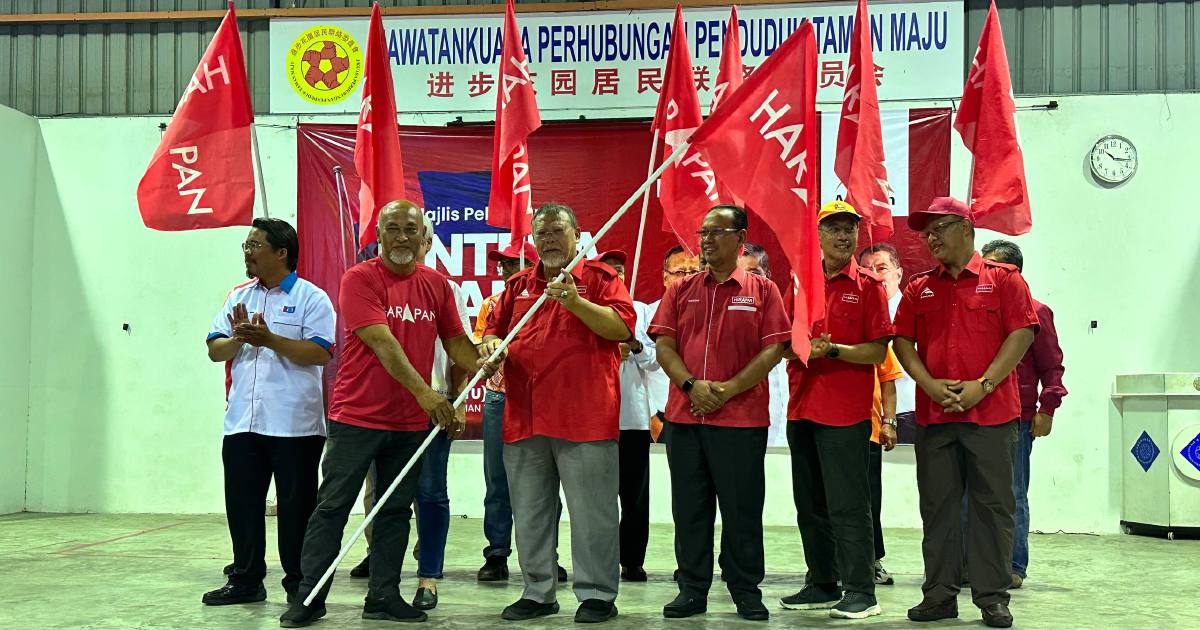
Amanah's leadership in Batu Pahat has declared ambitious plans for the upcoming July 11 Johor state election, projecting victory in six of the ten legislative seats it plans to contest across the northern zone. The party's confidence reflects what it characterises as strengthened grassroots support and improved electoral positioning compared to previous contests in the state. This projection comes as political activity intensifies ahead of the poll, with various coalitions and parties recalibrating their expectations in one of Malaysia's most significant electoral battlegrounds.
The northern zone encompasses constituencies that have historically shown mixed political leanings, oscillating between ruling-coalition parties and opposition movements. Johor's political landscape has undergone considerable shifts in recent years, particularly following changes in state leadership and the reconfiguration of federal political alignments. For Amanah, a significant component of the broader opposition coalition, performance in Johor carries implications extending beyond the state itself, potentially influencing the broader narrative around opposition consolidation in the peninsula's southern flank.
Amanah's presence in Johor reflects the party's broader peninsular strategy of building influence in states traditionally dominated by UMNO and other establishment parties. The party, which emerged from within PKR's structures and subsequently established independent organisational frameworks, has been attempting to carve out distinctive political space centred on social democracy, governance reform, and religiously-moderate positions. However, sustaining this differentiation whilst maintaining coalition cohesion with secular and Islamic-oriented partners presents perpetual strategic challenges.
The targeting of six seats from ten represents an assessment that the party can achieve a 60 per cent success rate in constituencies where it has invested organisational capacity and candidate recruitment. This calculation necessarily involves evaluations of demographic composition, incumbent performance records, and perceived swing-voter sentiment in each targeted area. The northern zone's socioeconomic profile, encompassing both urbanising townships and rural agricultural communities, requires political messaging that resonates across distinct voter priorities ranging from economic opportunity to rural development financing.
Amanah's election strategy in Johor must navigate the complex terrain created by PAS's parallel strengthening in northern peninsular constituencies. The Islamist party has consolidated considerable support, particularly among rural Malay-Muslim voters, simultaneously pulling away traditional constituencies from secular opposition groupings. This dynamic creates a fundamental tension for Amanah, which seeks to position itself as authentically Islamic whilst maintaining secular coalition partnerships and advancing pluralistic governance agendas. The July 11 contest will effectively test whether this positioning remains viable.
The party's confidence projection likely reflects internal polling and ground-level assessments conducted through its volunteer networks and community engagement structures. Regional party leadership would have analysed voting patterns from the 2018 and 2020 elections, tracked demographic shifts, and evaluated constituency-specific competitive dynamics. Such projections, whilst encouraging internal party morale and attracting media attention, should be understood as aspirational targets rather than empirical predictions. Electoral surprises remain common in Malaysian politics, with local issues, candidate personalities, and coalition dynamics frequently overriding broader national political trends.
For Malaysian electoral observers, Amanah's performance in Johor will provide insights into opposition coalition effectiveness and the party's capacity to expand beyond its historical strongholds in states like Selangor and the Klang Valley. The party has invested substantially in state-level capacity building, but translating organisational infrastructure into electoral victories requires navigating complex local political economies and building sufficient community trust to overcome incumbency advantages wielded by established parties. Johor's political culture, traditionally characterised by strong patronage networks and UMNO dominance, presents formidable structural barriers to opposition parties seeking breakthrough performances.
The northern zone's specific composition—encompassing constituencies with distinct socioeconomic profiles, varying levels of urbanisation, and differing demographic structures—demands differentiated campaign approaches. Amanah's messaging around economic policies, education access, healthcare provision, and anticorruption governance must address these varied community needs. The party's credibility in delivering substantive policy positions, rather than focusing exclusively on critical narratives regarding incumbent performance, will likely prove decisive in attracting swing voters uncomfortable with established ruling parties but uncertain about opposition alternatives.
Broader regional political consequences flow from Johor election outcomes. Successful opposition performance strengthens Selangor-based political actors and enhances the federation-level opposition coalition's narrative regarding rising voter dissatisfaction. Conversely, strong ruling-coalition performances reinforce federal government legitimacy and Kuala Lumpur-based power structures. For Southeast Asian observers, Johor elections illuminate Malaysia's ongoing democratic vitality, the stability of its federal institutions, and the continuing capacity of political coalitions to contest power through electoral mechanisms despite periodic institutional tensions and coalition fragmentation.
Amanah enters the July 11 contest as a party simultaneously seeking relevance and authenticity—attempting to demonstrate electoral competitiveness whilst maintaining coalition commitments that may constrain independent political positioning. The six-seat target reflects measured optimism grounded in constituency-level analysis and perceived momentum shifts. Ultimately, the outcomes will reveal whether Amanah has successfully translated organisational improvements and strategic positioning into tangible electoral gains, or whether structural advantages favouring incumbent parties and competing opposition groupings prove more determinative than the party's internal confidence suggests.

