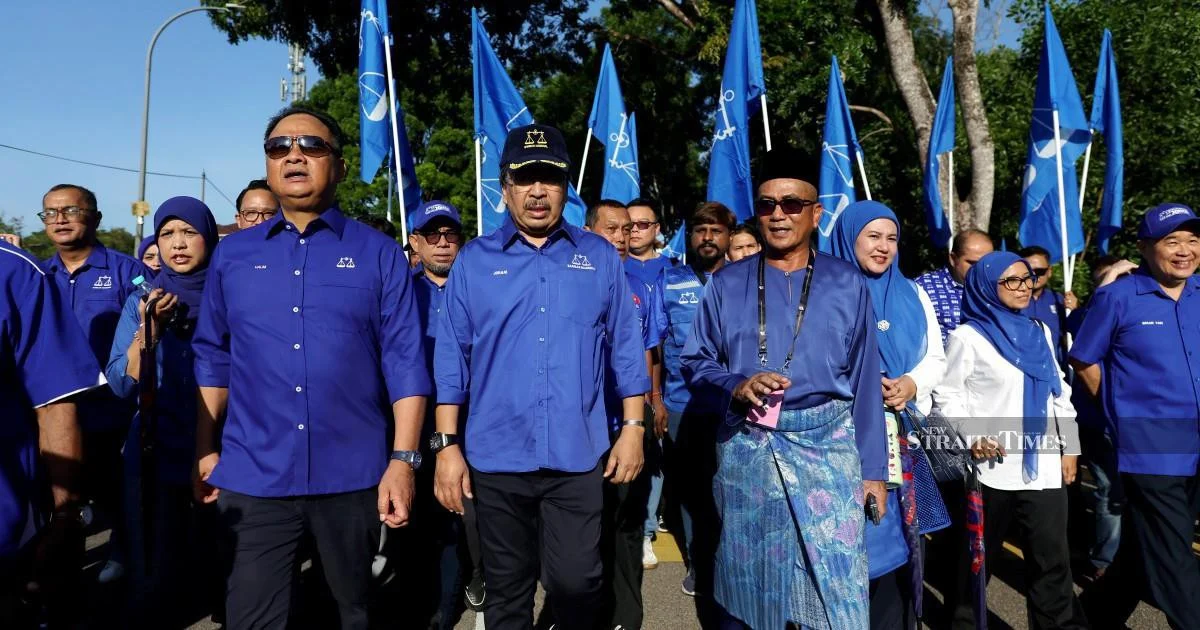
Umno vice-president Datuk Seri Johari Abdul Ghani has stepped up Barisan Nasional's campaign efforts in Johor by throwing his weight behind the coalition's candidate for the Tiram assembly seat, appearing at a rally held at the Taman Pelangi Indah community hall in Johor Baru. The deployment of a senior party figure to the hotly contested constituency underscores the strategic importance both Umno and BN are placing on capturing—or reclaiming—ground in Johor's electoral landscape.
The Tiram seat represents a significant battleground in Johor's state assembly politics, reflecting the broader competitive dynamics that have reshaped the state since the 2022 general election. By dispatching the Umno vice-president, party leadership is signalling that it views this particular contest as winnable and worth concentrated organisational muscle. Such targeted deployment of high-profile personalities typically occurs when parties identify seats as either vulnerable to loss or opportunities for gains, suggesting that Tiram holds particular strategic value within the broader state electoral map.
Johari's campaigning activities form part of a wider BN strategy to reinvigorate its presence across Johor's state assembly constituencies. The coalition, which has faced renewed competition from various quarters in recent electoral cycles, is banking on unified grassroots mobilisation to consolidate support among voters. The presence of senior party figures at community gatherings serves not merely as symbolic endorsement but as a mechanism to energise local party machinery and demonstrate to constituents that their concerns command attention from the highest levels of party hierarchy.
The choice of venue—a community hall in an urban residential area—reflects the evolving nature of electoral campaigns in Malaysia, where direct engagement with voters in neighbourhood settings has become increasingly important. The Taman Pelangi Indah locality sits within Johor Baru, the state capital and a significant demographic centre with diverse voter profiles. Community halls serve as accessible gathering spaces where elected representatives and party officials can interact with residents on matters ranging from local development concerns to broader policy positions.
For Umno specifically, maintaining or expanding its footprint in Johor remains crucial to the party's overall political standing in Malaysia. As the dominant Malay-Muslim political organisation historically, Umno's performance in state assembly contests across Johor carries implications for its influence within the national political structure. Individual seats like Tiram thus become part of a larger electoral calculation that extends beyond local constituency interests to shape state-level and potentially national political configurations.
The rally also highlights how BN continues to invest in traditional campaigning methods that emphasise direct candidate-voter contact alongside party machinery mobilisation. Even as political communication has evolved to encompass digital platforms and social media outreach, physical gatherings remain integral to how Malaysian political parties build momentum during election campaigns. These events provide opportunities for candidates to articulate their positions, address constituent grievances, and demonstrate organisational capacity.
Johari's appearance carries particular weight given his role as Umno vice-president, a position that places him among the party's senior decision-makers. His decision to campaign in Tiram signals that party leadership is actively engaged in seat-level strategy rather than delegating campaign responsibilities entirely to local candidates and divisional structures. This hands-on approach by the national leadership can influence voter perception of how serious the party considers a particular contest.
The Johor state assembly elections, whenever they occur, will serve as an important electoral testing ground in the broader Malaysian political calendar. Johor's size, demographic diversity, and historical significance as an Umno stronghold mean that the state's results carry amplified symbolic and practical importance. Performance in seats like Tiram will contribute to the overall narrative about which coalitions and parties are effectively connecting with voters and which face erosion in traditional support bases.
For voters in the Tiram constituency, the appearance of senior party figures presents an opportunity to assess candidates' profiles and party commitments to their locality. Constituents increasingly expect elected representatives to demonstrate not only local responsiveness but also capacity to secure resources and attention from state and national leadership. Campaign events featuring prominent party officials therefore serve as indirect assurances about candidate connectivity to higher decision-making levels.
The momentum generated through such campaigns will likely continue to build as election dates approach. BN's strategy across Johor will depend substantially on maintaining cohesion among coalition partners while presenting a unified platform that resonates with voters concerned about economic development, public services, and communal harmony. Individual constituency campaigns like Johari's appearance in Tiram thus represent visible manifestations of broader party strategy and resource allocation decisions that reflect leadership priorities.

