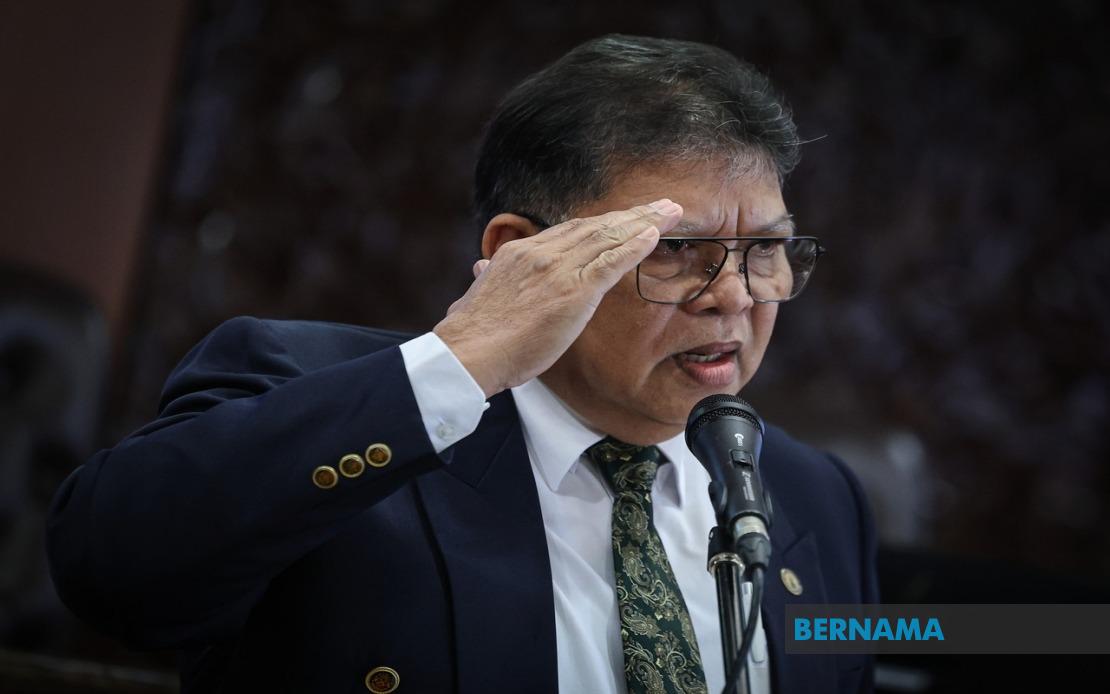
Dewan Rakyat Speaker Tan Sri Johari Abdul has made a compelling case for Malaysia to embrace proportional representation, framing the electoral reform as essential to preserving minority political representation as the nation's demographics shift dramatically over the coming decades. Speaking at the Harmony Symposium held at the Parliament building on June 26, Johari articulated a forward-looking vision of governance that extends well beyond current political cycles, arguing that the country must address structural inequities in representation before demographic realities render minority voices entirely powerless within parliamentary structures.
The core of Johari's argument rests on demographic projections indicating that Bumiputera Malays will constitute 77 per cent of Malaysia's population by 2050. This demographic concentration, he contends, creates an intractable problem under the current first-past-the-post electoral system, where electoral boundaries are drawn to reflect constituency geography. Within such a framework, minority communities dispersed across multiple constituencies would increasingly find themselves unable to command majorities in any single seat, effectively locking them out of parliamentary representation despite comprising a significant portion of the overall population.
Johari emphasised that the stakes extend far beyond abstract questions of democratic fairness. Should minority voices become marginalised within Parliament, he argued, the practical consequences would ripple through society. Citizens from minority communities might feel excluded from the political process, potentially breeding disaffection and undermining the social cohesion that Malaysia has worked to maintain. This concern reflects a growing recognition among policymakers that electoral systems shape not merely which parties hold power, but whether all segments of society feel they have meaningful avenues to participate in governance.
The Speaker deliberately reframed the discussion around electoral reform away from immediate partisan concerns toward a longer temporal horizon. Rather than debating today's politics or relitigating historical grievances, he urged Malaysians to consider the country's trajectory over the next five to 100 years. This rhetorical move is strategically significant, as it positions proportional representation not as a reactive response to current power imbalances but as proactive constitutional engineering designed to prevent future crises of representation. By shifting the discourse toward demographic futures, Johari attempted to depoliticise what is ordinarily a highly contentious issue.
Central to Johari's vision is explicit recognition of Malaysia's extraordinary ethnic and religious diversity. The country is home to 77 distinct ethnic groups, a plurality that extends far beyond the conventional Malay-Chinese-Indian categorisation that often dominates political discussions. This diversity, Johari suggested, should be treated not as a complication to be managed through restrictive electoral design, but as a defining feature requiring sophisticated institutional accommodation. A proportional representation system, by allowing multiple parties to secure parliamentary seats based on overall vote share rather than geographic concentration, could translate this diversity into proportional parliamentary representation.
The symposium itself represented an institutional innovation in how Parliament approaches questions of national harmony and intercommunal relations. Held at the heart of Malaysia's legislative chambers, the event brought together parliamentarians and civil society actors under the banner of the Malaysia Cross-Party Parliamentary Group on Racial and Religious Harmony (KRPPM-KKA). Syahredzan Johan, who chairs KRPPM-KKA and represents the Bangi constituency, articulated the group's dual mandate: producing policy recommendations that Parliament and the ministries could implement while simultaneously building bridges between the legislature, executive, civil society, and educational institutions.
The strategy reflected in KRPPM-KKA's approach recognises that electoral reform cannot succeed through parliamentary fiat alone. Sustainable change requires building consensus across party lines, engaging civil society organisations, and ensuring that educational institutions prepare future generations to understand and embrace more inclusive democratic systems. By framing proportional representation within a broader architecture of institutional and legal reform, advocates signal that electoral mechanics are merely one component of a larger project to deepen Malaysia's commitment to minority protection and intercommunal cooperation.
For Malaysian readers, Johari's proposal carries significant implications that extend beyond the immediate technical question of how to tally votes. Proportional representation would fundamentally alter the incentive structures facing political parties, encouraging them to broaden their appeal rather than concentrate on geographically concentrated voter blocs. It would shift power dynamics in coalition formation, as no single party could expect to govern alone and would need to build broader consensus governments. These changes could reshape the tenor of Malaysian politics, potentially reducing the zero-sum competition that sometimes characterises ethnic-based politics.
However, proportional representation is not without critics or complications. Malaysia's federal structure, with significant powers held by state governments elected under first-past-the-post systems, creates questions about whether federal electoral reform could proceed independently. The implementation of proportional representation in one chamber while maintaining existing systems elsewhere could create institutional tensions. Additionally, in a politically polarised environment, large numbers of small parties in Parliament could fragment policymaking authority or enable minority parties to exercise disproportionate influence over governments dependent on coalition partners.
From a Southeast Asian perspective, Malaysia's consideration of electoral reform carries broader significance. The region contains several countries grappling with representation of minorities and ethnic minorities' concerns about political marginalisation. How Malaysia addresses these questions could influence policy debates in neighbouring jurisdictions facing similar demographic and political pressures. Conversely, Malaysia's experience with ethnic coalition politics and power-sharing arrangements offers instructive lessons, whether cautionary or exemplary, for neighbouring democracies.
The timeframe Johari invoked—looking toward 2050 and beyond—reflects a growing recognition that constitutional and electoral systems require long-term thinking rather than responsive reaction to immediate political crises. By anchoring the proportional representation proposal in demographic data and extended temporal horizons, advocates attempt to remove the discussion from the realm of short-term partisan advantage. Whether this rhetorical strategy will prove sufficient to overcome the substantial political obstacles to electoral reform remains uncertain, but Johari's symposium address signals that serious conversations about Malaysia's electoral future are now occurring at the highest levels of parliamentary leadership.
Ultimately, the proposal represents an attempt to reconcile Malaysia's constitutional commitment to protecting minority interests with the practical realities of changing demographics. Whether proportional representation proves to be the answer, or whether alternative mechanisms might better serve this goal, the underlying concern—ensuring that all Malaysians retain meaningful political voice regardless of ethnic or religious identity—commands attention as the nation plans for its demographic future.

