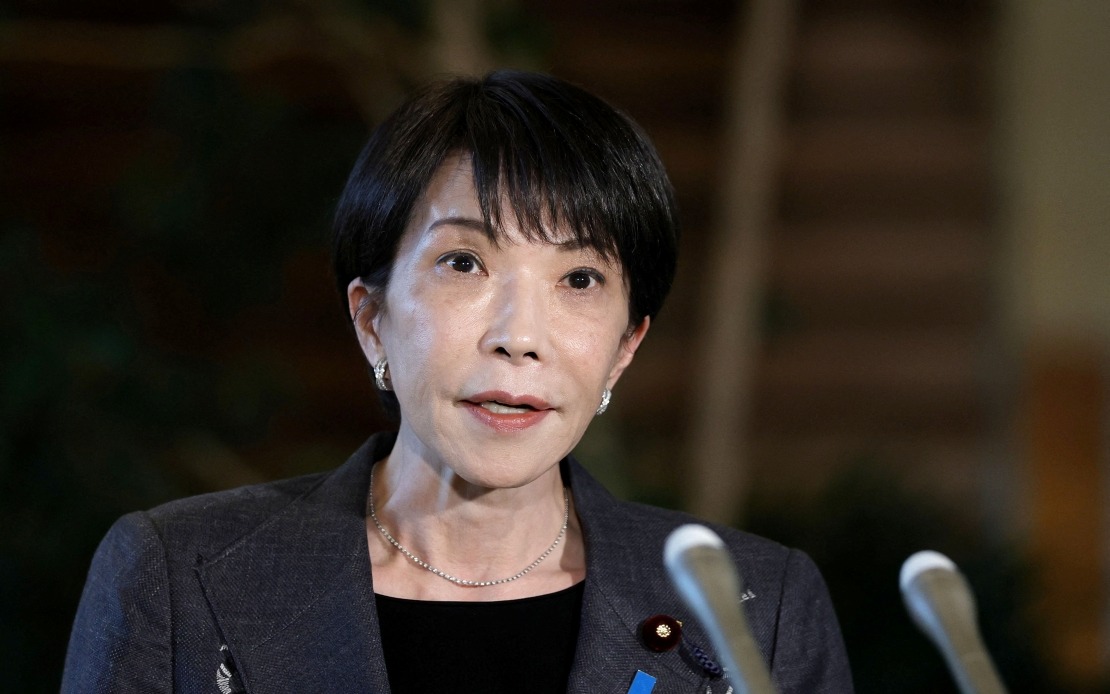
Prime Minister Sanae Takaichi has made an explicit commitment to raise Japan's consumption tax back to its original 8 per cent rate once a temporary reduction on food expires, signalling her government's intention to manage inflationary pressures whilst addressing the nation's deteriorating public finances. Speaking during parliamentary deliberations on Monday, Takaichi clarified that the planned two-year tax cut would not become permanent, a reassurance that comes as Japan grapples with weakening fiscal metrics that already rank as the poorest among developed economies.
The clarification proves significant given the shifting parameters of the tax relief plan itself. During February's lower house election campaign, Takaichi's Liberal Democratic Party had promised a complete elimination of the consumption tax on food and beverages, pledging zero per cent taxation. That pledge resonated across the political spectrum, with the junior coalition partner Japan Innovation Party and numerous opposition groups offering similar commitments to help households struggling with persistent inflation. Yet as implementation details emerged through the ruling party's cross-party national council on taxation and social security, the proposal evolved considerably, reducing the ambition to a 1 per cent rate rather than a full abolition.
The downward revision reflects practical concerns around retail infrastructure. Converting point-of-sale systems nationwide to accommodate a zero per cent rate would demand substantial time and investment, making a complete tax elimination logistically complicated. By settling on a 1 per cent floor instead, the LDP sidesteps this technological barrier whilst maintaining the appearance of delivering on its electoral mandate. The party subsequently proposed offsetting revenue losses through annual cash handouts totalling 600 billion yen, approximately equivalent to the forgone tax receipts from the 1 per cent rate.
Opposition voices have already flagged the political hazards inherent in Takaichi's commitment to restore the full rate. Ken Tanaka, a lawmaker from the opposition Democratic Party for the People, articulated the core difficulty during parliamentary questioning: reversing a tax cut, regardless of its temporary designation, invokes the language of "tax increase" in public discourse. Such messaging carries political peril, potentially triggering backlash from households that have grown accustomed to reduced food costs over a two-year period. The psychological resistance to reinstating charges once removed presents a formidable obstacle to implementation.
Takaichi has signalled her determination to advance with implementation "as soon as possible" following the national council's presentation of an interim report, expected later this month. The accelerated timeline reflects both electoral momentum and underlying economic pressures. Japan faces mounting concerns about its fiscal trajectory, with government bond yields recently reaching their highest levels in decades. The weakness of the Japanese yen compounds these difficulties, amplifying import costs and limiting policy flexibility for stimulus or investment.
For Malaysian and Southeast Asian observers, Japan's policy deliberations carry instructive implications. Nations across the region remain navigating similar trade-offs between immediate household relief and fiscal sustainability. Japan's experience demonstrates the political costs of temporary tax measures and the difficulty of unwinding them once households incorporate lower rates into consumption expectations. The divergence between campaign promises and implementable policies also reflects a broader pattern evident across advanced democracies, where political commitments encounter reality-based constraints.
The fiscal backdrop shapes all these considerations. Japan's public debt already stands at levels that constrain policy options relative to other Group of Seven economies. Adding a two-year revenue loss through reduced food taxation, even partially compensated through cash handouts, deepens the structural imbalance between revenue and expenditure. Bond market reactions—evident in rising yields—suggest investor concern about the sustainability of Japan's fiscal position absent meaningful revenue measures or structural spending reforms.
The 600 billion yen annual handout mechanism carries its own complications. Rather than embedding relief into the tax structure permanently, the cash distribution approach creates annual budget pressures and requires sustained government allocation. This approach also raises equity questions, as cash transfers distribute relief differently than universal tax cuts, potentially excluding certain household segments or creating administrative overhead.
Takaichi's explicit commitment to restoration attempts to pre-empt criticism that the cut represents a disguised permanent change. By framing the measure as temporary and binding her administration to reversal, she seeks to maintain fiscal credibility with bond markets whilst delivering near-term relief. Yet this political positioning relies heavily on her government remaining in power through 2029 and maintaining the political capital necessary to enforce an unpopular tax increase. Shifts in public sentiment, electoral outcomes, or economic conditions could undermine this commitment.
The episode reflects broader challenges confronting Japan's policymaking apparatus. Electoral pressures encourage expansionary commitments, whilst fiscal realities demand restraint. The compromise adopted—a reduced rate rather than zero taxation—represents a middle position that satisfies neither those demanding maximum relief nor those prioritising immediate fiscal consolidation. Whether Takaichi can sustain the political will to restore the full rate when that moment arrives remains uncertain, making her current assurances a test of governmental credibility.

