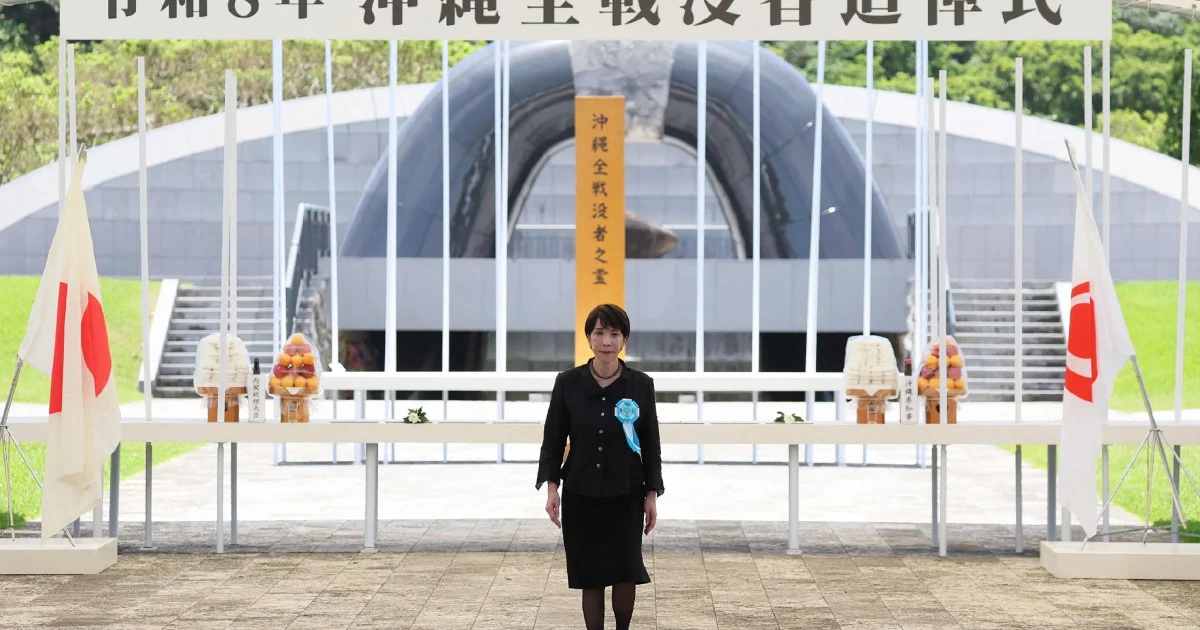
Japanese Prime Minister Sanae Takaichi encountered vocal opposition at a World War II commemorative gathering, with protesters loudly objecting to the government's strategic pivot toward expanded military capabilities, according to television records of the incident. The disruption underscores deepening tensions between Japan's ruling establishment and a segment of the population concerned about the nation's changing security posture, particularly as regional tensions intensify across East Asia.
The interruption occurred during an official memorial ceremony, a setting traditionally associated with solemn national reflection on Japan's wartime history. The presence of demonstrators at such an event signals the contentious nature of contemporary defence debates within Japanese society. For more than seven decades following its 1945 surrender, Japan maintained a constitutionally-rooted commitment to pacifism, with severe constraints on military spending and overseas deployments. This philosophical framework defined much of Tokyo's post-war identity and earned the nation significant goodwill among neighbouring states recovering from Japanese imperial expansion.
Takaichi, as Prime Minister, represents the latest iteration of Tokyo's strategic reassessment. Her government has pursued more assertive defence policies, including proposed increases in military expenditure and expanded operational capabilities for the Self-Defence Forces. These decisions reflect Japan's response to evolving regional security challenges, particularly China's rising military assertiveness, North Korea's advancing nuclear and missile programmes, and Russia's invasion of Ukraine—events that have shaken fundamental assumptions about regional stability.
The protesters at the memorial ceremony articulated concerns that resonate with a traditional constituency within Japan that remains attached to the country's pacifist heritage. This segment of Japanese society worries that embracing expanded militarism risks repeating historical mistakes and could trigger regional arms escalation. The commemoration of World War II—an event that caused catastrophic suffering across Asia—provides an emotionally charged backdrop for such arguments, as the site itself embodies memories of the conflict's devastation.
Japan's defence posture evolution carries significant implications throughout Southeast Asia and the broader Indo-Pacific region. Malaysia and other ASEAN nations maintain delicate diplomatic balances between major powers, making Japan's military trajectory a factor in regional calculations. A more militarily assertive Japan could alter strategic dynamics, potentially affecting maritime security in shared waters and influencing alliance configurations across the region. Moreover, Japan's defence decisions interact with broader American strategic interests in containing Chinese influence, creating interconnected security considerations affecting smaller nations' autonomy.
The incident also reflects internal Japanese political dynamics. Takaichi's administration represents a particular ideological orientation favouring stronger defence capabilities and a more proactive international security role. However, electoral constituencies and civil society groups opposing this direction remain vocal and organised. The heckling at a state memorial demonstrates that despite government momentum toward expanded militarism, significant public scepticism persists, particularly among voters who remember or identify with Japan's pacifist tradition.
Historically, Japanese governments navigated defence policy carefully, aware that both domestic constituencies and neighbouring nations harboured sensitivities about military expansion given the country's imperial past. Postwar Japanese leadership crafted policies that allowed modest Self-Defence Force growth while maintaining rhetorical commitment to pacifism and constitutional constraints. This approach enabled Japan to maintain regional trust while building defensive capabilities. The current government's more explicit embrace of military expansion represents a notable departure from this careful balancing act.
China's rising military spending and assertive maritime activities in disputed territories have directly prompted Japan's strategic recalibration. North Korea's accelerating weapons development and repeated missile tests over Japanese territory have heightened public concern about national security. These genuine threats provide rational foundation for defence policy adjustments, yet they simultaneously reignite historical anxieties among Japanese citizens wary of military escalation. The protesters at Takaichi's memorial event articulated this tension between security imperatives and pacifist principles.
The timing of the disruption—during a World War II commemoration—carries symbolic weight within Japan's ongoing national conversation about its history and identity. How Japan remembers and contextualises its wartime role continues shaping contemporary political debates. Pacifist constituencies invoke this history as cautionary argument against renewed militarism, while security hawks argue that a dangerous world demands Japan shed constitutional restrictions handicapping its ability to defend itself. The tension between these interpretations remains unresolved in Japanese political culture.
Regional observers will monitor how Tokyo navigates these competing pressures. Japan's substantial economic weight and technological capabilities mean its security decisions ripple across Asia-Pacific trade patterns and alliance structures. ASEAN nations, including Malaysia, have interests in both Japanese stability and regional peace. An overly militarised Japan could provoke Chinese countermeasures that destabilise the entire region, yet Japan's insufficient defence capacity could invite regional aggression. The heckling at the memorial reflects this fundamental dilemma facing modern Japan.
For the Takaichi government, the challenge involves building political consensus around defence expansion while respecting enduring pacifist sentiments within Japanese society. International engagement, particularly through dialogue frameworks with neighbouring nations, may help legitimise Japan's security measures as reasonable responses to regional threats rather than expressions of renewed imperial ambition. How successfully Japan manages this domestic and regional communication will significantly influence whether its defence evolution strengthens or destabilises the Indo-Pacific security environment affecting all nations in the region.

