Japan is committed to strengthening its security partnership with Malaysia as both nations navigate an increasingly unstable regional landscape, Japan's Ambassador to Malaysia Noriyuki Shikata announced at a military ceremony in Kuala Lumpur on Wednesday. The declaration follows Prime Minister Anwar Ibrahim's recent visit to Japan, where he and his Japanese counterpart Sanae Takaichi reaffirmed their determination to deepen bilateral strategic cooperation with defence and security positioned as central pillars. The timing of this announcement reflects broader geopolitical shifts in Southeast Asia, where maritime disputes, military modernization efforts, and great power competition have made regional security partnerships more strategically significant than ever.
The elevation of Japan-Malaysia ties to Comprehensive Strategic Partnership status in 2023 marked a watershed moment in bilateral relations, and recent developments suggest both capitals view this arrangement as increasingly vital to their respective security architectures. Shikata's remarks at the 72nd Japan Self-Defence Forces Day Reception underscored Tokyo's intention to maximize this partnership ahead of the 70th anniversary of formal diplomatic relations next year. This forward-looking stance indicates Japan recognizes Malaysia's geographic centrality in Southeast Asia and its influence within ASEAN, making it an essential ally in regional stability efforts. The ambassador's emphasis on taking cooperation to new heights across defence and security domains signals Japanese policymakers view Malaysia not merely as a tactical partner but as a cornerstone of their broader Indo-Pacific strategy.
A cornerstone of the expanded partnership involves aligning Japan's Free and Open Indo-Pacific vision with ASEAN's own Outlook on the Indo-Pacific. Both frameworks emphasize rules-based order, freedom of navigation, and peaceful resolution of disputes—principles that resonate deeply in Malaysia given its position astride critical shipping lanes. By synchronizing these visions, Japan and Malaysia are working to establish complementary security architectures that reinforce international law and resist coercive practices in the region. For Malaysian policymakers, this alignment offers a way to strengthen regional stability while maintaining equidistance from competing powers, a delicate balance that has long defined Malaysia's diplomatic approach.
Practical military cooperation forms the backbone of the security arrangement. The bilateral exercise MALPAN, conducted regularly by the Japan Maritime Self-Defence Force and Royal Malaysian Navy in the South China Sea and Strait of Malacca, has evolved into a sophisticated platform for building interoperability and institutional trust. The expansion of MALPAN in April to include the Royal Malaysian Air Force demonstrates both nations' commitment to integrated maritime security operations spanning multiple military domains. These exercises accomplish multiple strategic objectives simultaneously: they train personnel in joint operations, establish communication protocols for crisis scenarios, and project a message of strong bilateral ties to the broader region. For Malaysia, participation in such exercises with a technologically advanced ally like Japan enhances its own military capabilities while signalling commitment to maintaining open sea lanes vital to its economy.
Beyond traditional military exercises, Japan has introduced an innovative Official Security Assistance programme designed to provide equipment and technical support to regional partners without the political complications of formal defence treaties. Launched in 2023, this framework has already benefited Malaysia substantially. In 2024, Japan provided unmanned aerial vehicles and rescue boats, directly enhancing Malaysian maritime domain awareness and emergency response capabilities. Under the 2025 iteration of the programme, Japan will supply equipment for ceasefire monitoring to the ASEAN Observer Team and deliver a diving support vessel to the Royal Malaysian Navy. These deliveries represent significant practical contributions that address real operational gaps Malaysia faces in maritime surveillance and emergency management, particularly relevant given Malaysia's responsibilities in monitoring vast ocean expanses.
The diving support vessel acquisition deserves particular attention, as it addresses a specific capability gap in Malaysia's naval operations. Such specialized vessels are expensive for individual nations to acquire and operate, yet essential for underwater rescue operations, mine countermeasures, and maritime infrastructure maintenance. By providing this through official assistance rather than commercial purchase, Japan reduces Malaysia's defence expenditure burden while ensuring interoperability with Japanese naval systems. This approach proves especially valuable for Southeast Asian nations balancing development priorities with security needs. The flexibility of the OSA framework allows Japan to respond to actual Malaysian requirements rather than imposing Japanese defence priorities.
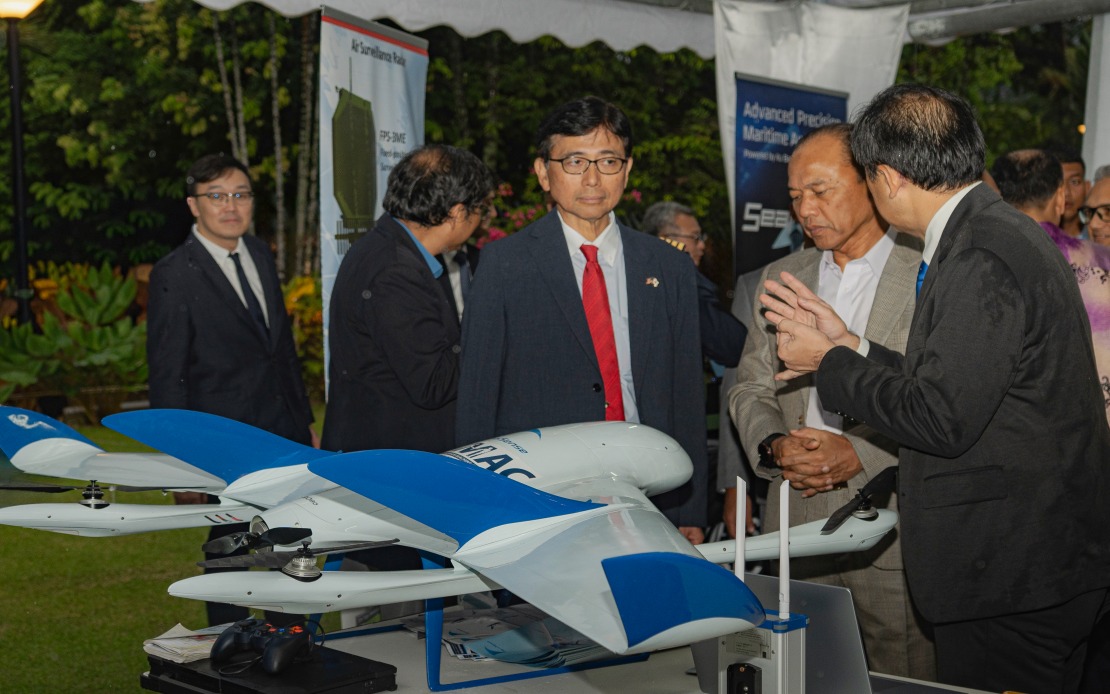
Defence industry cooperation represents another dimension of the partnership. The recent Defence Services Asia 2026 exhibition in Kuala Lumpur attracted 10 Japanese companies showcasing advanced military technologies and equipment, reflecting Japanese commercial interest in Malaysia's defence modernization. More significantly, Japan and Malaysia signed Terms of Reference to establish a bilateral defence industry dialogue mechanism. This institutional framework promises to facilitate deeper technological cooperation, potentially including defence manufacturing partnerships and knowledge transfer. For Malaysia, such collaboration offers access to Japanese expertise in areas like naval systems, robotics, and advanced electronics—fields where Japan possesses considerable competitive advantage.
The geopolitical context surrounding this partnership intensification cannot be overlooked. Rising tensions in the South China Sea, persistent regional maritime disputes, and increased military posturing by various powers have made security partnerships like Japan-Malaysia increasingly valuable. Malaysia's geographic position along crucial shipping routes and its role as ASEAN's largest maritime nation make it a natural focal point for regional security initiatives. Japan, constrained by constitutional limitations on military action but deeply invested in regional stability, increasingly relies on robust partnerships with nations like Malaysia to advance its strategic interests. This complementarity—Malaysia's regional standing and geographical centrality combined with Japan's technological sophistication and institutional credibility—creates a natural foundation for deepening cooperation.
The involvement of Malaysia's Armed Forces Chief General Tan Sri Malek Razak Sulaiman in the announcement ceremony underscores the military establishment's endorsement of this partnership. Military-to-military relationships often provide the most durable foundation for strategic partnerships, as they transcend political transitions and operate through established institutional channels. The presence of senior Malaysian military leadership signifies that security cooperation has become institutionalized rather than dependent on particular political leaders or circumstances. This institutionalization promises continuity and gradual deepening of ties regardless of electoral outcomes or diplomatic fluctuations.
Looking forward, the announced partnership carries implications extending beyond bilateral Japan-Malaysia relations. As Japan seeks to strengthen its strategic position in Southeast Asia amid broader regional competition, deepening ties with Malaysia sends important signals about Tokyo's commitment to the region. Simultaneously, Malaysia gains access to advanced defence capabilities and technological cooperation while maintaining its traditional non-alignment posture. The partnership also contributes to ASEAN's collective security interests by strengthening individual members' capabilities and reinforcing norms around peaceful maritime behaviour. For regional observers, the Japan-Malaysia security trajectory offers a model of how nations with different strategic priorities can find common ground through pragmatic, issue-specific cooperation rather than formal alliance commitments.

