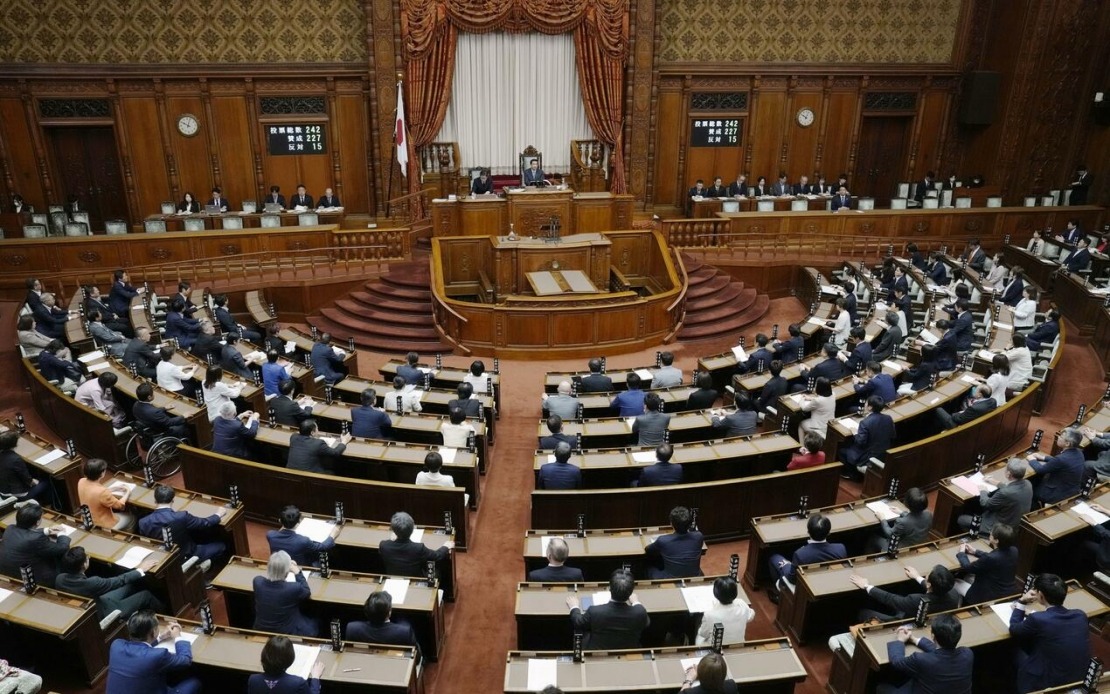
Japan has taken a decisive step in reshaping its defence posture by enacting parliamentary legislation to fundamentally restructure its Air Self-Defence Force, with the transformation emphasising capabilities in space operations. The reform, approved by the House of Councillors on Friday, represents a significant recalibration of Japanese military doctrine to address contemporary security challenges in an increasingly contested domain. The newly restructured unit is slated to commence operations during the fiscal year concluding in March 2027, marking a critical juncture in how Tokyo is preparing for future defence requirements.
Central to this reorganisation is the establishment of a dedicated space operations group, which will operate under the command of a lieutenant general and bear responsibility for expanding Japan's space domain awareness and enhancing satellite surveillance capabilities. This structural elevation of space operations reflects a recognition that modern security threats no longer respect traditional geographical boundaries and that dominance in orbital space has become essential to national defence strategy. The prioritisation of satellite surveillance and space domain awareness aligns Japan with broader patterns among advanced democracies that increasingly view space as a critical operational theatre.
Defence Minister Shinjiro Koizumi underscored the civilian dimensions of this shift, noting that contemporary daily life has become inseparable from space-based infrastructure. He pointed to satellite navigation systems, smartphone mapping applications and weather forecasting as examples of how space technology permeates civilian society, implying that strengthening space defence protects not only military interests but also essential public services. This framing suggests Japan intends to position space defence not as militarisation but as protection of critical infrastructure that underpins economic and social stability.
The legislative package extends beyond aerospace concerns, addressing broader institutional challenges within Japan's Self-Defence Forces. Parliament has authorised the appointment of a second senior vice defence minister, a move designed to distribute decision-making responsibilities during crises and natural disasters while facilitating enhanced defence dialogue with the United States and other security partners. This additional senior appointment is expected to be formalised as early as summer, streamlining the chain of command during complex contingencies where split attention might prove problematic.
Manpower challenges have increasingly plagued the SDF, with recruitment and retention becoming pressing concerns amid Japan's demographic decline and shifting career preferences among young adults. To address these challenges, the legislation implements increases to post-retirement benefits for SDF members, recognising that competitive compensation structures are essential to attracting and retaining skilled personnel. The SDF's mandatory retirement ages, which vary by rank but typically occur earlier than standard civil service positions, have created retention difficulties that these enhanced benefits aim to mitigate.
Particularly significant for regional dynamics is the elevation of the Ground Self-Defence Force's 15th Brigade, stationed in Naha in Okinawa Prefecture, to full divisional status. This upgrade carries implications far beyond organisational restructuring, as it signals Japan's determination to strengthen its defensive posture across the southwestern island chain—a strategically vital region that faces increased pressure from Beijing's expanding maritime activities. The southwestern islands, including Okinawa and the Senkaku Islands, represent critical territory that serves as a buffer between Japan's core territory and the broader Pacific region.
China's assertive maritime posture has been a driving factor behind this recalibration. Increased naval and coast guard activity in disputed waters, coupled with more aggressive aerial operations, has prompted Tokyo to prioritise defence capabilities in its southern flank. The elevation of the 15th Brigade addresses this concern directly, placing additional command authority and presumably greater resources into a unit responsible for some of Japan's most strategically sensitive territory. This move also demonstrates Japan's commitment to regional stability amid concerns about potential military adventurism by larger powers.
The timing of these reforms reflects Japan's broader strategic reassessment following Russia's invasion of Ukraine, which demonstrated the vulnerability of democracies to conventional military aggression and highlighted the importance of sustained defence spending and modernisation. Tokyo has watched developments in Europe closely, recognising that the security environment in Asia could shift with comparable rapidity. The space defence initiative particularly reflects lessons from Ukraine, where satellite communications and surveillance proved decisive to military operations.
For Southeast Asian nations and the broader region, Japan's defence modernisation carries multiple implications. As a technologically advanced ally of the United States and a key participant in regional security arrangements, Japanese defence capabilities directly influence the balance of power in Asia-Pacific. Enhanced Japanese space defence capabilities could potentially strengthen the information-sharing architecture that underpins regional security cooperation, benefiting allies and partners across the region. Additionally, Japan's willingness to invest substantially in defence despite budgetary constraints sends a signal about the seriousness with which Tokyo views regional security challenges.
The reforms also underscore the competitive nature of defence modernisation in Asia. As major powers invest in space capabilities and advanced technologies, secondary powers like Japan must similarly upgrade their own systems to maintain credible deterrence. This dynamic creates pressure throughout the region for countries to enhance their defence capabilities, sometimes driving arms races that complicate diplomatic solutions to regional disagreements. Japan's space defence investment, while presented as defensive in nature, forms part of this broader regional pattern.
Looking forward, the implementation of these reforms over the coming years will reveal how effectively Japan can integrate space operations into its broader defence strategy. The success of the restructured Air Self-Defence Force in achieving space domain awareness and satellite surveillance objectives could serve as a model for other regional powers considering similar institutional changes. Conversely, challenges in recruitment, retention or technology integration could limit the impact of these organisational changes and prompt further adjustments.
The legislative approval represents Japan's conviction that existing defence structures are inadequate for contemporary security challenges. By formally recognising space as a critical operational domain and elevating its institutional priority, Tokyo has signalled that future defence planning will increasingly occur in three dimensions rather than two. This conceptual shift, while subtle in bureaucratic terms, has profound implications for how Japan prepares for potential conflicts and how it positions itself within regional security arrangements.
As implementation proceeds toward the 2027 target date, the international dimension of Japan's defence evolution will become increasingly apparent. Coordination with the United States Space Force, intelligence sharing with allied nations and the development of interoperable systems will all present opportunities and challenges. The success of Japan's space defence initiative will likely influence how other democratic nations in Asia approach their own space defence capabilities, potentially creating a more cohesive technological and operational framework among regional partners.

