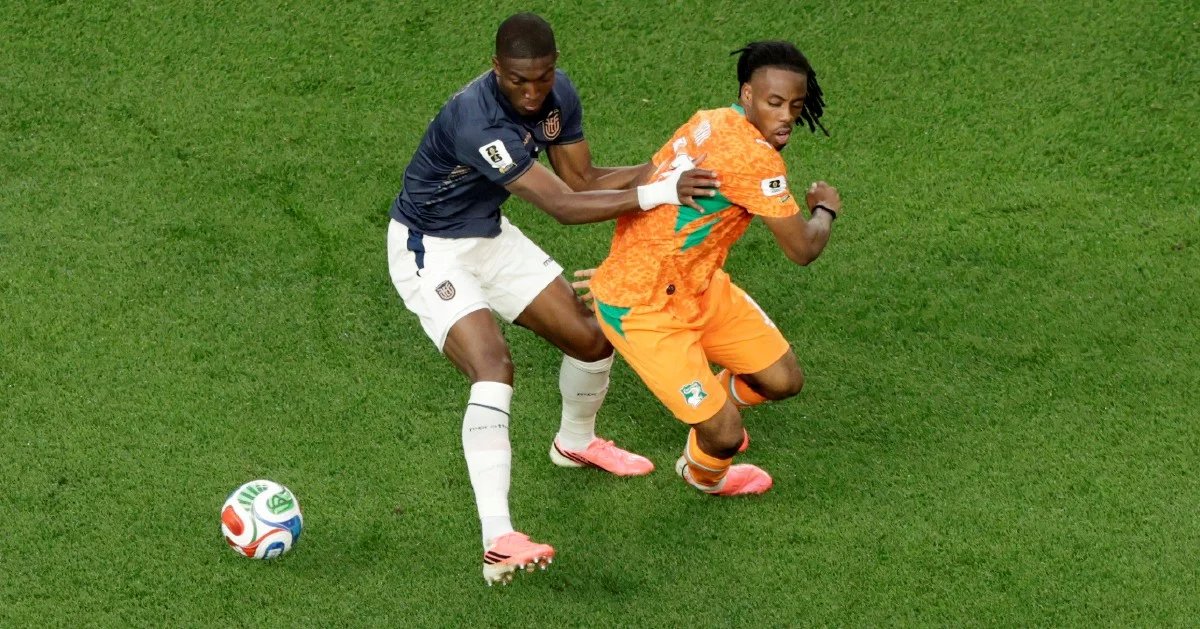
The Ivory Coast Football Federation announced on Thursday that striker Elye Wahi will be sidelined from the squad competing in Canada this weekend, with the governing body's decision arriving swiftly after allegations surfaced connecting the player to a suspected match-fixing scandal in French professional football. The dramatic turn of events underscores the mounting pressure on national teams to maintain integrity standards, even when disciplinary action may disadvantage squads in crucial competitive fixtures.
Wahi, a prominent forward representing Ivory Coast at the highest international level, became embroiled in controversy following reports of his potential involvement in a corruption investigation centred on alleged irregularities in a Ligue 1 encounter. The Ivorian Football Federation's swift response—barring him from international duty—demonstrates how seriously African football authorities are now treating match-fixing allegations, particularly in the context of global competitions and sponsorship arrangements that depend on competitive credibility.
The timing of this scandal creates significant logistical and tactical complications for Ivory Coast's preparation for the Germany fixture, forcing coaching staff to recalibrate offensive strategies with limited preparation time. International football calendars operate on compressed timelines, where squad announcements typically occur well in advance, allowing teams to plan formations, training sessions, and contingency lineups. Wahi's last-minute removal disrupts this carefully orchestrated process and potentially weakens Ivory Coast's competitive positioning against a formidable European opponent.
Match-fixing investigations in Ligue 1, Europe's fifth-most prominent football league by global viewership, carry particular significance for African footballers developing careers in European competitions. France attracts considerable talent from West African nations, including Ivory Coast, creating pathways for continental players to gain exposure on prestigious platforms. When corruption allegations target these professionals, they cast shadows not only over individual reputations but also over the credibility of African representation within European football structures.
The broader context reveals how international sports governance bodies increasingly coordinate with domestic league authorities to address integrity concerns. Investigations spanning multiple jurisdictions require cooperation between national football federations, league officials, and in some cases, law enforcement agencies. The decision to exclude Wahi from international competition suggests the Ivorian Football Federation received information or confirmation from investigative bodies indicating sufficient grounds for precautionary measures.
For Malaysian football observers, this episode illustrates challenges facing Southeast Asian leagues attempting to establish credibility within global football hierarchies. Match-fixing remains an ongoing concern across Asian competitions, from the Thai League to the Malaysian Super League, where investigations occasionally emerge into suspicious betting patterns and coordination between players. The Wahi case demonstrates that such problems transcend regional boundaries and affect even players operating in ostensibly more regulated European environments.
The implications for World Cup qualification campaigns are substantial. Ivory Coast faces Germany in a fixture likely to determine group positioning and advancement prospects. Removing a key attacking player diminishes offensive depth precisely when teams require maximum firepower against strong opponents. The federation's willingness to prioritise integrity over competitive advantage reflects evolving priorities within African football, though such decisions inevitably generate internal debate about whether institutional credibility justifies sacrificing performance objectives.
International football's governing structures, including FIFA, have established protocols encouraging member federations to cooperate with corruption investigations and implement disciplinary measures when players face credible allegations. The Ivorian Football Federation's action aligns with these expectations, positioning the organisation as responsive to integrity concerns whilst maintaining standing within FIFA's regulatory framework. Federations that ignore or minimise such allegations risk sanctions, including fines, point deductions, or suspension from international competition.
The investigation itself raises questions about vulnerability points within professional football systems where corruption penetrates despite considerable resources invested in monitoring and regulation. Ligue 1, benefiting from France's sophisticated sports law enforcement infrastructure and institutional oversight mechanisms, nonetheless experienced a match-fixing scandal involving an international player. This suggests that no league, regardless of development level or regulatory investment, remains entirely insulated from integrity risks.
Looking ahead, Wahi's situation will likely develop through investigative processes extending beyond the immediate World Cup fixture. Depending on investigation outcomes, the player may face further sanctions ranging from league suspension to criminal charges, with consequences extending across his professional career and earning potential. Such severe ramifications explain why national federations increasingly implement precautionary measures when players become subjects of credible corruption probes.
For regional sports administrators in Southeast Asia, monitoring this case provides instructive lessons about institutional responses to integrity threats. Malaysia's football authorities, alongside counterparts across ASEAN, continue developing protocols for identifying, investigating, and responding to match-fixing allegations. International precedents—whether from European leagues or African federations—inform best-practice frameworks helping domestic organisations strengthen competitive credibility.
The incident also highlights competition structures where multiple stakeholders hold enforcement authority. Ivory Coast's World Cup objectives compete with systemic integrity requirements, creating tension between short-term competitive interests and long-term institutional credibility. Navigating these competing demands requires clear policies and institutional commitment to principles that transcend individual fixture outcomes, precisely the approach the Ivorian Football Federation demonstrated through its decisive action.