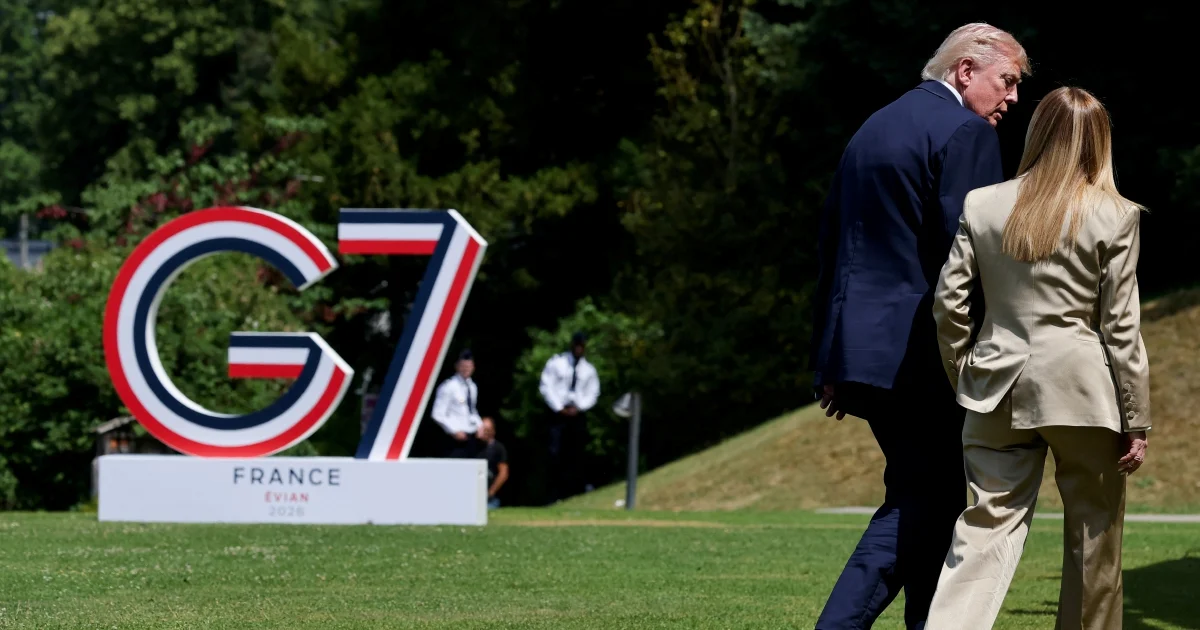
Italy's government responded with visible anger on Friday following reports that US President Donald Trump had made demeaning comments about Prime Minister Giorgia Meloni, characterising her as seeking a photograph opportunity. The diplomatic friction triggered an immediate policy response from Rome, with the foreign minister postponing a planned trip to the United States in what constitutes a notable rebuke to the American president.
The incident highlights the unpredictable nature of Trump's approach to international relations and his tendency to use public comment to reshape or undermine relationships with foreign leaders, even those who have cultivated cooperative ties with his administration. Meloni, who has positioned herself as a bridge between traditional European values and conservative governance, found herself the target of mockery that Italian officials interpreted as both personally disrespectful and diplomatically improper.
Italy's swift and public reaction signals that Rome will not tolerate what it views as casual disrespect from Washington, regardless of the broader alignment between the two countries on various geopolitical issues. The cancellation of the foreign minister's visit represents more than a symbolic gesture; it demonstrates Italy's willingness to adjust diplomatic schedules in response to perceived slights from the White House. For Southeast Asian observers, the incident underscores how unpredictable relations with the Trump administration can become when personal dynamics sour, a lesson relevant to any nation maintaining diplomatic ties with Washington.
The timing of these comments is particularly sensitive given the ongoing discussions between the United States and European allies regarding security, trade, and defense spending. Italy, as a NATO member and a significant European economy, holds considerable strategic importance in American foreign policy calculations. Trump's apparent dismissiveness toward Meloni suggests a willingness to subordinate diplomatic niceties to personal commentary, a pattern that has characterised much of his public engagement with world leaders across his political career.
Meloni's government has generally maintained a pragmatic relationship with Trump, seeking to balance conservative ideological alignment with Italy's obligations as a European Union member state. The reported mocking comment appears designed to diminish her stature or suggest her eagerness to court American favour, implications that Italian officials clearly found intolerable. This dynamic reveals how quickly goodwill in international relations can evaporate when personal respect erodes, even among ostensibly aligned partners.
The foreign minister's decision to reschedule the American visit carries weight beyond the immediate diplomatic incident. It represents a threshold-crossing moment where Italy demonstrated that economic and strategic considerations do not entirely override expectations of basic professional courtesy at the highest levels of government. Other European nations, particularly those with their own complicated histories with Trump's rhetoric, would be observing Italy's response as a potential template for their own reactions to similar provocations.
For the broader Asia-Pacific region, this episode offers important context regarding how the Trump administration might engage with regional partners. Nations such as Australia, Japan, and South Korea, which maintain close security relationships with the United States, face the question of how to respond if they become targets of similar public commentary. The Italian precedent suggests that even aligned democracies may eventually move beyond expressed disapproval to actual diplomatic consequence.
Italy's response also reflects internal political considerations within Rome. Meloni leads a government that campaigned partly on nationalist themes and the assertion of Italian interests against perceived external pressures. Accepting public mockery from an American president could undermine her political standing domestically and suggest weakness in defending national dignity. The decision to cancel the foreign minister's visit therefore serves both an international message and a domestic political necessity.
The incident demonstrates the fragility of international relationships in an era of unscripted presidential communication. Traditional diplomatic protocols attempted to maintain decorum even amid disagreement, but the current approach by Trump prioritises candid expression over calculated restraint. This creates uncertainty for allied nations attempting to calibrate responses that neither appear weak nor escalate tensions unnecessarily.
Looking forward, the question becomes whether this represents a temporary rupture or the beginning of a broader cooling in United States-Italy relations. Much may depend on Trump's response to Italy's rebuke and whether he acknowledges the seriousness with which Rome views the comments. The incident also underscores the importance for smaller and medium-sized powers of diversifying their diplomatic relationships rather than assuming enduring alignment with larger partners based solely on ideological proximity or security partnerships. Italy's capacity to withstand this diplomatic moment partly derives from its position within the European Union and NATO, institutions that provide alternative frameworks for security and cooperation beyond the bilateral relationship with Washington.

