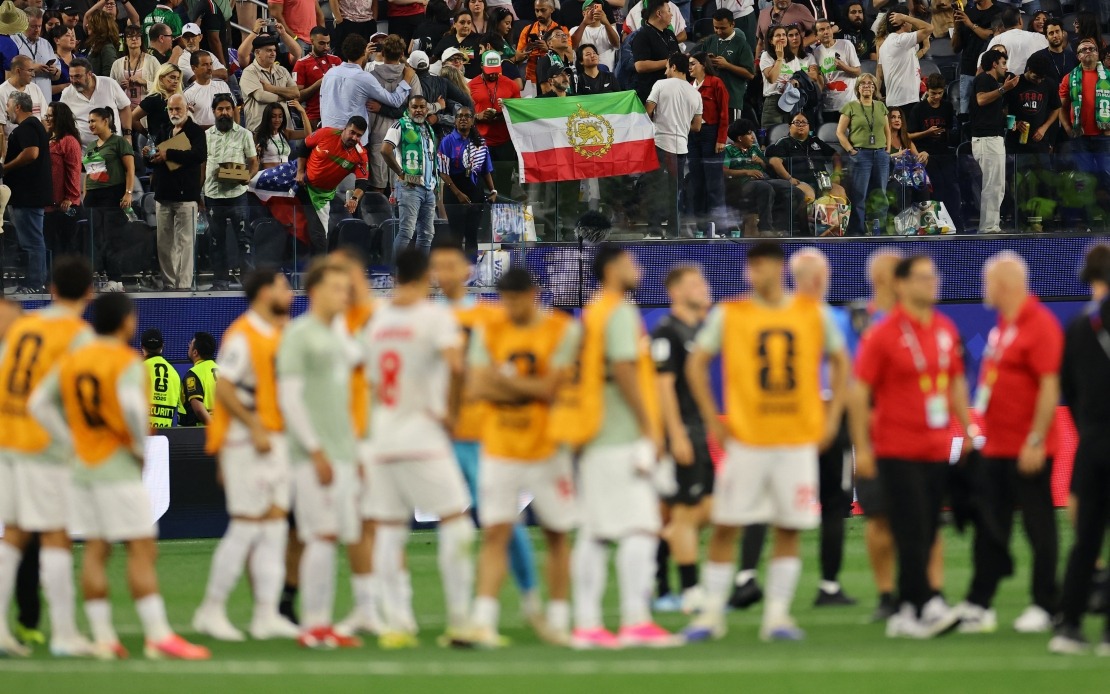
The Iranian national football team's experience at the World Cup has become a flashpoint for geopolitical tensions, according to head coach Amir Ghalenoei, who lambasted tournament organisers for what he characterises as exceptional restrictions placed on his squad. Speaking in Istanbul on June 16, Ghalenoei described Iran as the "most repressed team in the whole World Cup," highlighting the immediate evacuation of his players from Los Angeles following their Monday night fixture against New Zealand. The forced relocation from California to their Mexican training base in Tijuana represents a stark departure from standard World Cup logistics and has raised questions about whether non-sporting considerations are influencing tournament administration.
The Iranian contingent had anticipated spending an overnight period in Los Angeles to undertake recovery protocols before travelling to their designated training facility in Mexico. Such rest periods are standard practice in modern football, allowing squad members to recuperate from the physical and mental demands of competitive matches through scheduled training and medical interventions. Ghalenoei emphasised the cumulative toll of extensive air travel combined with the denial of post-match recovery time, describing the situation as operationally unreasonable and logistically punitive. The coach expressed frustration through an ESPN interview, noting that the directive to depart came immediately after the final whistle, allowing no flexibility or negotiation regarding the team's immediate needs.
While Ghalenoei did not explicitly identify which organisation or individual mandated the departure, team captain Mehdi Taremi provided a notable clue during subsequent remarks. Taremi revealed that FIFA President Gianni Infantino had visited the Iranian dressing room following the Monday encounter, suggesting potential involvement from football's governing body. However, Taremi's comments carried implications extending beyond simple logistical matters, with the captain referencing "other things" and alluding to longstanding diplomatic tensions between the United States and Iran. His statement that "everyone knows it" and "I don't need to mention that because you know where we are" pointed toward the geopolitical context underlying the team's unusual treatment, suggesting that sporting and political considerations may have become intertwined.
The backdrop to these developments involves complex historical relations between Washington and Tehran. The reference to a "100-day war" appearing to conclude with an imminent peace agreement frames the World Cup period as occurring during a particularly sensitive diplomatic moment. Such timing raises legitimate questions about whether international sporting events can remain insulated from government pressure or whether host nations and governing bodies inevitably reflect broader geopolitical alignments. For Southeast Asian observers, the Iranian situation illustrates how even the supposedly neutral domain of international football can become entangled with state interests and diplomatic manoeuvrings, a dynamic with potential relevance to regional competitions and relationships within Asia.
Iran's original preparations for the tournament had already proven complicated by logistical obstacles. The squad initially planned to establish their training headquarters in Tucson, Arizona, but encountered visa difficulties and other administrative hurdles that necessitated relocating to Tijuana, Mexico, in late May. This earlier disruption to their preparation schedule likely compounded the difficulties arising from the post-match departure mandate. The accumulation of travel-related disruptions suggests a pattern of obstacles rather than isolated incidents, potentially undermining Iran's competitive preparations at a crucial juncture in the tournament. For coaching staff managing elite athletes, such unpredictability in operational conditions complicates the precise preparation strategies necessary for optimal performance at world level.
The implications of Ghalenoei's complaints extend beyond the specific circumstances of one team. Should systematic restrictions genuinely target particular nations for non-sporting reasons, this would represent a fundamental departure from the principles of fair competition that international tournaments purport to uphold. The World Cup, as football's premier global competition, depends on universal acceptance of its legitimacy, which requires consistent application of rules and standards across all participating nations. If certain teams face exceptional constraints while others operate under standard conditions, the tournament risks appearing politically compromised rather than purely meritocratic in its framework.
From a Southeast Asian perspective, these developments carry relevance beyond immediate sympathy for Iran's predicament. Regional football associations and governing bodies must consider how international tournaments might incorporate broader geopolitical considerations, potentially affecting their own teams if diplomatic tensions arose. The Iranian case demonstrates that geographic proximity to major powers and political relationships can influence operational treatment during competitions, factors that several Southeast Asian nations navigate carefully in their international engagements. Malaysian readers, given their nation's role as a bridge-builder in regional diplomacy, may recognise parallels to situations where sporting events intersect with diplomatic positioning.
Ghalenoei's characterisation of his team as "most repressed" carries rhetorical weight in the context of World Cup coverage. The phrasing suggests a systematic approach rather than administrative oversight, framing the situation as deliberate rather than incidental. Whether this characterisation accurately reflects organisational intent remains unclear, but the public articulation of such grievances during the tournament generates discussion about governance standards and institutional fairness. Tournament organisers now face questions about whether their decisions were justified by legitimate security or organisational concerns, or whether they reflected political calculations regarding which nations should operate under normal conditions versus heightened restrictions.
The presence of Infantino in the Iranian dressing room introduces additional layers of intrigue. As FIFA's chief executive, Infantino holds responsibility for ensuring fair treatment of all participating nations and for maintaining the organisation's political neutrality across diverse constituencies. His direct engagement with the Iranian squad, whether intended as supportive or communicative of organisational requirements, became instantly politicised by Taremi's subsequent comments. The captain's suggestion that Infantino's visit conveyed unstated messages beyond standard diplomatic courtesy implies that nonverbal communication or implicit understandings may have transpired, adding interpretive complexity to straightforward institutional interactions.
Moving forward, the Iranian team faces the dual challenge of competing effectively while operating under conditions they perceive as disadvantageous and politically motivated. The psychological impact of feeling singled out or unfairly treated can influence squad morale and on-pitch performance, particularly at a tournament where mental resilience proves as crucial as technical ability. Ghalenoei's public complaints may serve multiple functions: expressing legitimate grievances, building team unity through collective narratives of external adversity, and documenting objections for potential future review or appeals. How other teams and football observers respond to these allegations will shape broader conversations about tournament integrity and institutional fairness that extend well beyond Iran's specific situation.