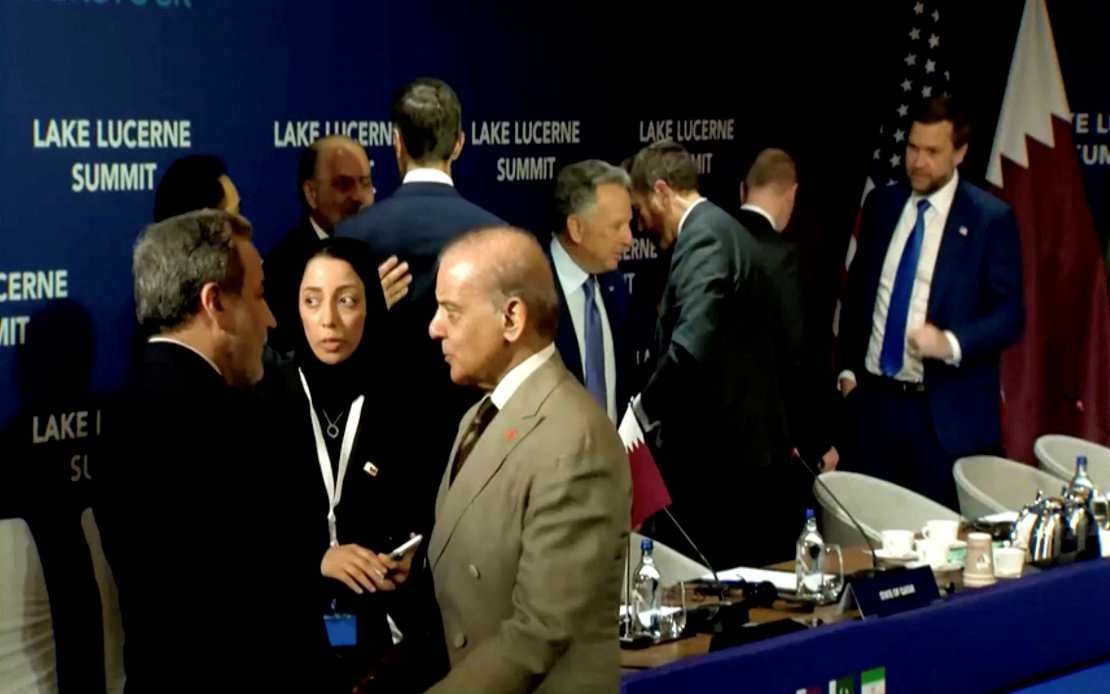
Iran's chief negotiators have announced substantial progress in talks with the United States, with both sides reaching consensus on a draft framework that would temporarily ease economic sanctions targeting Iran's oil sector. The development emerged from discussions held at the Burgenstock resort in Switzerland, marking a significant step in implementing the recently ratified Islamabad Memorandum of Understanding that aims to establish lasting peace between the two nations and their respective allies.
Hossein Ghorbanzadeh, a senior member of Iran's delegation, disclosed that the technical framework governing temporary sanctions relief on crude oil exports has been finalised following intensive negotiations. This breakthrough comes roughly four days after the Islamabad Memorandum entered into force following electronic signatures from Iranian President Masoud Pezeshkian and US President Donald Trump on June 18. The memorandum itself represents a 14-point agreement brokered through Pakistani mediation, establishing a pathway for ending hostilities and resolving longstanding disputes between Washington and Tehran through sustained diplomatic engagement.
However, the agreement contains a critical conditional clause that reflects the complex regional dynamics at play. According to Ghorbanzadeh's statement, the broader provisions outlined in the memorandum of understanding will not become binding or operationally effective unless and until a final comprehensive settlement is successfully negotiated to terminate the war in Lebanon. This conditionality underscores how interconnected Middle Eastern conflicts have become, with resolution of one regional flashpoint now explicitly linked to progress on another. Lebanon's strategic importance to both Iran and Western powers means that progress toward peace there could unlock significant economic benefits for Tehran.
The Swiss negotiations extended considerably beyond the headline issues to encompass detailed technical discussions addressing implementation mechanics and procedural requirements. These parallel technical meetings tackled specific provisions governing how sanctions relief would be administered, monitored, and enforced to ensure compliance by both parties. The completion of these technical discussions represents essential groundwork, as the complexity of unwinding international sanctions regimes requires meticulous attention to detail regarding financial flows, banking systems, insurance arrangements, and export documentation protocols.
Simultaneously, Iranian negotiators used the diplomatic platform to advance other critical national interests. During separate meetings with the Qatari delegation, Iran's representatives pressed for discussion and resolution regarding substantial volumes of Iranian assets that have remained frozen in international financial institutions under various sanctions regimes. These frozen assets represent a major economic grievance for Tehran and their eventual release would provide crucial liquidity for Iran's domestic economy, particularly as it rebuilds following years of economic contraction induced by comprehensive Western sanctions.
The Islamabad Memorandum upon which these negotiations are founded encompasses several transformative provisions designed to fundamentally reshape regional security architecture and economic relationships. Beyond the oil sanctions relief framework under negotiation, the agreement commits both parties to ceasing all hostilities across multiple theatres of conflict, including Lebanon where Iran-backed Hezbollah faces Israeli military operations. Additionally, the memorandum calls for reopening the Strait of Hormuz, the world's most critical chokepoint for global energy supplies through which roughly one-third of seaborne traded crude passes annually, and removing the extensive US naval blockade that has severely constrained Iran's shipping capabilities.
For Malaysian policymakers and business leaders, these developments carry substantial implications given Malaysia's position as a major Southeast Asian energy consumer and trading hub deeply embedded in global energy markets. Any sustained reduction in sanctions on Iranian oil exports would theoretically increase global crude supply and potentially moderate energy prices, benefiting energy-importing nations throughout the region. However, the conditional nature of the agreement—contingent upon Lebanon peace progress—introduces uncertainty regarding implementation timelines and whether the arrangement will ultimately translate into meaningful market impacts.
The role of Pakistan as mediator in facilitating the Islamabad Memorandum also highlights broader regional reconfigurations underway in Asia, where traditional Cold War alignments continue evolving. Pakistan's successful mediation demonstrates the diplomatic capacity of regional powers to shape outcomes affecting global energy security and geopolitical stability, a reminder that major agreements increasingly involve actors beyond traditional Western decision-making circles.
The timing of these negotiations also reflects the current American administration's apparent willingness to pursue diplomatic solutions to long-standing adversarial relationships, contrasting sharply with previous years of "maximum pressure" sanctions campaigns. Whether this diplomatic opening proves durable will depend substantially on whether Lebanon conflict resolution progresses sufficiently to trigger the broader sanctions relief mechanisms now under negotiation. The coming weeks will therefore be critical in determining whether Iran-US relations move toward sustained normalisation or whether regional complications derail the process.

