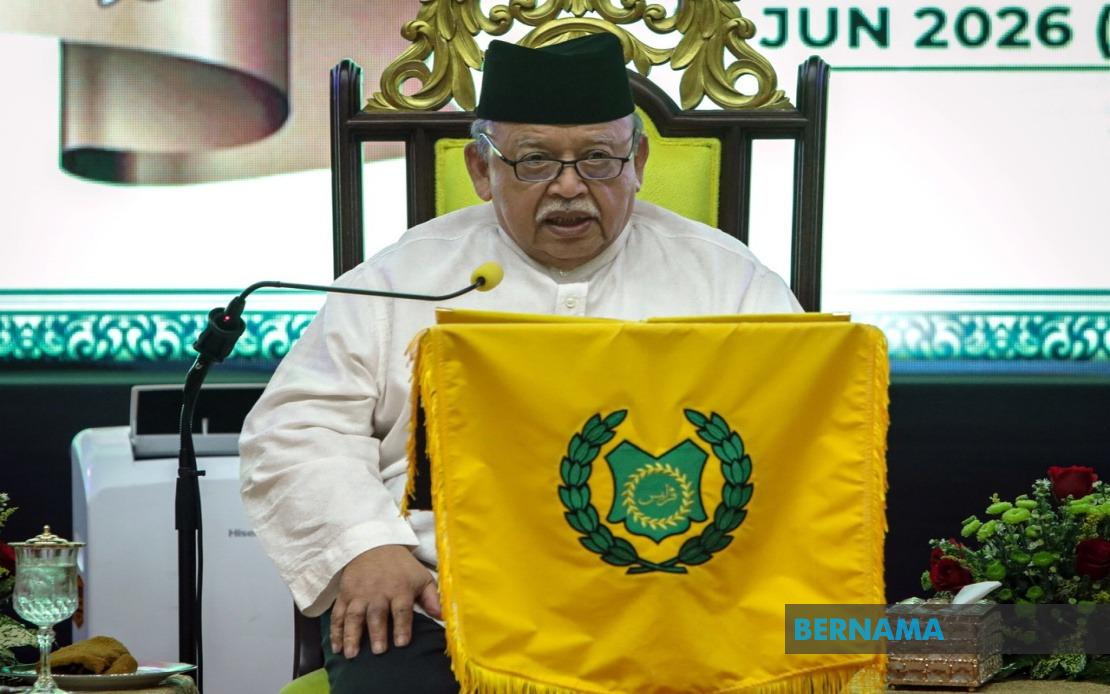
The Raja of Perlis, Tuanku Syed Sirajuddin Jamalullail, has delivered a pointed message about the foundations of national development, arguing that material progress alone cannot sustain a thriving state. Speaking at the opening of Perlis's state-level Maal Hijrah 1448H/2026M celebration in Kangar on June 18, the Ruler stressed that sustainable advancement requires citizens to conduct their affairs with sincerity, view their labour as a form of devotion, and actively resist corrupt practices in all their forms.
Tuanku Syed Sirajuddin's remarks carry particular resonance in Malaysia's ongoing struggle with governance challenges and public confidence in institutions. The Ruler articulated a vision of societal transformation that extends well beyond infrastructure and economic metrics. He contended that a state achieves meaningful progress only when its inhabitants possess knowledge, demonstrate personal integrity, uphold standards of civilised conduct, and maintain social cohesion. This framing positions moral development and educational advancement as co-equal with economic growth in determining whether a nation can truly be described as developed.
The Ruler's characterisation of what constitutes authentic progress under the MADANI framework represents an important reframing of national development discourse. He emphasised that true MADANI advancement cannot be measured through construction projects or GDP figures alone, but must encompass intellectual development, moral character, cultural vitality, intellectual maturity, and the integrity underpinning societal institutions. This distinction matters deeply for Malaysian policy-makers and planners who have traditionally prioritised physical infrastructure. By elevating character and knowledge to primacy, Tuanku Syed Sirajuddin challenges the growth-focused paradigm that has dominated regional development strategies.
The Ruler provided specific guidance on the values he believes must permeate daily life and institutional practice. Citizens should embrace civilised conduct, strengthen national unity, pursue continuous learning, maintain standards of propriety and respect, and execute their responsibilities with full accountability. These prescriptions suggest that without a parallel commitment to ethical conduct and shared values, even economically prosperous societies risk internal fragmentation and institutional decay. The emphasis on accountability particularly addresses concerns about public sector performance and the need for officials and citizens alike to answer for their actions.
Tuanku Syed Sirajuddin identified the strengthening of Islamic understanding based on the Quran and Sunnah as essential to this broader development agenda. Rather than positioning religion and modern governance as competing frameworks, he portrayed authentic Islamic scholarship as complementary to developing a mature political culture and fostering public self-reliance and competitiveness. This integration of religious and civic values reflects the Ruler's attempt to demonstrate that spiritual commitment and economic dynamism need not conflict but can reinforce one another.
The development of the ummah, the Ruler suggested, must remain central to public discourse and policy, encompassing religious instruction, political maturity, economic opportunity, and social welfare. These dimensions cannot be treated in isolation; comprehensive advancement requires simultaneous attention across all spheres. Moreover, Tuanku Syed Sirajuddin advocated for nurturing independence, intelligence, and courage among Perlis citizens as defining characteristics that would prepare them for future challenges and enable them to contribute to the state's trajectory.
Looking forward, the Ruler acknowledged that Malaysia and the wider region face accelerating transformations that demand proactive responses rather than passive acceptance. Technological disruption, artificial intelligence applications, rapid social change, and shifting global economic relationships present both opportunities and risks. The Ruler warned against remaining passive observers of these developments and instead called on citizens to assume leadership roles, generate solutions, and actively participate in shaping outcomes. This framing casts individual responsibility and community engagement as essential to navigating contemporary complexity.
The ceremony also recognised exceptional contribution to Perlis's development, with Tuanku Syed Sirajuddin presenting the Perlis Tokoh Maal Hijrah award to Yayasan Tuanku Syed Putra board member Datuk Izham Mahmud. Such recognition mechanisms serve to highlight and celebrate the individuals and organisations whose work embodies the values the Ruler articulated. The award underscores the practical operationalisation of the principles of integrity and social responsibility that animated his address.
The Ruler's address, delivered alongside the Raja Muda of Perlis, Tuanku Syed Faizuddin Putra Jamalullail, and the Raja Puan Muda of Perlis, Tuanku Dr Hajah Lailatul Shahreen Akashah Khalil, reflects the state's traditional leadership perspective on governance and national purpose. For Malaysian readers, the remarks offer a reminder that sustained national progress hinges not on economic metrics alone but on the collective integrity, knowledge, and civic commitment of the population. As Malaysia continues navigating complex economic and social transitions, the Ruler's emphasis on character, accountability, and purposeful engagement provides a counterweight to purely technocratic or material assessments of advancement, suggesting that national transformation ultimately depends on societal values and institutional trustworthiness.