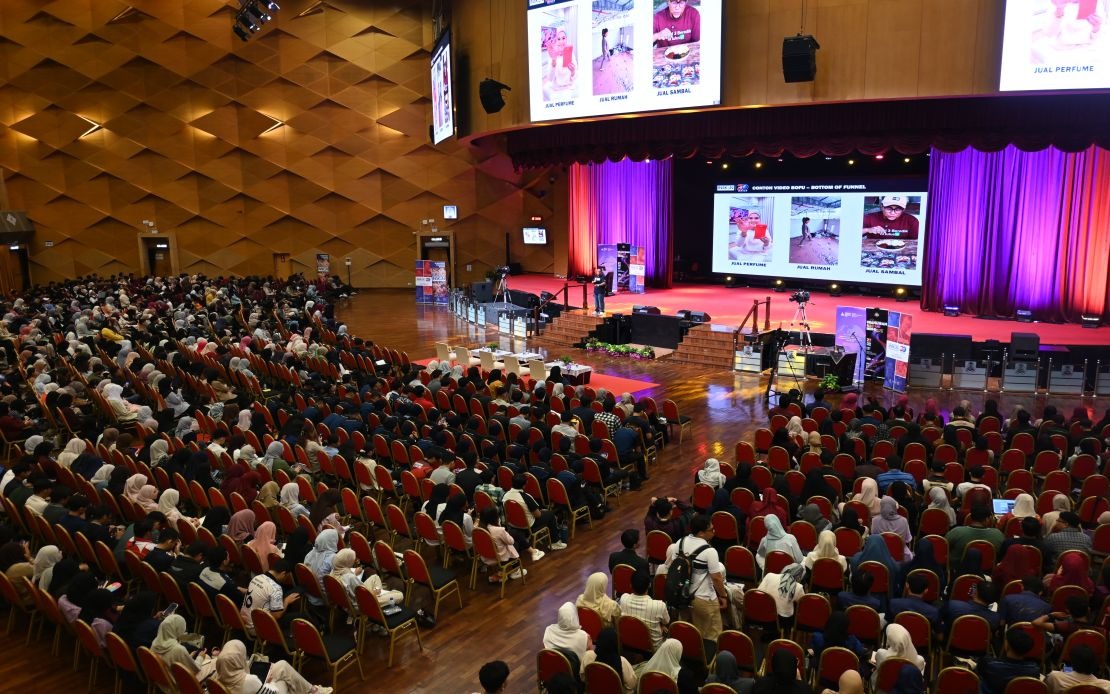
The Usahawan MADANI Mega (SUM MEGA) 2026 entrepreneurship seminar concluded in Shah Alam with a landmark achievement, drawing 6,877 participants across physical and online platforms and securing recognition from the Malaysia Book of Records for hosting the nation's largest student participation in an entrepreneurship seminar. Held at Dewan Agung Tuanku Canselor on UiTM's Shah Alam campus, the event underscored the mounting enthusiasm among Malaysian university students for establishing their own ventures and developing entrepreneurial capabilities in an economy increasingly dependent on innovation and job creation.
Organised by the National Entrepreneurship Institute (INSKEN) alongside the Malaysian Academy of SME and Entrepreneurship Development (MASMED) and Universiti Teknologi MARA (UiTM), the programme assembled students from institutions nationwide to participate in knowledge exchanges, skill-development workshops, and business networking opportunities. The scale of participation reflects a broader cultural shift within Malaysian tertiary education, where entrepreneurship is transitioning from a peripheral interest into a mainstream career trajectory for graduates seeking independence and impact in their professional lives.
Datak Mohamad Alamin, deputy minister for Entrepreneur and Cooperatives Development, addressed the gathering and emphasised that the record attendance demonstrates the expanding appeal of business ownership among younger Malaysians. He positioned entrepreneurship not merely as an alternative employment path, but as a cornerstone of Malaysia's economic resilience and competitive positioning in an increasingly complex global marketplace. This framing aligns with government policy priorities that recognise the capacity of micro and small enterprises to absorb labour, diversify economic activity, and stimulate regional development beyond major urban centres.
Through the Ministry of Entrepreneur and Cooperatives Development (KUSKOP), the MADANI administration has pledged sustained commitment to constructing a robust, equitable, and results-driven entrepreneurial environment. Mohamad Alamin outlined the government's multifaceted approach, encompassing capacity building to strengthen foundational business skills, expanded financing mechanisms to reduce capital barriers, improved market access to connect entrepreneurs with customers, digitalisation support to enhance operational efficiency, and comprehensive business development services to guide ventures through critical growth phases. These interventions recognise that successful entrepreneurship depends not on individual effort alone, but on systemic enabling infrastructure.
Datak Mustaffa Kamil Ayub, chairman of INSKEN's Board of Trustees and a UiTM board member, characterised the seminar's strong attendance as evidence of deepening entrepreneurial consciousness across Malaysia's youth demographic. He challenged conventional perceptions of entrepreneurship as merely a job option, reframing it instead as a foundational mindset, cultural orientation, and collective movement capable of propelling the nation's economic trajectory. This philosophical positioning seeks to normalise business creation within Malaysian society, reducing the perceived risk and social stigma that may deter talented individuals from pursuing independent ventures rather than corporate employment.
During the seminar, participants engaged with practical training grounded in the MOFA methodology, a framework that systematically addresses four essential dimensions of business operation. The acronym encompasses marketing strategy and customer acquisition, operational efficiency and process management, financial planning and cash flow control, and administrative infrastructure including legal compliance and human resource practices. By exposing emerging entrepreneurs to this structured diagnostic approach, the programme aims to equip students with conceptual tools and practical checklists that enhance their capacity to navigate challenges, adapt to market pressures, and sustain competitive advantages throughout the entrepreneur's lifecycle.
SUM MEGA 2026 functions as a cornerstone initiative within Malaysia's broader strategy to cultivate entrepreneurial culture specifically among university students and recent graduates. The event aspires to accelerate the emergence of a generation equipped not only with business acumen but also with innovation mindsets, employment-creation capacity, and industry leadership potential. By concentrating on students before they enter the formal labour market, INSKEN and UiTM aim to shape career preferences and professional identities at a formative moment, potentially redirecting talented individuals from conventional corporate pathways toward venture creation that generates cascading benefits throughout local economies.
Beyond the seminar itself, INSKEN operates a portfolio of supplementary entrepreneurial development programmes designed to sustain momentum and deepen capabilities among prospective and nascent business owners. These initiatives include the INSKEN Masterclass, offering intensive training from experienced business practitioners; BANGKIT, which focuses on accelerating high-potential ventures through mentoring and resource access; and PROTÉGÉ, which provides structured guidance and ongoing support for entrepreneurs navigating critical business phases. This ecosystem of complementary programmes recognises that a single seminar, however large, cannot singularly transform an individual's trajectory or overcome systemic barriers to entrepreneurial success.
The seminar also served as a convening platform that strengthened collaborative relationships among critical stakeholders across Malaysia's entrepreneurship landscape. Participation from government agencies, higher education institutions, industry associations, commercial financial institutions, entrepreneur development organisations, and private sector entities created opportunities for partnership alignment and resource coordination. Such cross-sector collaboration is essential for addressing the multifaceted challenges entrepreneurs encounter, from regulatory navigation to technology access to supply chain integration, which no single institution can resolve independently.
The event's design and execution directly advance Malaysia's National Entrepreneurship Policy 2030, a strategic framework that positions entrepreneurship as fundamental to long-term economic transformation and prosperity. By assembling diverse stakeholders and focusing development efforts on students and graduates, SUM MEGA 2026 operationalises policy aspirations into tangible capacity building and network formation. The record attendance suggests growing policy resonance with Malaysia's youth, indicating receptiveness to entrepreneurship messaging and willingness to explore business creation despite economic uncertainties and competitive pressures from established firms and multinational corporations.

