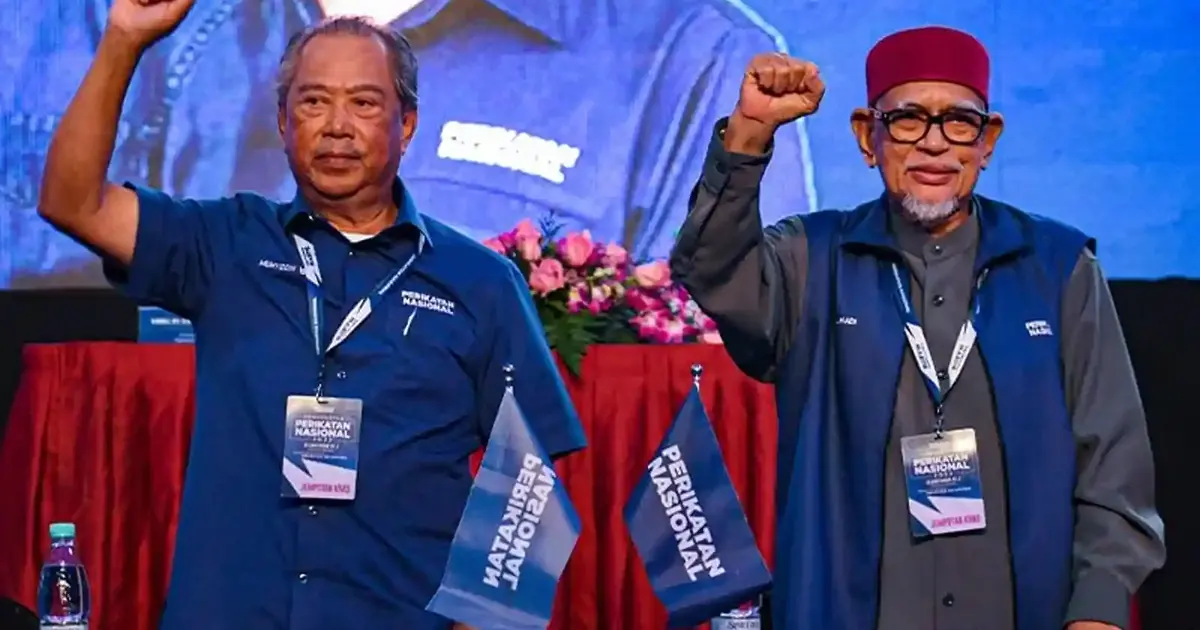
The question of who truly commands Perikatan Nasional has become one of Malaysian politics' most consequential tugs-of-war, with analysts now pointing to a surprising phenomenon: the coalition itself has become more electorally valuable than the individual parties within it. This dynamics-shifting reality is driving a behind-the-scenes contest between PAS and Bersatu that goes far beyond the typical factional disputes that plague multiparty alliances across Southeast Asia.
Under the surface of public statements about unity and shared vision lies a fundamental disagreement about the future shape of the pact. Both parties recognise that Perikatan Nasional's political identity—built through years of positioning, messaging, and electoral performance—resonates more powerfully with voters than PAS's own organisational brand or Bersatu's relatively newer political standing. This discovery has transformed internal coalition management from a question of ideological alignment into something more nakedly about resource allocation, media prominence, and campaign messaging dominance.
For PAS, the party that entered Perikatan Nasional with the deepest organisational roots and longest electoral track record, the situation presents a paradox. The Islamic party brings institutional strength, grassroots networks particularly in rural Malaysia, and ideological coherence. Yet the very party machinery that constitutes PAS's traditional source of power appears diminished when discussions turn to electoral strategy and voter appeal under the Perikatan banner. This friction reflects a broader tension within the coalition between maintaining party identities and building a unified electoral machine.
Bersatu's position in this struggle is equally complex. The party founded by former Prime Minister Mahathir Mohamad carries the historical baggage of internal divisions and leadership transitions. However, within Perikatan Nasional, Bersatu has positioned itself as the coalition's bridge-builder and strategic architect. The smaller party's ability to punch above its weight depends significantly on whether the Perikatan Nasional brand remains primary in voters' minds rather than the constituent party labels. For Bersatu, losing control over coalition identity could mean irrelevance.
The empirical evidence underpinning analysts' assessments is telling. Voter surveys and electoral studies show that Perikatan Nasional commands a distinct and substantial following among segments of the Malaysian electorate who might not individually identify with PAS's religious platform or Bersatu's opportunistic reputation. The coalition brand has successfully created its own political persona, one that appeals to voters seeking an alternative to Pakatan Harapan without necessarily committing to the Islamic governance agenda central to PAS's messaging. This constituency exists, and it is substantial enough to matter in election outcomes across multiple constituencies.
Understanding why a coalition brand outperforms its constituent parties requires examining Malaysia's specific political context. Malaysian voters increasingly consider themselves sophisticated political consumers, evaluating coalitions not merely as mechanical aggregations of parties but as distinct political entities with their own strategic logic and governance capacity. Perikatan Nasional, positioned as neither the incumbent-associated Barisan Nasional nor the reform-oriented Pakatan Harapan, has cultivated a carefully constructed middle ground. This positioning has allowed it to absorb voters from across the spectrum without the ideological baggage that either parent party carries independently.
The ramifications of this internal struggle extend beyond factional maneuvering. How PAS and Bersatu resolve questions about coalition leadership, campaign messaging authority, and resource distribution will determine whether Perikatan Nasional can sustain its electoral momentum or whether internal tensions become publicly visible enough to damage the brand they both depend upon. The coalition's coherence in the next general election may depend entirely on managing this contradiction between maintaining party distinctiveness and projecting a unified Perikatan identity.
Regional observers watching Malaysian politics note that this dynamic mirrors challenges facing coalition arrangements elsewhere in Southeast Asia, where traditional party-based politics has given way to more fluid alliance structures. The success of these newer political formations often hinges on whether voters perceive them as genuine alternatives rather than temporary convenience arrangements. Perikatan Nasional's ability to maintain that perception while accommodating the ambitions and concerns of constituent parties will significantly influence Malaysian electoral dynamics and potentially the stability of future government coalitions.
For ordinary Malaysian voters, the practical consequence of this behind-the-scenes battle remains unclear. The internal distribution of power within Perikatan Nasional may ultimately matter less than whether the coalition can effectively articulate a governing agenda that extends beyond opposition to Pakatan Harapan. The true test will come when voters are asked not simply to choose against something but to actively support a coherent vision. How PAS and Bersatu navigate their control struggle while simultaneously building that vision may determine whether Perikatan Nasional becomes a durable force in Malaysian politics or a transitional arrangement that fragments under pressure.