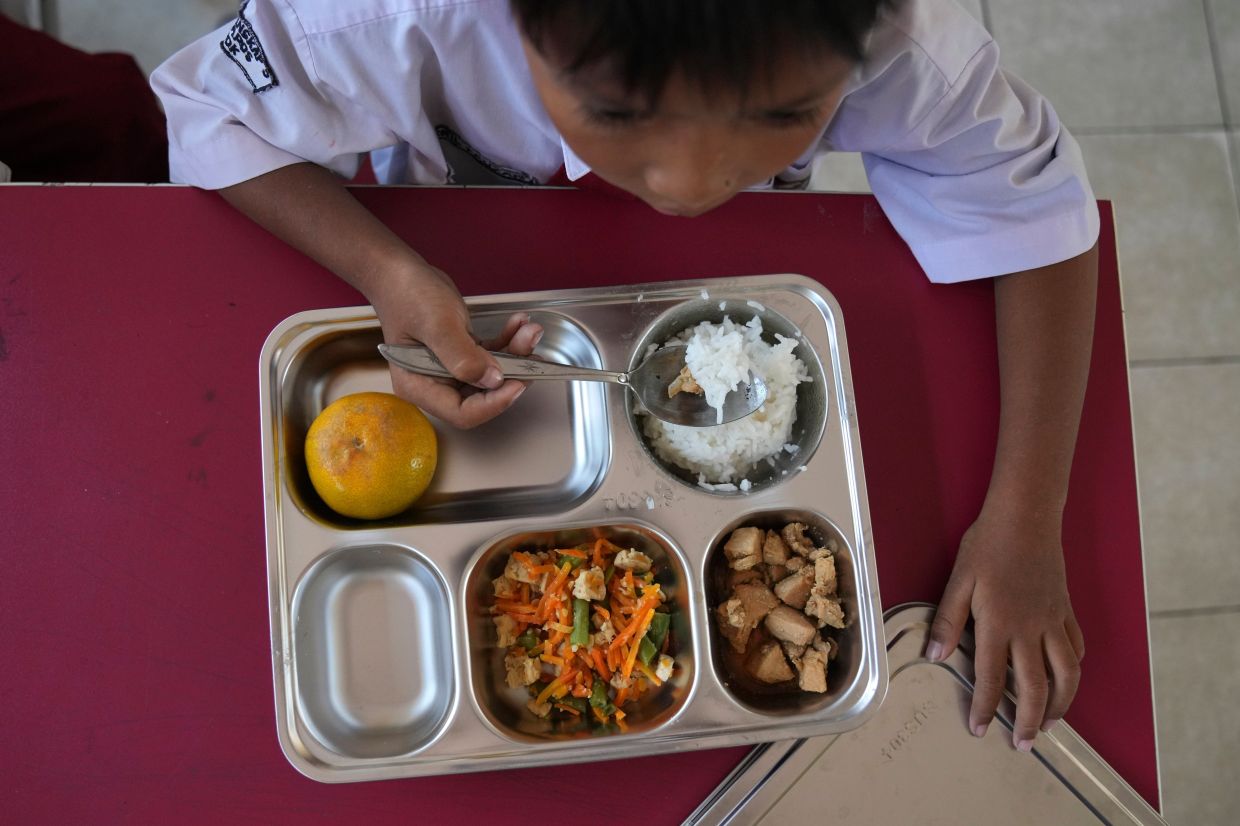
Indonesia's prominent anti-corruption organisation has escalated pressure on the government to suspend President Prabowo Subianto's flagship free meals initiative and launch a sweeping investigation into the sprawling programme, which has already ensnared multiple officials in corruption allegations. Indonesia Corruption Watch, a respected civil society group focused on economic justice and institutional reform, has gone further than previous critics by calling for the complete dissolution of the National Nutrition Agency, the body managing the roughly US$15 billion national scheme to combat malnutrition and poverty.
The intervention follows the detention this month of Dadan Hindayana, the agency's former chief, on corruption charges, just hours after his dismissal from the post. The fallout has extended to four others in his orbit, including two of his deputies, all now in custody as authorities widen their examination of the nearly two-year-old institution that now serves more than 60 million people across the country. Wana Alamsyah, head of law and investigations at Indonesia Corruption Watch, has argued that current enforcement efforts remain too narrowly focused on top management and fail to address the systemic vulnerabilities that enabled misconduct to flourish in the first place.
According to Wana's assessment, investigators must examine the broader network of beneficiaries from the programme's governance lapses, including vendors, procurement officials, and other actors embedded in the implementation chain. The watchdog contends that the meals initiative was fundamentally rushed into operation without adequate planning or oversight mechanisms, creating an environment where misappropriation of public funds became possible. This criticism strikes at the core of how the government rolled out the programme—deploying it universally across Indonesian schools rather than targeting areas with demonstrated nutritional needs, a choice that has drawn questioning from independent economists and policy researchers.
The new leadership at the nutrition agency, headed by Nanik S. Deyang, has signalled a strategic recalibration aimed at improving programme quality and financial discipline. Rather than pursuing the original target of reaching 82.9 million recipients at a cost of 268 trillion rupiah (US$14.9 billion) annually, the agency now intends to concentrate resources on remote and underserved regions where the intervention is most justified. Deyang has emphasised that future operations will prioritise nutritional value and food safety over raw numbers, marking a sharp pivot from the previous approach that prioritised rapid scale-up and universal coverage.
The agency has also announced a freeze on establishing new kitchen facilities, implementing stricter vetting procedures for vendors and operational partners. Rather than constructing fresh infrastructure, the refocused model will leverage existing school canteens and community food preparation facilities, a move designed to reduce costs and mitigate the risks associated with hastily-assembled networks of external operators. This structural retreat reflects broader acknowledgment within government circles that the initial implementation strategy was fundamentally flawed and unsustainable given both budgetary constraints and institutional capacity limitations.
President Prabowo has publicly committed to zero tolerance for corruption within the meals programme, warning during an address to officials and implementation partners that no violations will be excused. His statement came in the wake of Dadan's detention and signals presidential awareness that the scandal threatens the political credibility of a signature policy initiative. However, critics question whether high-level pronouncements can address systemic governance failures that independent researchers have documented, including widespread patronage networks linking kitchen operators to politicians, military figures, and business interests across 38 provinces.
A comprehensive audit by Indonesia Corruption Watch examined 102 foundations running meals kitchens and identified concerning ties to politically-connected individuals—including elected officials, security force personnel, and commercial networks—suggesting that operator selection was driven by political considerations rather than capability or integrity. Separately, the Jakarta-based Centre of Economic and Law Studies found that nearly 80 per cent of surveyed respondents identified potential conflicts of interest arising from the direct, non-competitive appointment of food vendors, while earlier investigations flagged risks of unequal geographic distribution, substandard food quality, and inefficient budget allocation.
The meals initiative has generated significant public backlash and financial anxiety. In mid-June, police mobilised thousands of officers to contain student-led protests in Jakarta calling for the programme's cancellation, with further demonstrations erupting in major provincial cities. Investor concerns about budget sustainability have mounted as the initiative consumes fiscal resources needed elsewhere, particularly given inflationary pressures on fuel subsidy costs stemming from regional geopolitical tensions. Economic analysts and research institutions have questioned whether the scheme will deliver the promised employment, health, and poverty-alleviation outcomes, suggesting that political symbolism has outpaced evidence-based programme design.
Wana Alamsyah has raised a pointed question about the timing of enforcement action, noting that problems documented on social media and in preliminary studies throughout 2025 did not trigger immediate government response until formal complaints prompted official action. His assessment suggests that fiscal deterioration may have forced authorities to reassess the programme's affordability and restructure it while simultaneously deploying the corruption investigation to deflect public anger and rebuild institutional credibility. By sacrificing Dadan Hindayana and a small cohort of officials, the government may be attempting to legitimise a scaled-back version of the initiative while addressing mounting civil society criticism.
The scandal reveals deeper structural challenges in how Indonesia implements large-scale social programmes. The appetite for rapid rollout and universal coverage, while politically appealing, appears to have created vulnerabilities to capture by patronage networks and opportunistic vendors. The government's shift toward a more selective, geographically-focused approach with enhanced screening and existing institutional infrastructure suggests belated recognition that sustainable programme design requires moving slowly enough to build genuine accountability mechanisms. For Malaysia and other Southeast Asian governments contemplating similar universal food initiatives, the Indonesian experience underscores the risks of divorcing scale from governance capacity and the necessity of transparent procurement processes and independent oversight from the programme's inception.